
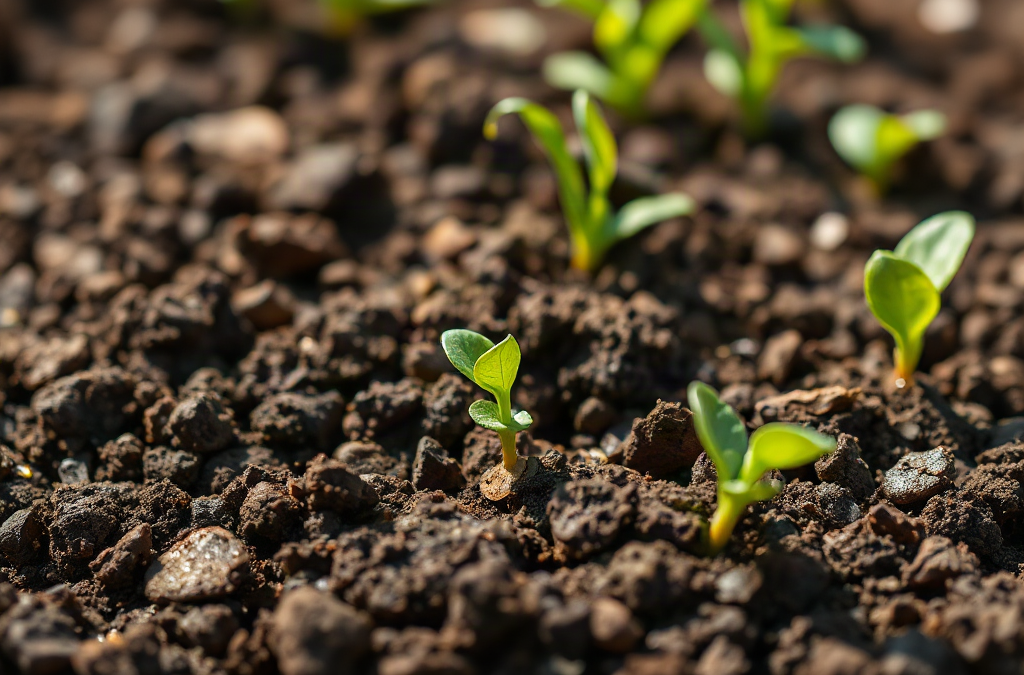
In-ground garden soil problems are best corrected by identifying whether the limiting factor is compaction, poor drainage, unsuitable pH, low organic matter, or excess salts before adding amendments. Check soil moisture and structure in several locations, review a laboratory soil test, and observe how quickly water enters and leaves the root zone. Compost can improve aggregation and water management, while lime, sulfur, or fertilizer should be used only when test results justify them. Avoid adding sand to clay by guesswork or repeatedly tilling wet ground, because both choices can leave roots with an even denser growing environment.
Separate Physical Problems From Chemical Problems
Similar plant symptoms can come from very different conditions below ground. Yellow leaves may reflect nitrogen shortage, but they can also appear when saturated soil deprives roots of oxygen. Wilting may indicate dry ground, damaged roots, compacted soil, or a root zone that is wet despite a dry-looking surface. Treating the leaf symptom without checking the ground often wastes fertilizer and may intensify the original problem.
Begin by comparing affected and healthy areas rather than judging the entire plot from one plant. Dig a narrow inspection hole near, but not through, the roots. Examine the soil at roughly 3, 6, and 12 inches deep. Notice whether it crumbles into small aggregates, breaks into hard plates, smears like putty, smells sour, or contains standing water. Roots offer useful evidence: healthy fine roots generally spread through the available layer, while roots confined to the surface or bent sideways may signal dense soil, shallow drainage, or a compacted interface.
History narrows the choices. A low spot that stays wet after rain points toward drainage or grading. A former walkway may have construction or foot-traffic compaction. A bed receiving manure, fertilizer, or wood ash every season may contain excessive nutrients or salts even though the surface looks rich. Newly imported topsoil can create an abrupt textural boundary over the native ground, causing water to pause at the interface.
Use a short diagnostic sequence before buying amendments:
- Map the pattern: note whether symptoms follow rows, slopes, paths, irrigation lines, or isolated pockets.
- Inspect moisture at root depth: a dry surface does not prove the full profile needs water.
- Test infiltration and resistance: compare how water enters and how easily a trowel or probe penetrates several locations.
- Obtain a representative soil test: combine multiple small samples from the same management area, excluding unusual spots.
This sequence separates physical limitations from chemical ones and may reveal both at once. A soil test cannot show whether a buried hardpan blocks roots, while a squeeze test cannot determine phosphorus level or lime requirement. Readers evaluating In-ground garden soil problems and correction choices should therefore pair field observations with laboratory results rather than treating either source as complete.
Check Drainage, Compaction, and Soil Structure
Drainage complaints require distinguishing slow infiltration from slow internal drainage. Crusted or compacted surfaces shed water before it enters, while dense subsoil or a naturally high water table keeps the root zone wet after water has entered. The correction differs: protecting and loosening the surface may address infiltration, but it will not lower a seasonal water table.
Observe the plot during and after ordinary irrigation or rainfall. Ponding that disappears slowly only where people walk suggests surface compaction. Saturated soil across the lowest portion of the yard suggests topography or an outlet problem. Digging a hole, filling it once, and timing the disappearance can provide a rough comparison among locations, but it is not a substitute for professional site evaluation where water approaches a foundation, sewage system, retaining wall, or neighboring property.
Compaction is easiest to address when the soil is moist enough to fracture but not wet enough to smear. A garden fork or broadfork can open a small bed with less inversion than repeated rotary tilling. Deep-rooted cover crops may gradually create channels where the season and crop rotation allow them. Neither option instantly transforms dense subsoil. Repeated traffic, especially on wet ground, can undo the work, so permanent paths and beds reachable from the sides usually matter more than annual aggressive cultivation.
Adding sand to clay is a common but unreliable shortcut. A small amount of sand does not automatically create loam; mixed in an unsuitable proportion, it may produce a dense, concrete-like mass with fewer stable pores. Organic matter is generally the more practical structure amendment because decomposing material encourages aggregation and biological activity. Mature compost is useful, but excessive yearly additions can raise phosphorus or soluble salts. A modest layer incorporated into a new bed or left near the surface in an established bed is preferable to burying large volumes deeply.
Where the native site remains wet for long periods, correction may require intercepting runoff, reshaping the grade, installing suitable drainage, or changing the planting elevation. Raised planting areas can place roots above poorly drained ground, but they do not make underlying water disappear. Drainage installations also need a lawful, functional discharge point. The sign of progress is not simply softer surface soil; look for deeper rooting, fewer puddles, faster recovery after rain, and aggregates that hold together without forming hard clods.
Correct pH and Nutrient Problems From Test Results
Soil chemistry should be corrected from measured values and crop needs, not from the assumption that every unproductive plot needs fertilizer. A reputable soil laboratory can report pH and nutrient levels and may provide amendment rates suited to the test method and regional soils. Request guidance for the crops being grown because vegetables, blueberries, turf, and ornamentals do not share one ideal reaction or fertility program.
Soil pH affects nutrient availability and microbial processes, but changing it is not instantaneous. Agricultural lime raises pH and also supplies calcium; dolomitic lime adds magnesium and should be chosen when a test indicates magnesium is needed, not merely because it is available. Elemental sulfur can lower pH through microbial conversion, which proceeds more slowly in cold conditions and varies with soil characteristics. Aluminum sulfate acts differently and can be overapplied, so it should not be treated as a casual substitute for a calculated sulfur recommendation.
Texture and buffering capacity explain why the same product rate does not produce the same change everywhere. A sandy soil with low buffering may shift relatively quickly, while a clay-rich or organic soil can require more material to move the reading. Home pH meters and color kits can help detect broad differences, but a laboratory result is a firmer basis for large or repeated applications. Test separate areas separately if they have different histories, such as an old vegetable plot, a lawn conversion, and a bed beside a concrete foundation.
Nutrient correction also demands restraint. Nitrogen may need regular replenishment because plants use it and it can move through soil, yet excess nitrogen promotes soft leafy growth at the expense of flowering or fruiting in some crops. Phosphorus and potassium may accumulate after years of routine blended fertilizer use. Adding more because plants look weak will not fix waterlogged roots, unsuitable pH, or transplant damage and may create runoff or salinity concerns.
Use the laboratory recommendation as a rate ceiling rather than rounding upward. Measure the actual bed area, calibrate the application, and keep fertilizer away from direct contact with seeds and roots unless the label specifically permits that placement. Retest after enough time has passed for the amendment to react; repeatedly checking within days encourages unnecessary additions. A useful treatment of In-ground garden soil problems and correction choices connects measured chemistry with visible root-zone conditions instead of expecting one bagged product to solve both.
Choose Amendments That Match the Root-Zone Problem
Amendment names matter less than their properties, maturity, and application rate. Compost can supply stable organic matter and modest nutrients, but batches differ according to feedstock and processing. Material that is hot, sour-smelling, visibly unfinished, or high in salts can injure seedlings or temporarily compete for nitrogen. Finished compost should have an earthy odor and a reasonably uniform texture; a product analysis is particularly useful when applying a large volume.
Organic mulch solves a different part of the problem. Leaves, straw, or arborist wood chips placed on the surface reduce crusting, moderate moisture swings, and shield soil from pounding rain. Wood chips are generally better used on top than mixed through the rooting layer. Surface decomposition concentrates most nitrogen competition at the interface, whereas incorporating fresh, carbon-rich material can temporarily reduce nitrogen availability around roots. Keep mulch away from plant crowns and avoid maintaining saturated conditions beneath an unnecessarily deep layer.
Gypsum is often marketed as a general clay loosener, but it is not a universal answer for compacted garden ground. It can be useful in particular sodic-soil situations where excess exchangeable sodium damages structure and where displaced sodium can be leached away. Without that diagnosis and adequate drainage, gypsum may add calcium and sulfate without addressing the cause. Lime is similarly misused when applied to clay solely to improve texture; its principal role is pH correction when the soil requires it.
Imported topsoil offers quick volume for reshaping or increasing planting depth, yet quality varies. Ask about texture, screening, compost content, and available test results. A very different material spread over native soil may form a sharp boundary that changes water movement and encourages shallow roots. Blending the interface during initial construction can reduce the abrupt transition, while established beds are usually better improved from the surface to avoid destroying existing structure.
The practical choice follows the diagnosis: use mature compost and mulch for gradual organic-matter and surface improvements; calculated lime or sulfur for verified pH adjustment; targeted fertilizer for documented nutrient need; and physical redesign where water has no outlet. No amendment replaces control of traffic, irrigation, or erosion. If the same symptoms return despite additions, stop applying products and reassess drainage, roots, watering volume, and the possibility that the affected plants are poorly matched to the site.
Apply Corrections Without Creating New Damage
Correction works best as a staged process because soil responds over seasons, not on a shopping schedule. Prioritize hazards and root restrictions first: contaminated fill, chronic saturation, severe erosion, or dense layers deserve attention before fine-tuning fertility. Where past land use raises concern about lead or another contaminant, use an appropriate environmental soil test and follow local public-health guidance; an ordinary fertility panel does not answer contamination questions.
For a new bed, clear perennial weeds, inspect the profile, collect the soil sample, and address grading before planting. Incorporate only amendments that need placement through the initial root zone, and do so when the ground crumbles rather than smears. After planting, shift toward surface mulch, targeted feeding, and minimal disturbance. For an established plot, digging the entire bed may sever roots and disrupt aggregates, so localized aeration and topdressing are usually less destructive.
Track a few observable indicators instead of relying on plant color alone. Record irrigation duration, rainfall, ponding time, amendment type and quantity, and crop response. Push a trowel into the same representative locations every few weeks. Improvement may appear as easier penetration, more earthworm channels, deeper fine roots, less crusting, and a wider interval between irrigation. Failure may appear as persistent sour odor, water standing below the surface, white salt crusts, harder clods, or seedlings declining shortly after amendment contact.
Budget also shapes the sensible choice. A laboratory test and one calculated correction are often less costly than repeated bags of general-purpose products. Compost made on-site reduces purchases but must be mature and may not provide a predictable nutrient rate. Mechanical work can offer fast loosening in a large new plot, yet operating equipment on wet clay causes damage that can outlast the convenience. Small plots often benefit more from permanent paths, hand tools, and phased treatment.
Reassessment closes the loop. Compare treated and untreated strips when practical, especially before applying an unfamiliar amendment across the whole area. Keep varieties, planting dates, and irrigation similar enough that the comparison means something. The broader topic of In-ground garden soil problems and correction choices becomes manageable when each intervention has a stated purpose, a measured rate, and a visible sign that determines whether to continue or stop.
Frequently Asked Questions
Can compost fix every kind of poor garden soil?
No. Mature compost can improve aggregation and moisture behavior, but it cannot correct a high water table, remove contamination, or reliably fix pH without test-based treatment.
Should sand be mixed into heavy clay soil?
Usually not without a professionally informed specification. Too little sand can create a denser mixture; organic surface inputs, traffic control, and drainage correction are generally more practical.
How often should an in-ground garden be soil tested?
Test before major correction and again after the recommended reaction period. Established beds usually need periodic testing rather than annual testing unless intensive fertilization or a known problem warrants closer monitoring.
Why does the soil stay wet even after adding compost?
The site may have dense subsoil, a perched water layer, low grading, excessive irrigation, or a high water table. Compost cannot create an outlet for trapped water.
Is tilling the fastest way to relieve compaction?
Tilling can loosen a new bed temporarily, but repeated or wet-soil tillage can damage structure and form a dense layer beneath the worked depth. Permanent paths and reduced traffic provide longer-term protection.
Conclusion
Effective correction begins with evidence gathered from the whole root zone: symptom pattern, moisture behavior, soil structure, site history, and a representative laboratory test. Address standing water, compaction, erosion, or possible contamination before refining fertility. Match each product to a documented need—mature compost for gradual organic-matter improvement, mulch for surface protection, and calculated lime, sulfur, or fertilizer for measured chemical conditions.
Make one or two changes at a time, record the rate and location, and judge progress through rooting depth, drainage, aggregation, and plant response. If water remains trapped or symptoms worsen after treatment, adding more material is unlikely to help. Recheck the diagnosis, protect the ground from wet-weather traffic, and seek local extension or qualified site guidance when drainage, contamination, or major grading exceeds routine bed management.


