
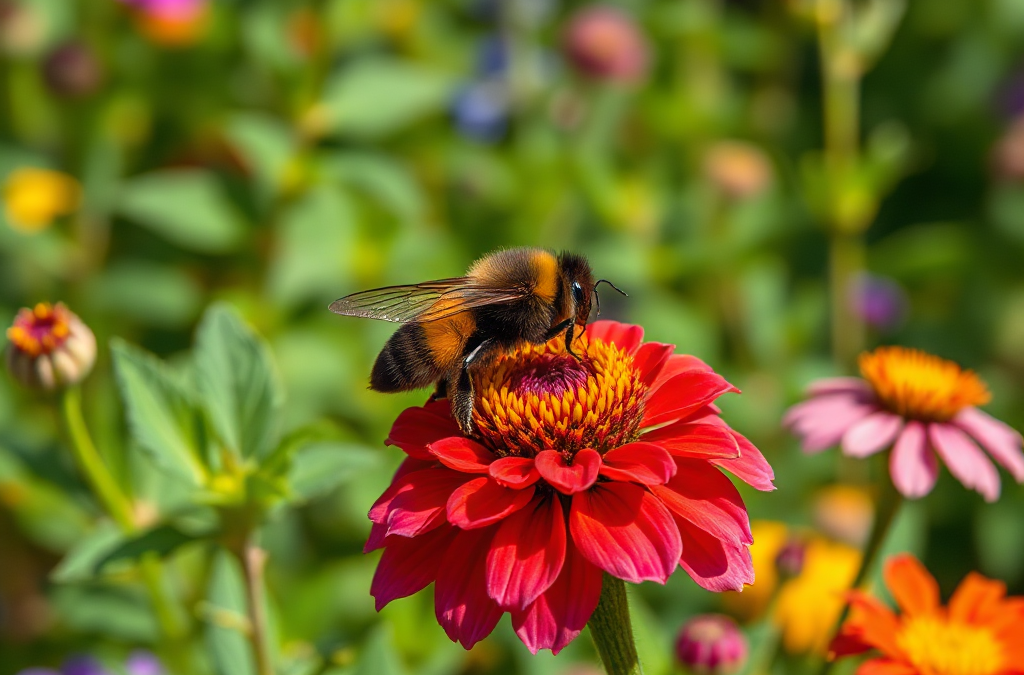
To create a pollinator-friendly garden, start by selecting a variety of native plants that bloom at different times throughout the growing season. This ensures a continuous food source for pollinators like bees and butterflies. Grouping plants in clusters rather than scattering them can enhance their attractiveness, making it easier for pollinators to find food. Additionally, avoid using pesticides to maintain a safe environment for these essential species. Incorporating water sources and providing shelter will further support pollinators, promoting biodiversity and a healthier garden ecosystem.
Choosing the Right Plants for Pollinators
Selecting the right plants is crucial for attracting and sustaining pollinators in your garden. Native plants are particularly effective as they have evolved alongside local pollinator species, providing the right nectar and pollen sources. For instance, plants like coneflowers, milkweed, and black-eyed Susans are known to attract various bee species and butterflies.
Moreover, consider the shape and color of flowers. Tubular flowers attract hummingbirds, while flat-topped flowers, like yarrow, are ideal for butterflies and bees. Aim for a variety of colors and bloom times to ensure a continuous food source from spring through fall. This diversity not only supports different pollinators but also enhances the visual appeal of your garden.
Designing Your Garden Layout
The layout of your garden can significantly impact its attractiveness to pollinators. Grouping plants in clusters rather than scattering them encourages pollinators to visit more efficiently. For example, planting a patch of lavender or sage together can create a vibrant and aromatic area that draws in bees and butterflies.
Additionally, incorporate varying heights and textures in your design. Taller plants can provide shelter for smaller species, while lower-growing plants can serve as ground cover. Creating layers in your garden not only helps attract different pollinators but also aids in managing sunlight and water effectively.
Maintenance Practices for a Thriving Pollinator Habitat
Maintaining a pollinator-friendly garden involves more than just planting. Regular watering, especially during dry spells, ensures that plants thrive and continue to produce flowers. Organic mulching can help retain moisture while suppressing weeds that compete for resources.
It’s also essential to avoid chemical pesticides, as they can be harmful to pollinators. Instead, consider natural pest control methods, such as introducing beneficial insects like ladybugs or using insecticidal soaps that target specific pests without harming pollinators. By practicing sustainable maintenance, you create a safe and inviting environment for these vital creatures.
Common Mistakes to Avoid
One common mistake gardeners make is planting non-native species that may not provide the necessary resources for local pollinators. Always research which plants are native to your area and prioritize them in your garden design.
Another pitfall is failing to provide continuous bloom times. If your garden lacks flowers during certain seasons, pollinators may look elsewhere for food. To avoid this, plan your garden to include early bloomers like crocuses and late bloomers like asters to ensure a steady food source throughout the growing season.
Frequently Asked Questions
What types of plants are best for attracting pollinators?
Native flowering plants such as coneflowers, milkweed, and black-eyed Susans are ideal for attracting various pollinators.
How can I maintain a pollinator-friendly garden?
Regular watering, organic mulching, and avoiding chemical pesticides are essential for maintaining a healthy pollinator habitat.
Why is it important to use native plants?
Native plants are adapted to local conditions and provide the right resources for local pollinators, ensuring their survival and health.
How can I provide shelter for pollinators?
Incorporate features like brush piles, native shrubs, and undisturbed areas to offer shelter and nesting sites for pollinators.
What are some common mistakes to avoid when creating a pollinator garden?
Common mistakes include planting non-native species and failing to provide continuous bloom times throughout the growing season.
Conclusion
Creating a pollinator-friendly garden requires thoughtful planning and care. By choosing native plants, designing an inviting layout, and maintaining the garden sustainably, you can provide a vital habitat for pollinators. Prioritize continuous blooms and avoid harmful chemicals to ensure a thriving ecosystem that supports these essential species. Start small, observe what works in your environment, and gradually expand your efforts to make a lasting impact on local biodiversity.


