
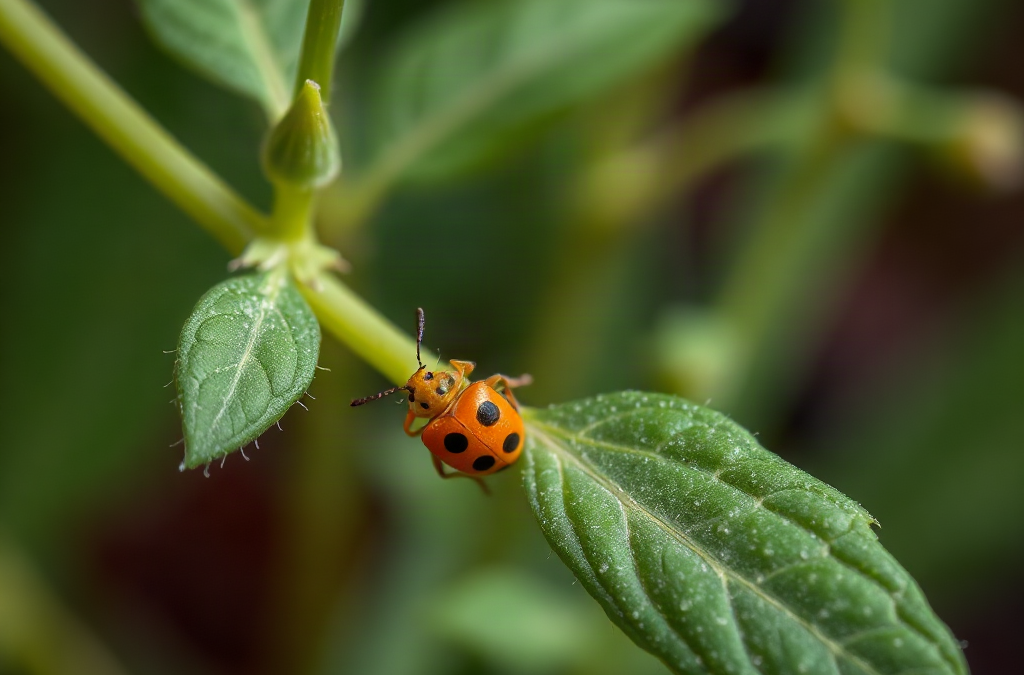
Identify aphid infestations by inspecting tender shoot tips and leaf undersides for clustered, pear-shaped insects, sticky honeydew, distorted growth, and shed white skins; treat the active colony with a strong water spray, repeated insecticidal soap applications, or a labeled horticultural oil while protecting beneficial insects. Aphids often multiply rapidly on nitrogen-rich new growth, and ants may protect them for honeydew, so control improves when both the insects and ant access are addressed. Check the same stems again after several days because eggs, hidden nymphs, or missed colonies can restart the infestation. Avoid broad-spectrum insecticides unless the damage is serious and other measures have failed.
Aphid Signs That Confirm an Infestation
Aphids are small, soft-bodied insects that cluster on plant tissue where sap is easy to reach. New shoots, flower buds, curled leaves, and the undersides of foliage deserve the closest inspection because these sheltered areas offer both food and protection. Adults may be green, black, gray, yellow, pink, or nearly translucent, so color alone is not a dependable identification feature. Their pear-shaped bodies, long legs, and slow movement are more useful clues.
Look for several signs together rather than reacting to one insect. Sticky honeydew on leaves or furniture below a plant indicates that sap-feeding insects may be present. Sooty mold can grow on that residue, turning foliage dark without being the original cause of the problem. White cast skins, distorted leaves, stunted tips, and clusters of ants moving up stems provide additional evidence. A few aphids may be incidental; a growing colony concentrated around tender growth warrants action.
Use a hand lens when the insects are tiny or when damage could have another cause. Thrips are narrower and move quickly, while spider mites are much smaller and may leave fine webbing or stippled leaves. Leaf curl caused by aphids often accompanies visible insects inside the fold, but herbicide injury, heat stress, and viral disease can produce similar distortion. Confirming the pest before spraying avoids harming beneficial insects with an ineffective product.
A practical inspection takes only a few minutes. Check the newest growth first, turn over several leaves, examine stems at leaf joints, and tap a distorted shoot over white paper. Record which plants are affected and whether the colony is localized or spread throughout the bed. That distinction matters: one isolated shoot may respond to pruning and water, whereas a widespread infestation calls for repeated monitoring and a broader treatment plan.
Why Aphids Multiply and Spread
Aphid populations can increase quickly because many species produce live young during favorable periods, allowing several overlapping generations to occupy the same plant. Winged individuals may appear when crowding, declining plant quality, or environmental conditions encourage dispersal. The result is often a sudden-looking outbreak that actually developed unnoticed inside curled leaves or dense new growth.
Soft, nitrogen-rich growth is especially attractive. Excessive nitrogen fertilization can push lush shoots that contain abundant sap, while water stress can reduce a plant’s ability to replace damaged tissue. Neither condition alone proves an infestation, but both can make the plant more vulnerable to visible injury. Aphids pierce plant tissue and remove sap; feeding may cause curling, yellowing, weakened shoots, and reduced flower or fruit development when pressure remains high.
Ants complicate control because they may collect honeydew and defend aphids from predators. An ant trail does not identify the aphid species, but it is a useful sign that natural enemies may be disturbed and that colonies could be hidden in protected locations. Reducing ant access to affected stems, while following local product labels for any ant control, can make aphid treatments more effective. Spraying aphids repeatedly without addressing a steady ant route may produce only temporary results.
Natural enemies change the treatment decision. Lady beetle larvae, lacewing larvae, hoverfly larvae, and parasitic wasps can reduce aphids without residue on edible crops. A plant covered with predators but still showing a few aphids may be moving toward balance rather than failing. The common mistake is to treat every insect cluster immediately and remove the organisms doing the control. Inspect for predator activity before choosing a product, and reserve stronger measures for sustained damage, expanding colonies, or plants that cannot tolerate continued feeding.
For broader information about plant stress and how to identify and treat aphid infestations, compare the location of symptoms with watering, fertilizing, pruning, and weather changes. A sound diagnosis considers the plant’s recent conditions, not just the appearance of one leaf.
Treatment Methods That Fit the Situation
The best first treatment for a small aphid colony is often a firm stream of water directed at shoot tips and leaf undersides. Water dislodges insects without leaving pesticide residue and is suitable for many sturdy plants. Spray early enough for foliage to dry, and avoid breaking delicate seedlings or saturating flowers. Repeat the inspection rather than assuming one pass removed every individual.
Pruning can be more efficient when aphids occupy a single curled tip or heavily infested leaf. Seal removed material in household waste instead of placing it beside the bed. This approach sacrifices a small amount of growth to protect the rest of the plant, but it is less useful when colonies cover many branches or when the plant is already sparse. Washing and pruning work best for low to moderate pressure, not for a rapidly expanding infestation hidden throughout dense foliage.
Insecticidal soap and horticultural oil may help when direct contact reaches the aphids. These products do not generally provide lasting protection after the spray dries, so thorough coverage and follow-up applications according to the label are more important than a single heavy treatment. Test a small area first, particularly on tender seedlings, hairy leaves, herbs, or plants exposed to heat. Do not mix products or increase concentration beyond the label; stronger is not automatically more effective and may burn foliage.
Choose between soap and oil based on the plant, weather, and location of the colony. Soap is useful for exposed soft-bodied insects but can injure stressed foliage. Oil may reach sheltered insects more effectively when applied correctly, yet heat, drought, and certain sensitive plants raise the risk of damage. Apply only when label directions allow, avoid open flowers when pollinators are active, and keep sprays off ponds or other aquatic environments if the label warns against it.
Broad-spectrum insecticides should not be the default response. They may kill aphid predators and pollinators, leave residues that require harvest intervals, and fail to reach insects concealed in curled leaves. If a product is necessary, identify the active ingredient, read the crop and pest directions, observe protective equipment and re-entry instructions, and follow the stated interval before eating treated produce. Organic labeling does not eliminate the need for careful application. Chemical control is a tool, not a substitute for diagnosis and monitoring.
A compact treatment sequence is usually more reliable than a single dramatic spray:
- Confirm aphids and map the affected shoots.
- Remove isolated colonies or dislodge them with water.
- Protect visible predators and reduce ant access where practical.
- Use a labeled contact product only if colonies persist or damage is increasing.
- Recheck new growth and leaf undersides after the product’s required interval.
Follow-Up Care and Long-Term Prevention
Follow-up determines whether treatment worked. Count or estimate aphid clusters on the same few shoots before and after treatment, and inspect new growth for fresh colonies. Yellowed or curled leaves may not recover even after aphids are gone; healthy, undistorted growth is a better sign of improvement than the appearance of old foliage. Treatment is failing when live insects remain numerous, new tips become distorted, or ants continue rebuilding colonies in protected areas.
Do not fertilize heavily in response to aphid damage. A flush of tender growth can provide more feeding sites and make the infestation harder to contain. Water deeply when the plant needs it, improve airflow by removing crowded or damaged material, and correct severe nutritional or root problems separately. These measures support recovery but do not kill an active aphid colony, so they should accompany inspection rather than replace it.
Prevention is mainly an observation habit, not a promise that aphids will never return. Examine susceptible plants when new growth emerges, especially after pruning or fertilizing. Keep weeds from serving as nearby hosts, avoid unnecessary nitrogen, and use flowering plants that provide food and shelter for beneficial insects. Physical barriers may help young plants, although covers must be removed or managed for pollination and ventilation when appropriate.
Plant selection also changes the consequences of an outbreak. A vigorous established shrub may tolerate light feeding, while a seedling, transplant, or heavily harvested leafy crop may need quicker intervention. Treating every aphid sighting can create more ecological disruption than the insects themselves, but ignoring a colony on a small pepper transplant can result in repeated leaf distortion and slowed establishment. Match the response to plant age, damage, colony growth, and the value of the crop.
Use how to identify and treat aphid infestations as a repeatable garden task: inspect, confirm, choose the least disruptive effective measure, and verify the result. If symptoms persist after aphids disappear, investigate disease, nutrient imbalance, herbicide drift, or root stress instead of continuing pesticide applications. That shift prevents a misdiagnosis from becoming a second plant problem.
Frequently Asked Questions
How can I tell aphids from other small garden insects?
Aphids usually have pear-shaped bodies, long legs, and clusters on tender growth or leaf undersides. Honeydew, shed white skins, leaf curling, and ant activity strengthen the identification.
Will a water spray eliminate an aphid infestation?
A strong spray can remove many exposed aphids, especially on sturdy plants, but it may miss insects in curled leaves. Reinspect new growth and repeat the treatment when live colonies remain.
Can I use insecticidal soap on edible plants?
Use only a product labeled for the specific crop and pest, and follow its application and harvest directions. Test sensitive foliage first and avoid treating stressed plants during unsuitable heat.
Why are ants appearing with aphids?
Ants may collect honeydew and protect aphids from predators. Reducing ant access can support control, but ant management must follow appropriate product labels and should not replace treating the aphids.
Should I remove leaves damaged by aphids?
Remove severely infested leaves or shoot tips when the problem is localized. Leave lightly damaged foliage if it is still functioning, because old damage may remain after the colony has been controlled.
Conclusion
Reliable aphid control begins with confirmation: inspect tender shoots, leaf undersides, sticky residue, and nearby ants before choosing a treatment. Small colonies may respond to pruning or a careful water spray, while persistent infestations may justify labeled insecticidal soap or horticultural oil applied with complete coverage. Protect lady beetles, lacewings, hoverfly larvae, and other beneficial organisms whenever possible, since unnecessary broad-spectrum spraying can remove useful control. Recheck the same plants after treatment and judge success by fewer live aphids and healthier new growth, not by whether old curled leaves straighten. Adjust watering and fertilization, remove nearby host weeds, and treat seedlings more promptly than established plants. If symptoms continue after aphids are gone, reassess the diagnosis rather than escalating pesticides.


