
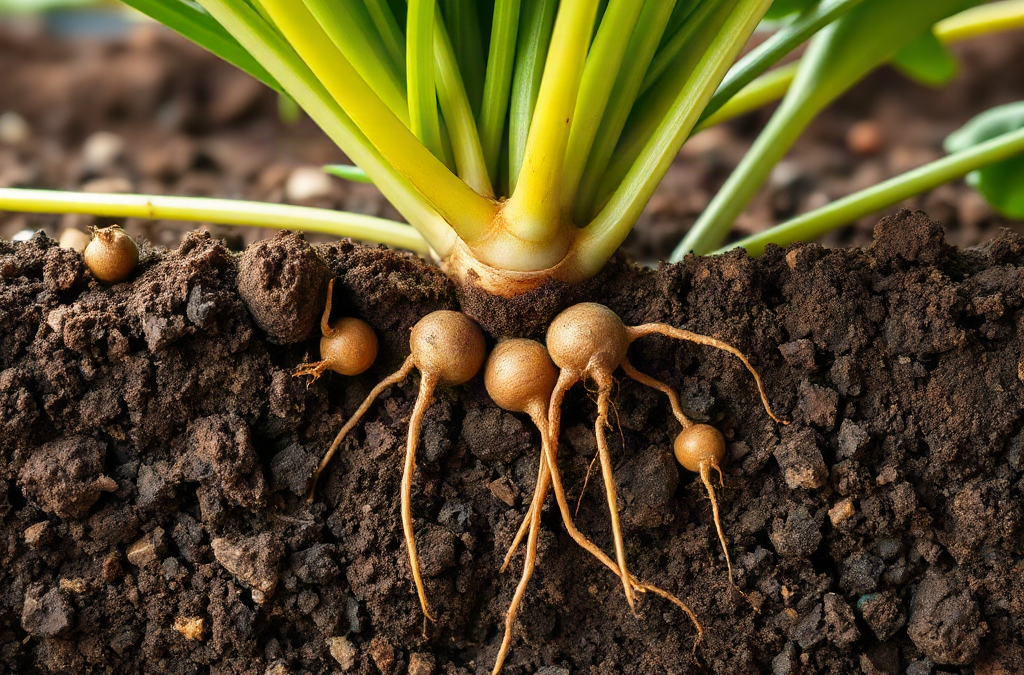
Encourage healthy root development in vegetables by giving roots loose, well-drained soil, steady moisture, moderate fertility, and enough room to expand. Work mature organic matter into compacted ground, water deeply enough to moisten the active root zone, and let the surface dry slightly between irrigations rather than keeping it saturated. Adequate oxygen is essential because waterlogged soil restricts respiration and can promote root decay, while excessive fertilizer may produce weak top growth and salt stress. Transplant with minimal disturbance, protect young plants from temperature extremes, and use mulch to reduce moisture swings. Check progress through new growth, firm stems, and evenly moist soil instead of relying only on leaf size.
Build A Root-Friendly Growing Environment
Healthy vegetable roots need a soil environment that holds moisture while still allowing air movement. Roots absorb water and minerals through fine branches near the soil surface, but those delicate structures cannot function well in either hard, sealed ground or permanently wet soil. Before planting, inspect the bed by digging a small hole. Soil that crumbles into small aggregates is easier for roots to enter than soil that forms dense slabs or sharp clods.
Improve structure with mature compost, leaf mold, or another stable organic amendment suited to the soil. Mix amendments through the planting zone rather than creating a narrow pocket of rich material around each transplant. A highly different pocket can hold water unevenly and may discourage roots from moving outward. Compost is not a substitute for drainage, and adding large amounts of unfinished material can temporarily tie up nitrogen or compete with seedlings for moisture.
Raised beds can help where native ground drains slowly, but their advantage comes from improved structure and water management, not from height alone. A raised bed filled with fine, compacted material can still stay airless. In sandy ground, organic matter can improve water retention; in heavy clay, broad, shallow incorporation and careful avoidance of wet digging can protect pore spaces. Working clay while it is sticky often creates long-lasting compaction.
Crop choice also affects root success. Carrots, parsnips, and other taprooted vegetables need a deep, stone-free zone, while lettuce and many herbs can grow in a shallower layer. Bush beans and squash need lateral room, and densely planted onions compete quickly for moisture and nutrients. Match bed preparation to the crop instead of treating every vegetable as if it has the same root architecture.
A practical starting checklist is simple:
- Remove large stones, woody debris, and compacted layers from the intended root zone.
- Confirm that excess water can leave the bed after heavy rain.
- Use finished organic matter, not fresh manure, around food crops.
- Leave enough spacing for roots as well as leaves.
Readers comparing bed preparation methods can use how to encourage healthy root development in vegetables as a reference point, but the best amendment depends on texture, drainage, and the crop being grown.
Balance Water, Drainage, And Oxygen
Water management is often the fastest way to change root performance because roots require both moisture and oxygen. Frequent shallow sprinkling can keep only the uppermost layer damp, encouraging a limited root system that dries quickly. Deep, slower irrigation generally wets a broader zone, although the exact amount depends on soil texture, rainfall, container size, and plant maturity.
Test the bed rather than watering by calendar alone. Push a finger into the soil near, but not directly against, a plant or use a narrow trowel to examine several inches down. If the soil is dry throughout the active root zone, irrigate thoroughly. If it is glossy, muddy, or sour-smelling, pause watering and investigate drainage. Mulch can reduce evaporation, but it should be kept slightly away from stems so persistent dampness does not encourage disease.
Different soils require different intervals. Sandy soil may need smaller, more frequent applications because water moves through quickly. Clay soil may need longer pauses because it stores water and drains slowly. A timer can provide consistency, but it should not override rainfall or a blocked outlet. Container vegetables are especially vulnerable to rapid drying, while containers without adequate drainage holes can remain saturated even when the surface looks dry.
Overwatering is not simply a problem of too much water; it is a shortage of air-filled pore space. Roots under oxygen stress may stop producing fine growth, and damaged roots can make foliage wilt even when the soil is wet. That confusing symptom often leads gardeners to add still more water. Check the root zone first, and correct drainage or irrigation frequency before applying fertilizer.
For new seedlings, gentle moisture is preferable to forceful streams that expose roots or wash soil away. For established tomatoes, peppers, and eggplants, a deep soaking followed by partial drying is usually more useful than repeated surface misting. The goal is not drought stress; it is a stable cycle in which roots receive water, air, and time to expand.
Use Nutrition Without Forcing Weak Growth
Roots need access to essential nutrients, but more fertilizer does not automatically create a stronger root system. Excess soluble fertilizer can raise salt levels around roots, draw water away from root cells, and stimulate lush foliage that the existing root system cannot adequately support. A soil test is more reliable than guessing from leaf color, particularly in beds that receive regular compost or manure.
Phosphorus is commonly marketed as a root-building shortcut, yet adding it without a documented need can create nutrient imbalance and environmental runoff. Root development depends on the whole growing environment: adequate moisture, oxygen, temperature, carbohydrate supply from leaves, and balanced mineral availability. A deficient soil may benefit from a targeted amendment, but a fertile soil usually benefits more from sound watering and structure than from extra bloom or transplant fertilizer.
Use a complete, labeled fertilizer only when the crop and soil justify it. Follow the product rate; concentrated granules placed against a stem can injure young roots. Slow-release products may reduce the risk of a sudden salt surge, while diluted liquid feeds can be useful for container crops that lose nutrients through repeated watering. Neither approach compensates for a potting mix that stays saturated.
Consider the crop’s growth stage. Seedlings need modest nutrition because their root systems are small. Once plants establish active foliage, roots and shoots develop together, and a balanced feeding plan may be appropriate. Heavy nitrogen feeding on young tomatoes, for example, can produce large leaves without proportionate root establishment, especially when light is limited. A plant that grows quickly above ground is not necessarily building durable below-ground capacity.
Organic inputs also have limits. Compost contributes nutrients gradually and improves biological activity, but its nutrient content varies. Fresh manure can burn roots and may introduce unwanted contaminants, so it should not be treated as an immediate planting fertilizer. Use a tested soil result, observe growth over time, and make one measured change rather than layering several products at once. That approach makes it easier to identify whether the response came from nutrition, water, or improved soil structure.
Protect Roots During Planting And Early Growth
Transplanting can temporarily reduce root function because fine roots are easily torn, dried, or compressed. Handle seedlings by the leaves or root ball rather than the stem, and plant them into moist—not waterlogged—soil. Set the root ball at the appropriate depth for the crop, firm the surrounding soil lightly, and water around the planting area to close large air gaps without packing the bed hard.
Some vegetables tolerate deeper planting than others. Tomatoes can often form additional roots along a buried stem, whereas burying lettuce crowns or placing peppers far below their original level may invite stem problems. Follow crop-specific depth guidance instead of assuming that every transplant should be planted deeply. Seedlings grown in small cells may also become root-bound; gently loosening circling roots can help, but aggressively tearing a compact root mass creates unnecessary injury.
Direct-sown crops avoid transplant shock but face their own risks. A crusted soil surface can block emergence, and heavy rain may expose or relocate seeds. Covering the seedbed with a thin layer of fine material and maintaining even moisture during germination supports early root anchoring. Once seedlings emerge, thinning is not wasted space: crowded plants compete for water and produce poorly developed root zones.
Temperature and physical disturbance matter during establishment. Cold soil can slow root activity in warm-season vegetables, while hot, dry soil can desiccate newly planted roots before they reconnect with surrounding soil. A light organic mulch, shade during an unusually hot transplant window, and protection from foot traffic can reduce these stresses. Avoid cultivating close to established plants; shallow hoeing can sever fine feeder roots even when the foliage appears unaffected.
A useful comparison is between speed and resilience. A heavily fed, tightly spaced planting may look impressive early, but a moderately nourished crop with room to root often handles brief heat or watering delays better. Inspect plants several days after planting for new leaves, upright growth during normal temperatures, and soil that remains evenly moist without staying muddy. Those signs are more informative than a dramatic first flush of foliage.
Diagnose Root Problems And Adjust The Plan
Weak top growth can result from poor roots, but the visible symptom does not identify the cause by itself. Yellow leaves may reflect nutrient shortage, cold soil, root injury, or excess water. Wilting in wet soil points toward impaired root function rather than a simple need for irrigation. Stunting in one section of a bed may indicate compaction or uneven drainage, while uniform stunting across the bed suggests a broader issue such as temperature, fertility, or planting stress.
When a plant is failing, examine the soil before reaching for a product. Check moisture several inches down, smell for stagnant conditions, look for a dense layer below the surface, and compare affected plants with healthy ones. If practical, lift a weak seedling carefully. Healthy roots are generally firm and associated with soil that is moist but not soupy; dark, soft, or sparse roots deserve attention, although root appearance varies by species and age.
Correct one limiting condition at a time. If water is pooling, improve the outlet, reduce irrigation, or relocate future crops rather than adding fertilizer. If the soil is compacted, avoid digging around fragile established roots and improve the bed between crops. If spacing is tight, remove weaker plants early instead of trying to compensate with extra feeding. If a container dries daily, a larger container or moisture-retentive mix may be more effective than repeated emergency watering.
Keep a brief record of planting dates, rainfall, irrigation, amendments, and symptoms. A pattern may emerge: roots failing after every heavy storm suggests drainage, while problems appearing only in small pots suggest volume or watering frequency. University extension services and government horticultural resources can help interpret crop-specific symptoms, but avoid diagnosing from a single photograph or treating every wilt as disease.
Use the same measured approach when planning the next bed with how to encourage healthy root development in vegetables. Prioritize physical conditions first, then water, then nutrition. Root growth is difficult to rescue when the surrounding soil remains compacted, airless, or repeatedly allowed to swing from saturated to bone-dry.
Frequently Asked Questions
Does compost directly make vegetable roots grow faster?
Compost may improve structure, moisture retention, and nutrient availability, but its effect depends on the starting soil. Mature compost cannot correct standing water or severe compaction by itself.
How often should vegetables be watered for strong roots?
Water when the active root zone begins to dry, then irrigate deeply enough to wet that zone. Frequency varies with soil, weather, crop size, and whether plants grow in containers.
Can root growth be improved with phosphorus fertilizer?
Only apply phosphorus when a soil test or crop recommendation indicates a need. Extra phosphorus does not reliably improve roots in already fertile soil and can create nutrient-management problems.
Should roots be loosened when transplanting vegetables?
Gently separate severely circling roots, but avoid tearing a healthy root ball apart. Handle seedlings carefully, plant at the correct depth, and water the surrounding soil to support reconnection.
Why are plants wilting even though the soil is wet?
Waterlogged soil can displace oxygen and damage roots, leaving plants unable to absorb water normally. Check drainage, pause irrigation, and inspect roots before adding more water or fertilizer.
Conclusion
Strong vegetable roots come from a workable balance rather than a single additive. Prepare soil that roots can penetrate, preserve air space, water according to actual moisture conditions, and feed only when the crop or soil indicates a need. Transplant gently, space plants for below-ground competition as well as foliage, and protect new plantings from drying, flooding, and unnecessary cultivation. When growth falters, inspect the root zone before assuming the plant needs fertilizer. A small record of irrigation, rainfall, amendments, and symptoms can reveal recurring problems and prevent repeated guesswork. Prioritize drainage and structure first, then stabilize moisture and refine nutrition; those decisions usually determine whether roots continue expanding through the season.
Further Reading
Authoritative Sources
- USDA FoodData Central
fdc.nal.usda.govOfficial food composition and nutrient data.
- CDC Nutrition
cdc.govOfficial public-health nutrition guidance and data.
- MedlinePlus Health Information
medlineplus.govConsumer health information from the U.S. National Library of Medicine.
- NIH Office of Dietary Supplements
ods.od.nih.govEvidence-based fact sheets about vitamins, minerals, supplements, and nutrition.


