
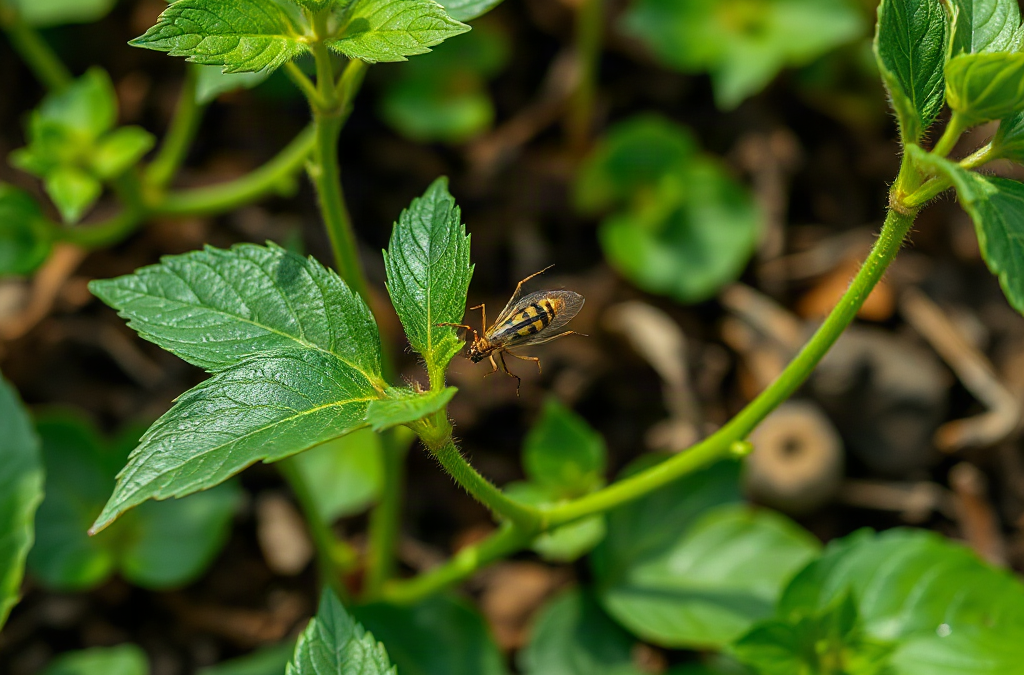
Manage garden pests naturally by identifying the pest first, checking whether damage is increasing, and using the least disruptive control that can protect the plant. Remove affected leaves or insects by hand, block access with row covers or collars, and improve airflow, watering, and plant spacing so vulnerable growth is less inviting. If damage continues, choose a targeted treatment such as insecticidal soap, horticultural oil, or Bacillus thuringiensis that matches the pest and life stage. Protect pollinators and beneficial insects by treating only infested plants, avoiding open flowers, and following the product label rather than spraying the entire garden.
Identify the Pest Before Taking Action
Accurate identification prevents wasted treatments and unnecessary harm to helpful insects. A chewed leaf does not reveal enough on its own: caterpillars, beetles, slugs, grasshoppers, and leafcutter bees can all remove plant tissue, yet they require very different responses. Look at the shape of the injury, the affected plant parts, the time when damage appears, and any insects, eggs, droppings, webbing, slime trails, or shed skins nearby.
Inspect both sides of leaves, the points where leaves meet stems, flower buds, and the top inch of soil around the plant. Early morning is useful for finding sluggish beetles and caterpillars, while an evening inspection with a flashlight may reveal slugs, snails, and earwigs. Place a sheet of light-colored paper beneath a branch and tap it gently; tiny beetles, thrips, or mites may fall where they are easier to see.
Different feeding patterns provide valuable clues. Aphids usually gather on tender shoots and leaf undersides, where they remove sap and may leave sticky honeydew. Flea beetles make numerous small holes, particularly in young brassica, eggplant, and radish leaves. Cutworms sever seedlings near soil level. Slugs create irregular holes and rasped surfaces, often accompanied by shiny trails. Tomato hornworms remove large amounts of foliage and leave conspicuous dark droppings below their feeding sites.
Do not assume every unfamiliar insect is destructive. Lady beetle larvae, lacewing larvae, ground beetles, hoverfly larvae, and many small wasps prey on or parasitize pests. A caterpillar on a damaged plant may be responsible, but a wasp visiting that caterpillar may be part of the solution. Photograph an unknown specimen and compare it with images from a regional university extension service, paying attention to life stage because larvae and adults can look unrelated.
Plant disorders can also imitate insect injury. Drought, nutrient imbalance, herbicide drift, sunscald, and fungal or bacterial diseases may produce curling, spots, yellowing, or distorted growth. Spraying these problems with an insect product adds stress without addressing the cause. A sound approach to how to manage garden pests naturally begins with confirming that a pest is present and identifying the stage that is actually causing damage.
Decide Whether the Damage Requires Control
Visible injury does not automatically justify intervention. Established plants often tolerate a modest loss of leaf area without losing vigor or yield, while seedlings and newly transplanted crops have little tissue to spare. The practical question is whether the pest population and damage are stable, declining, or increasing fast enough to threaten the part of the plant being grown.
Mark several representative plants and check them every two or three days. Record the number of affected leaves, insects, egg clusters, or damaged fruits. This simple comparison is more useful than reacting to a single ragged leaf. New growth that remains healthy while older damage stays unchanged suggests the problem has passed or predators are catching up. Expanding colonies, fresh holes, wilting shoots, or damage moving toward flowers and fruit indicate that control should be considered.
Plant value and growth stage change the decision. A few holes in mature kale leaves may be cosmetic, especially when the damaged portions can be trimmed. The same feeding on a row of newly emerged seedlings could destroy the planting. Aphids on a vigorous nasturtium may be tolerated while predators arrive, but aphids deforming the growing tip of a young pepper deserve closer attention. Damage to an ornamental leaf also has different consequences from tunneling inside an edible fruit.
Use a compact decision check before treating:
- Confirm: Is the organism present, and does its feeding match the injury?
- Trend: Is fresh damage appearing between inspections?
- Risk: Is the plant young, stressed, or approaching harvest?
- Natural control: Are predators, parasitized pests, or diseased pest bodies visible?
- Reach: Can hand removal or a barrier solve the problem without spraying?
A common failure is applying broad treatments at the first sign of damage. Even products marketed as natural may kill non-target insects or disrupt predators that provide continuing control. Waiting indefinitely is the opposite mistake; rapidly multiplying pests can become difficult to manage once leaves curl around aphid colonies or caterpillars enter stems and fruit. Monitoring creates the middle path: tolerate damage that plants can carry, but act while a targeted method can still reach the pest.
Use Physical and Cultural Controls First
Physical removal and exclusion usually offer the most selective response because they address the pest without leaving a treatment on every plant. Handpick caterpillars and beetles into a container of soapy water, pinch off leaves carrying concentrated egg masses, and dislodge aphids from sturdy plants with a firm stream of water. Repeat inspections matter because eggs may hatch after the first cleanup.
Fine insect netting or floating row cover protects vulnerable crops before pests arrive. It is particularly useful over young brassicas against cabbage butterflies and over radishes or arugula where flea beetles are persistent. Seal the edges with soil, boards, or weights; a gap at ground level turns the cover into a protected enclosure for insects. Covers must be removed or opened when insect-pollinated crops flower unless pollinators are introduced beneath them. They also trap heat, so monitor covered beds during warm weather.
Collars around seedling stems can block cutworms, while copper barriers or dry, abrasive surroundings may reduce slug movement in limited areas. Traps are better for monitoring than for solving every infestation. Yellow sticky cards can reveal incoming whiteflies or fungus gnats, but outdoors they may also capture small beneficial insects. Beer traps collect some slugs yet rarely protect a large bed unless hiding places and moisture conditions are addressed as well.
Cultural adjustments remove the conditions pests exploit. Water soil rather than foliage when practical, and irrigate early enough for wet leaves to dry. Space and prune plants to improve air movement without stripping away excessive foliage. Remove badly infested plant material, fallen fruit, crop residue harboring larvae, and weeds that sustain pests near the bed. Put actively infested material in municipal green waste where accepted or dispose of it securely rather than moving live pests into a cool compost pile.
More fertilizer is not a pest remedy. Excess nitrogen can produce soft, succulent growth that is attractive to aphids and other sap feeders. Stressed plants are vulnerable too, so the better target is steady growth supported by appropriate watering and soil fertility. When considering how to manage garden pests naturally, choose the smallest workable intervention first. A covered seedling row or ten minutes of handpicking often gives more reliable control than repeatedly treating an entire mixed planting.
Choose Natural Treatments That Match the Pest
Natural pesticides work only when their active ingredient, coverage, and timing match the target. “Natural” does not mean harmless, pollinator-safe, or suitable for every edible plant. Read the label to confirm the crop and pest are listed, follow mixing and reapplication directions, observe harvest intervals when stated, and wear the specified protective equipment.
Insecticidal soap is most useful against exposed, soft-bodied pests such as aphids, whitefly nymphs, and spider mites. It works through direct contact and has little effect after it dries, so coating the insects—including colonies under leaves—is more important than soaking the soil. Test a small portion of a sensitive plant first because heat, drought stress, or an overly concentrated mixture can cause leaf injury. Homemade dish-detergent sprays have uncertain concentrations and may contain degreasers or fragrances that damage plant tissue.
Horticultural oils, including some plant-derived oils, smother exposed insects and eggs when coverage is thorough. They may help with scales, mites, whiteflies, and aphids, depending on the label. Avoid applying oils to drought-stressed plants or during unsuitable temperatures, and do not combine them casually with sulfur products because plant damage may result. Neem products vary in active ingredients and labeled uses; the product directions, not the shared “neem” name, determine how each should be used.
Bacillus thuringiensis var. kurstaki, commonly called Bt, targets caterpillars that eat treated foliage. Young larvae are easier to control than large ones, and sunlight and rain reduce residues, so timing and renewed coverage may be necessary. Bt does not distinguish between a vegetable pest caterpillar and a desirable butterfly larva feeding on treated leaves. Apply it only to affected crops rather than nearby host plants used by non-pest species.
Iron phosphate slug baits can be a practical option when sanitation, hand collection, and barriers are insufficient. Use the labeled amount and store the package away from children and animals. Diatomaceous earth loses effectiveness when wet and can injure small insects that contact the dust, making it a poor fit for damp slug habitat or flowering areas. Botanical insecticides such as pyrethrins can affect a broad range of insects despite their natural origin, so they should not be the default substitute for precise identification and lower-impact controls.
Spray drift and pollinator exposure are reduced by treating calm conditions, directing material at infested tissue, and avoiding open flowers. Stop and reassess if live pest numbers and new injury do not decline after the label’s expected treatment window. Failure often means the organism was misidentified, the wrong life stage was targeted, or coverage did not reach concealed insects—not that a stronger mixture is needed.
Build a Garden That Keeps Pest Pressure Lower
Long-term suppression comes from making outbreaks less likely and easier to detect, not from trying to eliminate every insect. Plant diversity, suitable spacing, clean planting material, and consistent observation reduce the chance that one pest will move unnoticed through a large block of identical, stressed plants.
Provide season-long flowers with accessible nectar and pollen for hoverflies, lacewings, predatory wasps, and other beneficial insects. Small-flowered plants such as sweet alyssum, dill, cilantro, and yarrow can fit near food beds, but flowering plants are habitat rather than an instant cure. Predators need time to find prey, and purchased beneficial insects may disperse if the site lacks shelter, water, or an established food supply.
Rotate annual plant families when space permits, particularly when a pest spends part of its life in soil or residue. Rotation has limits in a small yard because mobile insects can cross a few feet easily, and nearby wild or cultivated host plants may maintain the population. Resistant cultivars, healthy transplants, and adjusted planting dates may be more effective against locally recurring problems. Keep notes on the crop, pest, first appearance, weather, and successful control so next season’s protection can begin before damage escalates.
Companion planting is often oversold as a dependable repellent system. Interplanting can diversify habitat and make monitoring easier, but placing one aromatic herb beside a crop should not replace netting, sanitation, or direct observation. Likewise, marigolds do not form a universal barrier against insects and soil pests. Choose companion plants for documented site benefits, bloom resources, or efficient use of space rather than expecting them to repel every threat.
Signs of a healthier pest balance include stable damage, fewer live pests at successive checks, new leaves expanding normally, and predators appearing near colonies. Warning signs include repeated outbreaks on the same crop, increasing injury despite treatment, declining plants, and the disappearance of beneficial insects after broad spraying. A seasonal record turns how to manage garden pests naturally from reactive treatment into prevention based on the pests and conditions actually present.
Frequently Asked Questions
What is the fastest natural way to remove garden pests?
For a small infestation, handpicking, pruning heavily infested leaves, or spraying aphids from sturdy plants with water usually works fastest. Recheck the plants for several days because missed eggs and concealed insects can restore the population.
Does soapy water kill pests without harming plants?
A labeled insecticidal soap can control exposed soft-bodied insects, but it may injure sensitive or stressed plants. Test a small area and follow the label. Household dish detergent is not an equivalent substitute and can damage protective leaf surfaces.
Should damaged leaves always be removed?
Remove leaves when they contain concentrated eggs, larvae, mines, or severe disease-like deterioration. Keep partly damaged leaves that remain green and pest-free because they still photosynthesize; excessive pruning can weaken the plant more than minor feeding.
How can natural pest treatments protect bees?
Avoid spraying open flowers, treat only infested plants, apply during calm periods when bees are not foraging, and choose a product specific to the target pest. Covering blooms does not justify using a product contrary to its label.
Why do garden pests return after treatment?
Eggs may hatch later, adults may arrive from nearby hosts, or the treatment may not reach insects under leaves or inside curled growth. Reconfirm the pest, inspect its hiding places, and correct favorable conditions before repeating a control.
Conclusion
Effective natural pest management depends on precision rather than the number of remedies applied. Identify the organism and feeding pattern, track whether fresh injury is spreading, and account for the plant’s age and ability to tolerate damage. Favor hand removal, exclusion, sanitation, and better growing conditions before selecting a pesticide. When a treatment is warranted, match its active ingredient to the pest and life stage, follow the label, and limit exposure to flowers and beneficial insects. Start a simple inspection record now: note affected crops, photograph the damage, and check the same plants again within several days. Those observations will show whether the population is declining, whether another tactic is justified, and which preventive measure should be in place before the next vulnerable crop is planted.


