
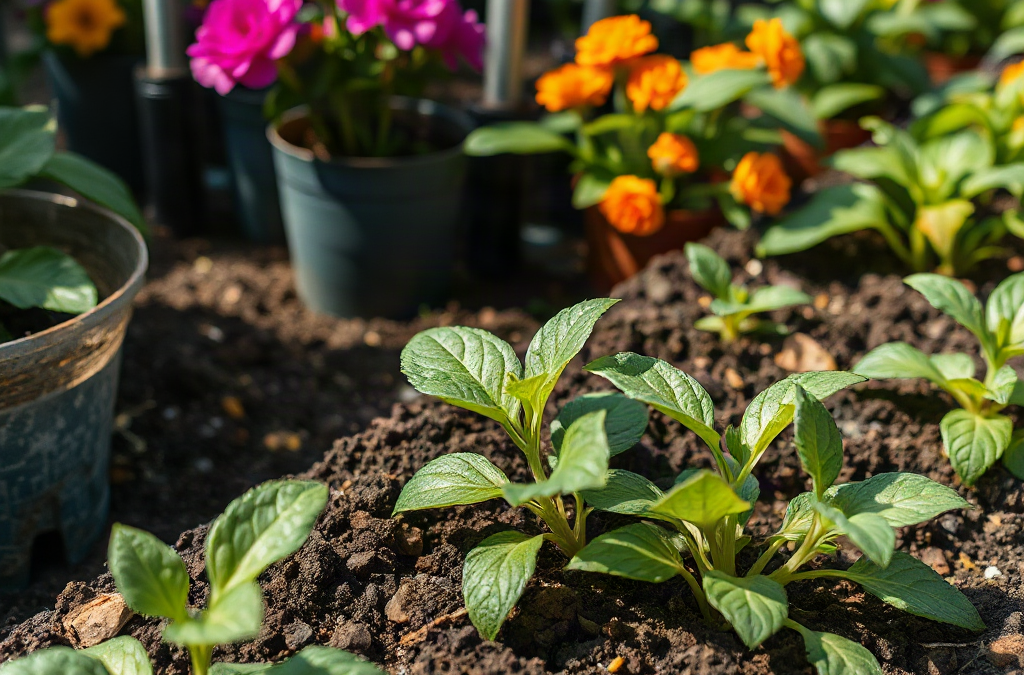
When plants are wilting in the heat, check the soil several inches below the surface before watering, then give the root zone a slow, thorough soak if it is dry. Temporary afternoon drooping can occur even in moist soil because leaves are losing water faster than roots can replace it, so extra irrigation may cause waterlogged roots rather than relief. Reduce stress with temporary afternoon shade, undisturbed roots, and a two- to three-inch mulch layer kept away from stems. Recheck leaves after sunset or early the next morning; continued wilting, scorched tissue, or wet soil points to root trouble, disease, or lasting heat damage.
Decide Whether the Plant Actually Needs Water
Heat-related wilting is not automatic proof that the soil is dry. On a hot, bright afternoon, leaves may lose moisture through transpiration faster than roots can replace it. The plant responds by lowering leaf pressure, and broad or tender leaves droop even though usable moisture remains around the roots. Squash, cucumber, hydrangea, and other large-leaved plants can show this temporary response dramatically.
Check moisture below the exposed surface rather than judging by its color. Push a finger, narrow trowel, or wooden probe two to four inches into the soil, taking care not to cut close to the main stem. Water is appropriate when the root-zone soil feels dry or barely damp and the probe comes out mostly clean. If the soil feels cool and distinctly moist, delay irrigation and reassess after the strongest sun has passed.
Container plants need closer attention because a limited volume of potting mix heats and dries rapidly. Lift a manageable pot to compare its weight with the weight after watering, or test through a drainage hole as well as from the top. A crusted surface can hide moist mix underneath, while peat-based mix that has become extremely dry may shrink from the pot and allow water to run down the sides without wetting the root ball.
Timing helps separate temporary heat response from damaging dehydration. A plant that droops at 3 p.m. but looks firm again after sunset or by early morning is regulating water loss and may not need emergency watering. A plant that begins the morning wilted, develops crisp leaf edges, or remains limp overnight deserves prompt investigation. Newly transplanted seedlings and shallow-rooted annuals have less capacity to reach deeper moisture, so the same heat that an established shrub tolerates may injure them.
A common mistake is repeatedly sprinkling every wilted plant during the hottest part of the day. This keeps the upper inch damp while leaving deeper roots dry, and it may encourage a shallow root system. The first priority in what to do when your plants are wilting in the heat is therefore diagnosis: compare soil moisture, time of day, container weight, and overnight recovery before adding more water.
Water the Root Zone Without Creating New Problems
Dry root-zone soil calls for slow, concentrated watering rather than a quick shower over the foliage. Apply water near the base over the area occupied by roots, allowing it to soak in before adding more. The aim is to moisten the active root zone evenly, not merely darken the surface or create runoff. A watering wand set to a gentle flow, drip line, or soaker hose offers better control than a forceful spray.
Morning is usually the most useful routine watering time because soil can absorb moisture before peak heat while wet foliage has time to dry. A severely dehydrated plant should not be left struggling until the next morning, however. Water the soil promptly if it is genuinely dry, even later in the day, while avoiding unnecessary leaf wetting. Waiting for an ideal schedule matters less than restoring moisture to a dry root ball.
Work in cycles when water beads, runs downhill, or escapes from a container immediately. Apply a small amount, pause while the dry medium absorbs it, and repeat until moisture reaches deeper layers. For a potted plant with badly shrunken mix, slow watering from several points may rewet it more evenly. Confirm the result with a probe or by checking moisture through a drainage opening; runoff alone does not prove that the center of the root ball is wet.
The appropriate volume varies with plant size, soil texture, root depth, weather, and drainage, so a fixed number of minutes is unreliable. Sandy soil accepts water quickly but loses it sooner. Clay-rich soil absorbs more slowly and can remain saturated if watered again before oxygen returns to the pores. Raised beds and fabric pots may dry faster than in-ground beds, while plastic or glazed pots generally retain moisture longer than porous terracotta.
Do not fertilize a wilted plant as an emergency treatment. Fertilizer does not correct rapid water loss, and concentrated salts around stressed or dry roots can worsen injury. Avoid repotting, root pruning, or heavy cultivation during the heat event for the same reason: damaged roots have even less capacity to supply leaves. Resume feeding only after the plant is hydrated, growing normally, and due for fertilizer according to its needs.
Signs that watering worked include improved leaf firmness within several hours or by the next cool morning, evenly moist soil below the surface, and no standing water. Failure signs include a persistently sour or saturated root zone, yellowing lower leaves, soft stems, or continued collapse despite wet soil. Those symptoms mean that more water is the wrong response and the investigation should shift toward drainage and root health.
Reduce Heat Load With Shade and Mulch
Reducing afternoon sun can lower leaf temperature and slow water loss while a stressed plant regains balance. Temporary shade is especially useful for recent transplants, seedlings, container vegetables, and plants suddenly exposed after moving from a protected site. Position shade cloth, an umbrella, or a lightweight screen so it blocks intense afternoon sun without resting on foliage or stopping air circulation.
Shade should moderate the harshest conditions rather than plunge a sun-loving plant into permanent darkness. Morning light with afternoon protection is a practical short-term arrangement during a heat spell. Remove or reduce temporary cover gradually once temperatures ease, because abrupt exposure after several shaded days can scorch tender foliage. For established heat-tolerant plants, excessive long-term shade may reduce flowering, weaken growth, or prolong dampness around leaves.
Mulch protects the root environment more steadily. Spread roughly two to three inches of shredded leaves, straw, fine bark, or another suitable organic material over bare soil, leaving a clear gap around stems, trunks, and crowns. Mulch slows surface evaporation and buffers rapid soil-temperature changes. Piling it against the plant, by contrast, traps moisture at vulnerable tissue and can conceal rot or pests.
Container placement deserves equal attention. A dark pot on concrete beside a south- or west-facing wall can experience heat from direct sunlight, the warmed pavement, and reflected radiation. Moving it a short distance into bright afternoon shade may provide more relief than adding water repeatedly. Avoid placing a hot container into a deep saucer of water unless the plant is specifically adapted to saturated conditions; standing water restricts oxygen around ordinary garden roots.
Do not mist leaves as the main rescue method. Fine droplets evaporate quickly outdoors and add little moisture to the root zone. They can also leave foliage wet when disease pressure is high, while droplets on hairy or tightly clustered leaves may linger. Cooling the surroundings briefly is not the same as correcting dehydration or protecting roots.
Heat preparation is more effective than repeated emergency intervention. Water according to measured soil moisture before forecast hot periods, refresh thin mulch, group compatible containers where they receive appropriate light, and install shade without crushing plants. Readers considering what to do when your plants are wilting in the heat should prioritize root-zone moisture and reduced afternoon exposure rather than cosmetic attempts to make leaves look upright immediately.
Judge Recovery and Investigate Persistent Wilting
Recovery should be evaluated during the coolest part of the day, not at the afternoon stress peak. Check the plant after sunset and again early the next morning. Leaves that regain firmness show that the roots can still replace lost moisture, although scorched margins will not turn green again. New growth and stable morning posture over the following days provide better evidence of recovery than the appearance of already damaged leaves.
Persistent wilting in moist soil points away from simple drought. Saturated soil can deprive roots of oxygen, reducing their ability to take up water even while surrounded by it. A blocked drainage hole, pot without drainage, leaking irrigation line, or dense soil layer can produce this contradiction. Stop automatic watering, empty standing saucers, verify that outlets are open, and allow the soil to move toward an appropriately moist condition rather than keeping it soaked.
Inspect the entire plant before assuming heat is the only cause. Wilting limited to one shoot can accompany stem injury, boring insects, or a localized vascular problem. A plant loose at its base may have damaged roots. Dark, soft roots and an unpleasant smell suggest decay, whereas pale, firm roots are generally more functional. Chewed stems, severed roots, or disturbed soil can indicate animal or cultivation damage. Disease is more plausible when wilting persists despite suitable moisture and appears with lesions, discoloration, or progressive collapse.
Transplant shock has a different pattern. A recently planted specimen may have a small disturbed root system supporting a relatively large leaf canopy. Keep the original root ball and surrounding soil evenly moist without saturation, provide temporary shade, and postpone fertilizer. Pulling the plant up repeatedly to inspect it interrupts new root formation; examine roots only when drainage failure, rot, or an unsuitable container clearly warrants intervention.
Use a compact recovery check rather than adding treatments at random:
- At dusk: compare leaf firmness and confirm whether the root zone is dry, moist, or saturated.
- The next morning: look for restored posture, spreading damage, stem lesions, or persistent collapse.
- Over the next few days: maintain stable moisture, limit extreme afternoon exposure, and watch new growth.
- If decline continues: investigate drainage, roots, stems, pests, and disease instead of increasing irrigation.
Do not remove every wilted or scorched leaf immediately. Partly green leaves can still contribute energy, and severe pruning adds another stress while roots are impaired. Remove tissue that is fully dead, soft, diseased, or broken, using clean tools. Once the plant resumes normal growth, remaining cosmetic damage can be trimmed more conservatively. If the whole crown stays limp for several cool mornings and stems are browning from the base, recovery may be limited despite correct care.
Frequently Asked Questions
Should I water plants immediately when they wilt in hot weather?
Check soil moisture first. Water promptly if the root zone is dry, but wait and reassess if the soil is moist and the plant only droops during peak afternoon heat.
Can wilted plants recover overnight?
Plants experiencing temporary heat stress often regain firmness after temperatures fall. Continued early-morning wilting suggests dry roots, poor drainage, root damage, or another problem requiring inspection.
Is evening watering harmful during a heat wave?
Dry soil should be watered when the plant needs it. Direct evening water onto the soil rather than foliage, and avoid leaving the root zone saturated overnight.
Should heat-stressed plants be fertilized?
No emergency feeding is needed. Fertilizer cannot replace water and may further stress dry or damaged roots; wait until normal hydration and active growth return.
Should scorched leaves be removed?
Remove fully dead, soft, diseased, or broken tissue, but retain partly green leaves while the plant recovers. Extensive pruning during heat adds stress and reduces functioning leaf area.
Conclusion
Successful heat recovery depends on distinguishing dry soil from temporary afternoon drooping. Test the active root zone, water slowly only when moisture is lacking, and verify that the water penetrated instead of running around a dry root ball. Temporary afternoon shade and correctly placed mulch can reduce demand while roots catch up, particularly for transplants and containers.
Judge progress the following morning. Firmer leaves and stable soil moisture indicate that the response is working; persistent collapse in wet soil calls for a drainage, root, stem, pest, or disease check rather than another soaking. Avoid fertilizer, major pruning, repotting, and repeated shallow sprinkling during acute stress. After conditions moderate, adjust irrigation depth, mulch, and container placement so the next hot period is less likely to overwhelm the plant.


