
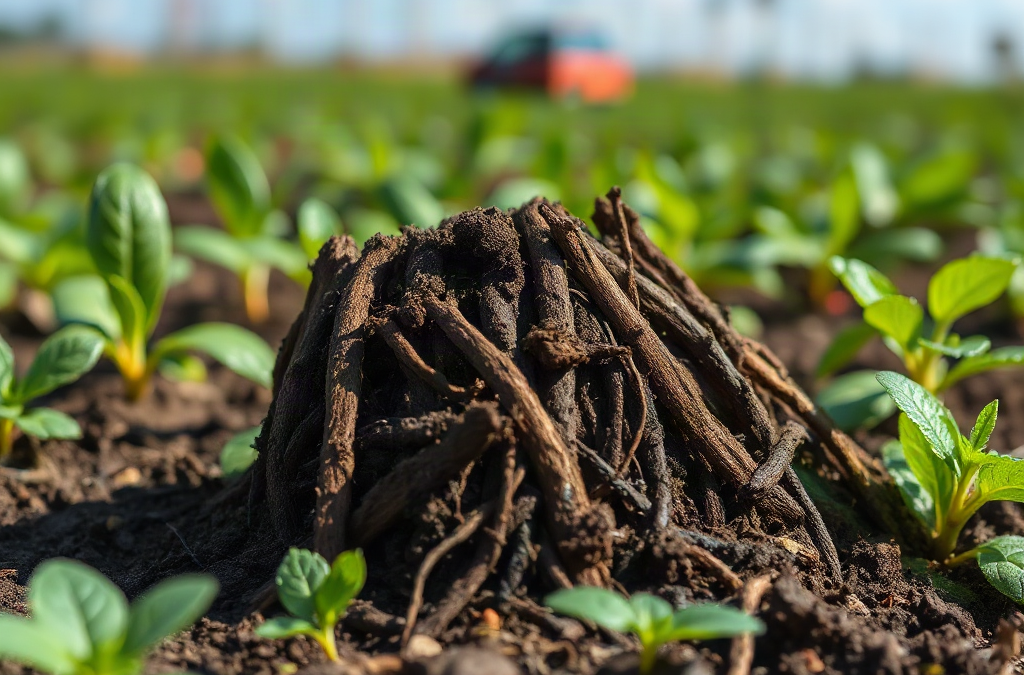
To improve the microbial life in your soil, add mature compost, keep the ground covered, maintain even moisture, and reduce unnecessary digging or chemical disturbance. Compost supplies diverse organic matter, while mulch and living roots feed microbes over a longer period. Good drainage matters because oxygen-starved, waterlogged soil favors a narrower microbial community, but soil that dries repeatedly also slows decomposition and nutrient cycling. Avoid applying unfinished compost, excessive fertilizer, or thick layers of fresh organic material directly against plant stems. Judge progress through crumbly structure, earthy odor, active roots, and improved water infiltration rather than expecting an immediate visible surge of microbes.
What Soil Microbes Need To Function
Soil microbial life includes bacteria, fungi, protozoa, and other microscopic organisms that decompose residues, transform nutrients, and interact with plant roots. A productive soil community needs food, water, oxygen, and habitat rather than a single added product. The balance changes with texture, temperature, pH, drainage, and the kinds of plants growing above ground.
Microbes obtain carbon from decomposing leaves, compost, root exudates, and other organic materials. Living roots are especially valuable because they release compounds into the rhizosphere, the narrow zone of soil influenced by roots. A bed planted with a healthy cover crop can therefore feed a different microbial community from bare soil covered only with a mineral fertilizer.
Air and water must remain in workable proportion. Waterlogged soil fills air spaces and limits oxygen, slowing many aerobic decomposers and increasing the risk of unpleasant odors. Soil that becomes powder-dry repeatedly can also interrupt microbial activity. The aim is not constant wetness; it is stable moisture with enough pore space for gas exchange.
Look for physical clues before buying an inoculant. Soil that forms stable crumbs, accepts water without immediate runoff, and contains visible fine roots is often developing better habitat. A sour smell, gray coloration, persistent surface crust, or rapid drying points toward a structural or moisture problem that microbes alone will not fix. how to improve the microbial life in your soil begins with correcting those conditions.
A common misconception is that more microbial products automatically mean healthier soil. Commercial inoculants may have a limited role in particular situations, but introduced organisms still need suitable food, moisture, and habitat. Improving the environment usually offers a more durable priority than repeatedly adding organisms to compacted or chemically stressed ground.
Organic Matter That Feeds A Diverse Soil Community
Mature compost is one of the most practical ways to add a broad food supply and improve the physical environment around soil organisms. It contributes partially decomposed carbon, fine particles, and materials that can improve aggregation. Use finished compost that smells earthy and has no obvious heating, slimy pockets, or large quantities of recognizable food waste.
Compost is not a substitute for every soil amendment. Sandy soil may need repeated additions because organic matter breaks down and does not permanently solve low water-holding capacity. Heavy clay may benefit from compost combined with root channels and careful traffic control, but mixing large amounts into wet clay can create clods. A modest surface application incorporated lightly, or left as a top dressing where appropriate, is often less disruptive than aggressive rototilling.
Mulch extends the food supply and buffers temperature and evaporation. Shredded leaves, aged wood chips, and weed-free plant residues can support decomposers as they break down. Woodier materials decompose slowly and are generally more useful on paths or around established perennial plants than mixed into the root zone immediately before planting annual vegetables. Nitrogen immobilization is more likely when high-carbon, immature material is mixed directly into soil than when it is placed on the surface.
Living plants add a different kind of input. Cover crops such as oats, rye, clover, peas, or buckwheat can keep roots in the soil between main crops, though selection should match climate, season, water availability, and the following crop. A cover crop that grows poorly or becomes difficult to terminate may create more management work than microbial benefit. In a small bed, a seasonal rotation of living plants and a layer of finished compost can be more practical than maintaining a complex blend.
Fresh manure, unfinished compost, and thick layers of wet kitchen scraps are poor shortcuts. They may contain weed seeds, produce odors, tie up nutrients temporarily, or damage seedlings through excess salts or ammonia. Use stable organic matter first, then observe plant growth and soil structure before adding more. This avoids the assumption that a darker soil surface necessarily indicates better fertility or more useful microbial activity.
Moisture, Roots, And Low-Disturbance Management
Consistent moisture and living roots create the conditions in which microbial populations can remain active between watering events. Apply water deeply enough to moisten the root zone, then allow excess water to drain. Short, frequent sprinkling may wet only the surface, encouraging shallow roots and leaving deeper microbial habitat dry. Drip irrigation or a slow hose application can make moisture more even, but the schedule still needs to reflect soil texture and weather.
Mulch helps by reducing evaporation and moderating surface temperature, yet it should not be packed against stems or trunks. Leave a small gap around plant bases to reduce persistent dampness and stem-rot risk. In poorly drained ground, adding more water or organic material without addressing compaction can worsen oxygen shortage. Raised beds, planting on broad ridges, or redirecting runoff may be more effective than another amendment.
Roots supply carbon while soil organisms help break down compounds and release nutrients in forms plants can use. The relationship is not a guarantee of faster growth: cool soil, inadequate light, disease, and nutrient imbalance can still limit a crop. A vegetable bed with continuous roots from spring through autumn generally offers more microbial continuity than one left bare after harvest and repeatedly cultivated.
Reduce disturbance when it is not solving a specific problem. Digging can temporarily loosen the surface, but repeated tillage breaks fungal threads, exposes protected organic matter to rapid oxidation, and disrupts pore networks. This does not mean never digging. Incorporating a dense cover crop, correcting a severe compaction layer, or preparing a new bed may justify targeted disturbance. The better comparison is purposeful cultivation versus routine turning of soil that already drains and roots well.
Avoid treating all chemicals as equally harmful or all organic inputs as automatically safe. Excess soluble fertilizer can alter salt concentration and encourage nutrient losses, while a correctly used fertilizer may address a genuine deficiency without replacing organic matter. Pesticides should be used only when justified and according to the product label, since broad disruption can affect non-target organisms. If microbial activity appears weak, first check irrigation, compaction, residue quality, and pH rather than assuming a missing microbial supplement is the cause.
A Practical Plan For Building Microbial Activity
Improving soil biology works best as a staged process because microbial change follows the availability of habitat and food. Begin with a simple inspection: squeeze a moist handful, examine drainage after irrigation, note odor and surface crusting, and check whether roots occupy more than the top few inches. A soil test can help identify pH or nutrient constraints, but laboratory tests do not capture every aspect of microbial diversity.
For an established garden, the following sequence keeps effort focused:
- Correct water problems: relieve standing water, improve runoff management, or adjust irrigation before adding substantial organic material.
- Protect the surface: use a suitable mulch and avoid leaving soil bare through every off-season.
- Add finished compost: apply a moderate layer and distribute it without pulverizing the existing soil structure.
- Keep roots present: grow a suitable cover crop, maintain perennial plants, or replant promptly after harvest where practical.
- Limit unnecessary disturbance: reserve deep digging for compaction, bed renovation, or a clearly identified management need.
Priorities change with the site. A compacted clay bed beside a downspout needs drainage and traffic control before a cover-crop experiment. A dry sandy bed may need organic matter and mulch, followed by irrigation adjustments that prevent rapid moisture loss. A productive vegetable bed with good structure may gain more from keeping roots alive over winter than from adding increasingly large compost applications.
Judge progress over a growing season rather than after a single application. Useful signs include better infiltration without prolonged saturation, a more stable crumb structure, fewer hard crusts, active decomposition of surface residues, and roots that explore a broader volume of soil. Poor signs include sour odor, fungus-like mats caused by persistently wet residue, seedlings stalled after an immature amendment, or plants showing symptoms after heavy fertilizer use.
Record what was applied, when it was applied, how much rain or irrigation followed, and how plants responded. That record helps separate a useful practice from coincidence. how to improve the microbial life in your soil is less about creating a visibly busy surface and more about sustaining functioning soil conditions. A careful gardener may use compost, mulch, roots, and reduced tillage together, but each should serve a diagnosed need rather than become a ritual.
Frequently Asked Questions
Does adding compost immediately increase microbial life?
Compost adds organic matter and organisms, but activity depends on moisture, oxygen, temperature, and soil conditions. Finished compost is safer and more predictable than unfinished material.
Can mulch feed soil microbes?
Yes. Leaf mulch, aged wood chips, and plant residues provide carbon as they decompose. Keep woody mulch on the surface and away from stems rather than mixing it deeply before planting.
Is tilling bad for soil microorganisms?
Repeated or unnecessary tillage can disrupt fungal networks and expose protected organic matter. Targeted digging may still be justified for severe compaction, bed renovation, or incorporating a difficult cover crop.
How often should soil be watered for microbial activity?
Water when the root zone begins to dry, then moisten it thoroughly while allowing drainage. Sandy and clay soils need different schedules, so check moisture below the surface instead of relying only on appearance.
Do microbial inoculants replace compost and mulch?
No. Added organisms still require food and suitable habitat. Compost, living roots, surface cover, adequate oxygen, and sensible moisture management generally provide the conditions microbial products depend on.
Conclusion
Healthy soil biology develops when microbes have continuous organic inputs, moderate moisture, oxygen, and protected habitat. Finished compost is a useful foundation, but it works best alongside mulch, living roots, sound drainage, and less routine disturbance. Match the remedy to the constraint: fix standing water before adding amendments, protect dry soil before increasing irrigation, and avoid mixing immature carbon-rich material into a seedbed. Watch structure, odor, infiltration, residue breakdown, and root distribution over time rather than expecting a quick visual change. A practical next step is to inspect one bed, correct its biggest physical limitation, add a measured amount of finished organic matter, and keep the surface covered through the next growing period.
Further Reading
Authoritative Sources
- USDA NRCS Soil Resources
nrcs.usda.govOfficial soil health, conservation, and water-management information.
- EPA Safe Pest Control
epa.govOfficial information for safer pest-management decisions.
- USDA National Agricultural Library
nal.usda.govAgricultural and plant-science research resources.
- Cooperative Extension Gardening Resources
extension.orgResearch-based gardening, soil, plant-care, and home-growing education.


