
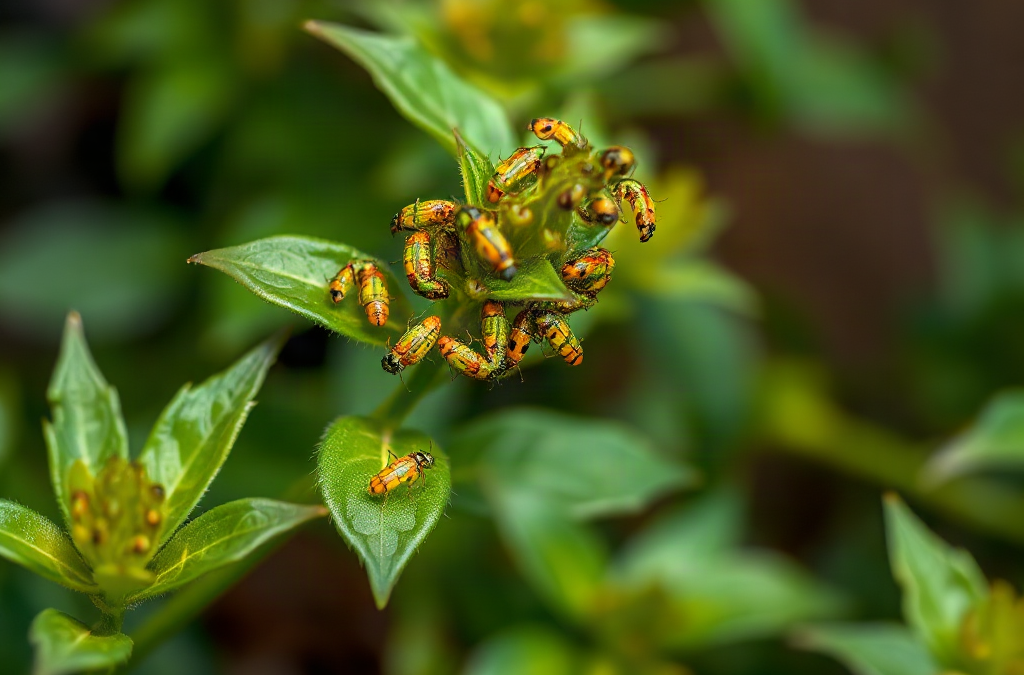
If your plants are covered in aphids, isolate badly infested containers, spray the foliage and stem undersides with a firm stream of water, then repeat an appropriate insecticidal soap treatment while checking for ants and beneficial insects. Aphids cluster on tender growth because they feed on plant sap, and their honeydew can encourage sooty mold; new leaves may curl before the colony is obvious. Remove heavily damaged shoots when practical, avoid broad-spectrum insecticides that kill lady beetles and lacewings, and inspect the plants every few days because eggs, winged adults, and hidden colonies can restart the problem. Escalate treatment only when repeated washing and targeted products fail or plant growth remains distorted.
Confirm Aphids and Measure the Damage
Aphids are small, soft-bodied insects that gather on new shoots, leaf undersides, flower stems, and the tender tips of vegetables and ornamentals. They may be green, black, gray, yellow, pink, or nearly white, so color alone is not a reliable identification feature. Look for pear-shaped bodies, long legs, two short tubes near the rear of the abdomen, and clusters that move slowly when disturbed. Sticky leaves, curled growth, and ants traveling up the plant are additional clues.
Check the whole plant before treating it. Aphids often remain concealed where a spray misses them, particularly inside curled leaves or dense new growth. Examine neighboring plants as well, since winged aphids can move to nearby hosts when a colony becomes crowded. A few insects on a vigorous plant may cause little lasting harm, while a mass covering the growing tip of a seedling can deform its next flush of leaves.
Honeydew is a useful damage clue, but black coating on leaves does not necessarily mean the aphids themselves are eating the tissue. Sooty mold grows on the sugary residue, reducing the leaf’s usable surface when buildup is heavy. The immediate priority is the sap-feeding colony, not scrubbing every dark mark from the foliage. Once feeding stops, weather and normal plant growth often reduce the residue.
Do not confuse aphids with whiteflies, thrips, or spider mites. Gently tap a branch over white paper: aphids usually crawl, whereas whiteflies flutter away. Fine webbing points more toward spider mites, and silvery scars or black specks may indicate thrips. Correct identification determines whether water, soap, pruning, or another response is likely to work. Photographing the insects and taking a sample to a local university extension office can help when the signs are unclear.
Immediate Actions for a Heavy Infestation
A heavy aphid infestation calls for physical removal before stronger products are considered. Move potted plants away from uninfested specimens, especially young transplants and plants kept in a greenhouse or enclosed porch. On a sturdy plant, direct a firm but not damaging stream of water at the growing tips, leaf undersides, petioles, and stem joints. The goal is to dislodge insects; water pressure should not tear leaves, strip flowers, or saturate soil in a container that already drains poorly.
Repeat washing every few days rather than expecting one pass to finish the job. Aphids that fall from a plant often cannot climb back, but survivors hidden in folded leaves continue reproducing. Prune and discard badly infested tips when removing them will not compromise the plant’s structure. Seal the trimmings in a bag or place them in the trash rather than adding actively infested material to a home compost pile.
Use this compact response sequence when a colony is visible:
- Separate the affected plant and inspect nearby hosts.
- Remove the most crowded shoots or flower stalks if practical.
- Rinse the remaining colony from all sides of the foliage.
- Check for ants, curled leaves, honeydew, and natural enemies.
- Reinspect after two or three days and repeat the least harmful effective measure.
Ants deserve attention because they may protect aphids from lady beetles, lacewings, and parasitoid wasps in exchange for honeydew. Stopping ants from reaching the plant can make biological control more effective, but avoid coating edible plant parts with an unapproved sticky product. Address ant trails at ground level according to the product label and keep treatments away from children, pets, pollinators, and harvestable produce.
A common mistake is to spray only the upper leaf surfaces. Aphids frequently occupy sheltered undersides and stem crevices, so a thorough but gentle rinse is more useful than a quick mist. Another mistake is removing a plant immediately when its roots and main stems remain healthy. Leaf distortion may persist on existing growth, but fresh leaves can emerge normally after the colony is controlled.
Choosing Treatments Without Creating a Bigger Pest Problem
Insecticidal soap is often a reasonable next step when washing alone does not control the colony. It works by contacting exposed soft-bodied insects, so it has little residual action against aphids that arrive later or remain protected inside curled foliage. Apply a product labeled for the specific plant and pest, cover both leaf surfaces, and follow the stated concentration and reapplication interval. Household dish detergent is not a dependable substitute; its formulation may burn foliage, especially in heat, drought, or bright sun.
Test any soap or oil product on a small section first and wait to see whether spotting, browning, or curling develops. Treat in the cooler part of the day, never when the plant is already wilted, and avoid spraying open flowers where bees are actively visiting. Horticultural oils may provide useful contact control, but they also require complete coverage and can injure plants when used during heat or combined improperly with other materials.
Systemic or broad-spectrum insecticides may seem attractive when a plant is densely covered, but they carry greater tradeoffs. They can reduce aphids while also harming pollinators and predatory insects that would otherwise suppress the next generation. For a flowering ornamental visited by bees, repeated washing and a targeted contact product may be preferable to a blanket spray. For a valuable plant with persistent distortion, a local extension recommendation can help identify whether a more specialized treatment is justified.
Use the label as the operating instructions, not as a formality. Confirm the crop or ornamental is listed, observe harvest intervals for edible plants, and never increase the dose because the infestation looks severe. More concentrate does not necessarily improve coverage and may cause phytotoxicity. Keep treated plants separated from untreated ones until the product’s instructions allow normal handling, and store chemicals in their original containers.
Observe the result rather than judging success immediately. Working treatment should reduce live, moving aphids and allow new growth to develop without fresh curling. A dead colony may remain attached to leaves, while honeydew and sooty mold can linger. If numbers rebound rapidly, coverage was incomplete, ants are defending the colony, or a new generation has arrived. Repeating a compatible low-impact measure after the label’s interval is usually more sensible than mixing products impulsively.
Preventing Aphids From Returning
Long-term control depends less on making a plant sterile than on keeping colonies below damaging levels. Inspect new purchases before placing them beside established plants, paying particular attention to shoot tips and leaf axils. Quarantine a questionable container for several days and wash it separately. Aphids can also arrive on transplants, cut flowers, weeds, or winged adults carried by air currents, so spotless plants cannot be guaranteed.
Plant stress can make an outbreak harder to manage. Water plants according to their actual moisture needs, avoid excessive nitrogen that produces lush, especially tender growth, and give each plant enough space for airflow and inspection. These measures do not repel aphids, but they reduce the dense, soft growth that is easy for colonies to exploit and make early detection more likely. Overfertilizing a rose or pepper after an infestation has begun can produce exactly the succulent shoots aphids prefer.
Preserve natural enemies whenever possible. Lady beetles, lacewing larvae, hoverfly larvae, and tiny parasitic wasps may appear after aphids establish. Do not mistake every insect near a colony for a pest: lacewing larvae can look somewhat alligator-like, and hoverfly larvae are legless maggots that consume aphids. Broad-spectrum sprays can remove these allies along with the target pest, leading to a rebound after the chemical residue declines.
Ant management, weed removal, and regular scouting work together. Check plants twice weekly during periods of rapid spring growth or after a flush of new leaves. Inspect the first signs of curled tips, sticky foliage, or ants before reaching for a product. A small colony on one shoot can often be pinched off or rinsed; a colony spread across several plants may justify a coordinated treatment and follow-up schedule.
Do not rely on companion planting, reflective mulch, or a single homemade spray as a guaranteed fix. Such measures may alter pest pressure in particular settings, but they do not replace inspection and direct coverage. The practical goal is healthy replacement growth, not the permanent absence of every aphid. If a plant repeatedly collapses despite control, check its roots, watering, nutrient conditions, and possible virus symptoms rather than assuming every decline is caused by insects.
Frequently Asked Questions
Should I remove a plant covered in aphids?
Usually not. Isolate it, rinse the colony away, and prune severely infested tips when the plant can tolerate removal. Discard it only when damage is extensive, the plant is declining for other reasons, or treatment would threaten nearby valuable plants.
Will spraying aphids with water kill them?
A strong, carefully directed stream can dislodge and injure many aphids, and fallen insects often do not return. Repeat the process because sheltered survivors and newly arriving aphids may remain.
Is dish soap safe for plants?
Not reliably. Household detergents vary and may strip protective leaf waxes or cause burns. A labeled insecticidal soap is a safer choice when used at its stated rate and tested on a small area first.
Why do ants keep appearing on aphid-infested plants?
Ants may collect aphid honeydew and defend the colony from predators. Reduce ant access to the plant while controlling aphids, using only methods appropriate for the plant's location and the product label.
How often should I check after treatment?
Inspect every few days during active growth. Look beneath leaves and around new shoots for live insects, fresh honeydew, and newly curled foliage. Reapply a product only according to its label.
Conclusion
Aphid-covered plants rarely need an immediate trip to the trash. Confirm the pest, separate the affected plant, and remove the largest colonies with water or selective pruning before deciding whether a labeled contact treatment is warranted. Coverage matters more than simply choosing a stronger product: inspect leaf undersides, stem joints, and tightly curled growth, then watch for survivors over the following days. Ants, excess nitrogen, plant stress, and indiscriminate insecticides can all undermine control, while lady beetles, lacewings, and other natural enemies may provide valuable assistance. Judge recovery by the condition of new growth rather than expecting damaged leaves to straighten. Continued scouting is the step that turns a one-time response into reliable aphid management.


