
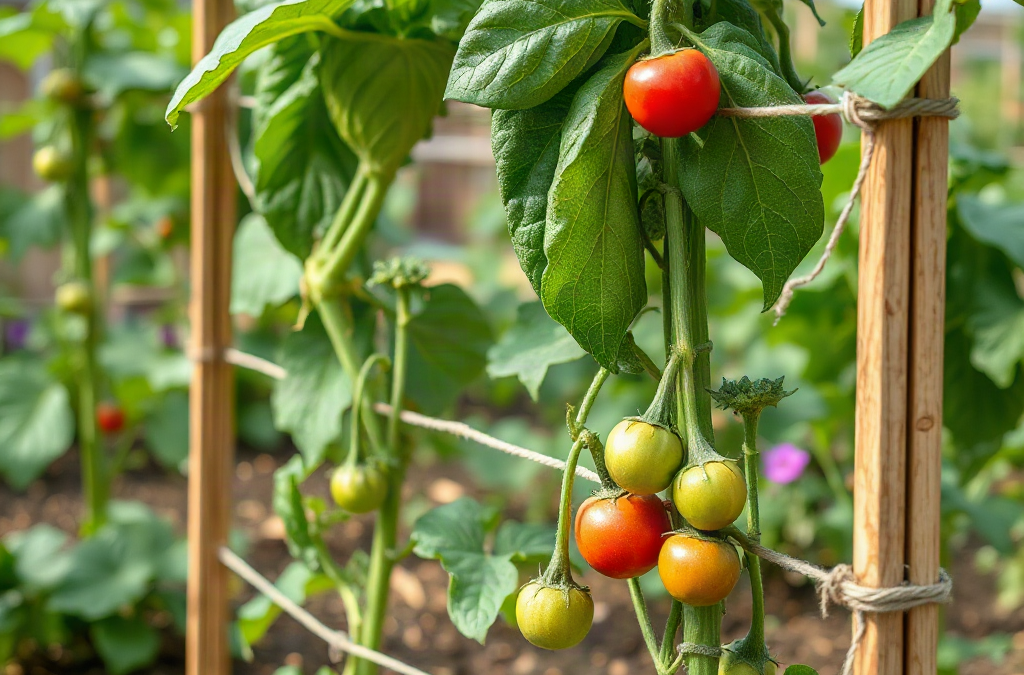
Provide support for climbing vegetables by installing a strong trellis, cage, or frame before vigorous growth begins, then guide stems upward with soft ties and check the structure as fruit weight increases. Match the support to the crop: peas and beans usually climb twine, netting, or narrow trellis materials, while cucumbers and indeterminate tomatoes need broader, stronger support. Anchor the base firmly, leave enough airflow around leaves, and avoid tying stems tightly because expanding vines can be damaged. Inspect after wind and heavy rain, redirect loose growth early, and replace weak stakes before they lean, snap, or pull roots from the soil.
Match the Support to the Vegetable
The first decision is not which trellis looks attractive; it is how the vegetable climbs and how much weight the structure must carry. Peas use tendrils that wrap around narrow surfaces, pole beans twine around vertical lines, and cucumbers often rely on tendrils but become substantially heavier once fruit develops. Indeterminate tomatoes do not truly climb on their own, so they need tying, clips, or a support system that holds the main stems upright.
A lightweight structure may work well for spring peas but fail under mature bean vines or a cucumber crop loaded with fruit. how to provide support for climbing vegetables therefore begins with matching strength, height, and surface texture to the crop rather than treating every vine alike. Check the seed packet or plant label for mature size, then consider wind exposure and whether the planting will remain in place for one season or several.
Use a narrow trellis, mesh, or taut twine for peas and smaller beans. Pole beans generally benefit from a tall frame with vertical strings, while cucumbers often perform well on a sturdy mesh panel or angled trellis. Tomatoes require a different approach: a single thin stake can support a young plant temporarily, but a broad cage, tall stake, or trellis is more dependable as stems and fruit clusters expand.
Growing upward saves ground space and can keep leaves and fruit away from wet soil, but vertical growth also concentrates weight higher above the ground. A useful test is to push gently against the empty frame. If it shifts easily, it will likely lean when foliage catches wind. The common mistake is choosing a support based only on current plant size; design for the mature vine, not the seedling.
Build and Position a Stable Climbing Structure
Install the support before the vegetable needs it, preferably at sowing or transplanting. Early installation prevents root disturbance and lets young stems find the structure without being bent sharply later. Drive stakes or frame legs deeply enough to resist movement, and place the base close enough to the plant that stems can reach the climbing surface without stretching across bare soil.
Materials can include untreated wood, bamboo, metal livestock panels, garden mesh, twine, or purpose-made trellis netting. The best choice depends on crop weight and how often the structure will be reused. Twine is inexpensive and easy to replace, but it may sag or deteriorate outdoors. A rigid panel costs more or takes more effort to move, yet it provides dependable support for cucumbers and can be cleaned and stored for future seasons.
Anchor tall supports at more than one point when possible. A-frame trellises distribute force better than a single upright stake, while a wall-mounted or fence-mounted system must be attached securely rather than merely leaned against the surface. Leave a small gap between foliage and a solid wall so air can circulate and leaves do not remain pressed against damp material.
Consider access before planting. A dense wall of vines can block harvesting from one side, hide yellowing leaves, and make watering difficult. Position the structure so fruit can be reached from a path, and avoid placing it where a falling frame could damage neighboring crops. A short trellis may be easier to harvest than a tall one, but it will require more frequent redirection or pruning if the vegetable naturally grows beyond its height.
- Light crops: use twine, narrow netting, or a simple bamboo frame.
- Heavy or wind-exposed crops: choose rigid mesh, a braced frame, or a firmly anchored cage.
- Long-season crops: favor durable materials that will not sag, rot, or become difficult to sanitize.
Test the completed structure before vines cover it. Pull lightly from several directions, inspect joints, and reinforce any connection that flexes excessively. A support that is slightly overbuilt is usually easier to manage than one that must be repaired after fruit has formed.
Train Stems Without Causing Damage
Guiding growth is usually easier when stems are young and flexible. Place loose ties around the support and stem in a figure-eight pattern, leaving room for expansion. The crossed section keeps the stem from rubbing directly against the stake, while the loose loop prevents girdling. Soft cloth strips, elastic garden tape, paper-covered wire, or purpose-made clips are safer than thin wire or rigid plastic ties.
Peas and beans often need only an initial nudge toward twine or netting. Once a bean stem begins twining, avoid repeatedly pulling it straight if it has wrapped firmly; redirect the growing tip gradually. Cucumbers may attach themselves, but heavy fruit can pull a vine downward. Guide loose tendrils into the mesh and support sections that sag rather than forcing the entire stem into a new position.
Tomatoes need closer attention because their stems may not attach to a stake at all. Tie the main stem at intervals, place support beneath heavy fruit clusters when necessary, and remove ties that become tight. A cage allows lateral growth and may reduce constant tying, whereas a single-stem trellis offers more control but demands regular pruning and training. Neither method is automatically better; the choice depends on available space, plant habit, and the time available for maintenance.
Do not wait until a vine has collapsed. Bent stems can kink, fruit can rest against soil, and a sudden correction may snap tender growth. During weekly harvests, lift foliage gently and check whether the stem is rubbing, whether a tie has tightened, and whether new growth is reaching the support. One frequent misconception is that every climbing vegetable should be wrapped tightly around its trellis. Support should guide the plant while preserving natural movement and airflow.
Maintain Supports Through the Growing Season
Support work continues after installation because rain, wind, irrigation, and increasing fruit weight change the load on the structure. Inspect the base after storms, especially in loose or recently watered soil. Repack soil around a leaning stake, add a brace, or move a tie point higher before the frame becomes unstable. If a support has shifted enough to pull at roots, stabilize it without wrenching the plant upright all at once.
Harvesting is part of structural maintenance. Overripe cucumbers, mature bean pods, and large tomato clusters add weight and can pull stems away from the support. Regular picking reduces that load and also reveals hidden damage. Look for stems pinched by ties, vines trapped beneath crossbars, leaves pressed into wet soil, and fruit touching the ground or a rough surface.
Airflow deserves attention even when the frame is strong. Dense foliage can remain damp longer, and tangled growth makes it harder to spot pests or discoloration. Thin or redirect growth according to the crop’s normal pruning needs, but do not remove healthy leaves simply to make a trellis look orderly. The practical priority is open access to the base, adequate light within the canopy, and safe support for fruit-bearing stems.
End-of-season cleanup protects the next planting. Remove old vines, inspect reusable mesh for tears, and clean soil and plant residue from rigid supports before storing them. Do not compost diseased material unless the composting system reliably reaches conditions suitable for breaking it down. A cheap support that must be discarded each year may still be sensible for a short-lived crop, while durable frames are worthwhile when planting the same climbing vegetables repeatedly.
Common Support Mistakes and Better Choices
The most damaging mistake is installing a support that is too weak for the mature crop. A slender decorative trellis may hold a few young tendrils but buckle under a full cucumber canopy. The second is placing the structure after roots and stems have filled the bed. Late installation often leads to broken roots, bent stems, or a support positioned too far from the plant.
Another failure comes from confusing height with usefulness. A tall frame does not help if its base is unstable, its openings are too wide for tendrils, or the gardener cannot reach the upper growth. For a compact bed, an angled panel can provide more accessible climbing surface than a vertical wall. For pole beans, a tall frame with several vertical lines is often more practical than a broad sheet of netting that becomes difficult to untangle at season’s end.
Use this quick decision sequence before buying materials:
- Identify whether the crop twines, grips with tendrils, or needs manual tying.
- Estimate mature height and the likely weight of foliage and fruit.
- Check wind, soil firmness, access for harvesting, and available attachment points.
- Install and test the frame before growth becomes difficult to redirect.
- Plan how the material will be removed, cleaned, or replaced after harvest.
Watch for clear signs that the method is working: new growth reaches the support, stems remain upright without tight ties, fruit hangs clear of the soil, and the structure stays steady after watering or wind. Signs of failure include a leaning base, snapped tendrils, flattened foliage, tight loops, and fruit pulling a stem downward. Adjust the system in small increments instead of making a large correction that may damage the plant.
For more crop-specific decisions, use how to provide support for climbing vegetables as a starting point, then adapt the structure to the vegetable’s growth habit and the conditions in the planting area. The strongest solution is not necessarily the most expensive one; it is the one that remains stable, reachable, and gentle on growing stems.
Frequently Asked Questions
When should a trellis be installed?
Install it before sowing or transplanting whenever possible. Early placement avoids root disturbance and gives young stems immediate access to the climbing surface.
Can one trellis support every climbing vegetable?
No. Peas and light beans can use slender materials, while cucumbers and indeterminate tomatoes usually need stronger, broader, or more frequently adjusted support.
How tightly should vines be tied?
Ties should be loose enough to allow stem expansion. A figure-eight loop made with soft material reduces rubbing and lowers the risk of constriction.
Do cucumbers need to be tied to a trellis?
Often they attach with tendrils, but loose vines may need gentle redirection. Support heavy sections or fruit rather than pulling firmly on an established stem.
What should be done if a trellis starts leaning?
Reduce strain by harvesting mature fruit, add a brace or deeper anchor, and reposition ties gradually. Avoid forcing a heavily loaded plant upright in one movement.
Conclusion
Good support begins with the vegetable’s growth habit, not with a generic trellis. Choose a surface that the crop can use, size the frame for mature foliage and fruit, and anchor it before roots and stems become crowded. Soft, loose ties and early redirection protect stems, while regular checks after wind, rain, and heavy harvests prevent small problems from becoming collapses. A strong structure also needs practical access: if the upper growth cannot be reached, harvesting and inspection will suffer. Start with a stable frame, test it before the vines fill in, and adjust support as weight changes. Those decisions provide climbing vegetables with room to grow while keeping the planting easier to harvest, monitor, and clean up.


