
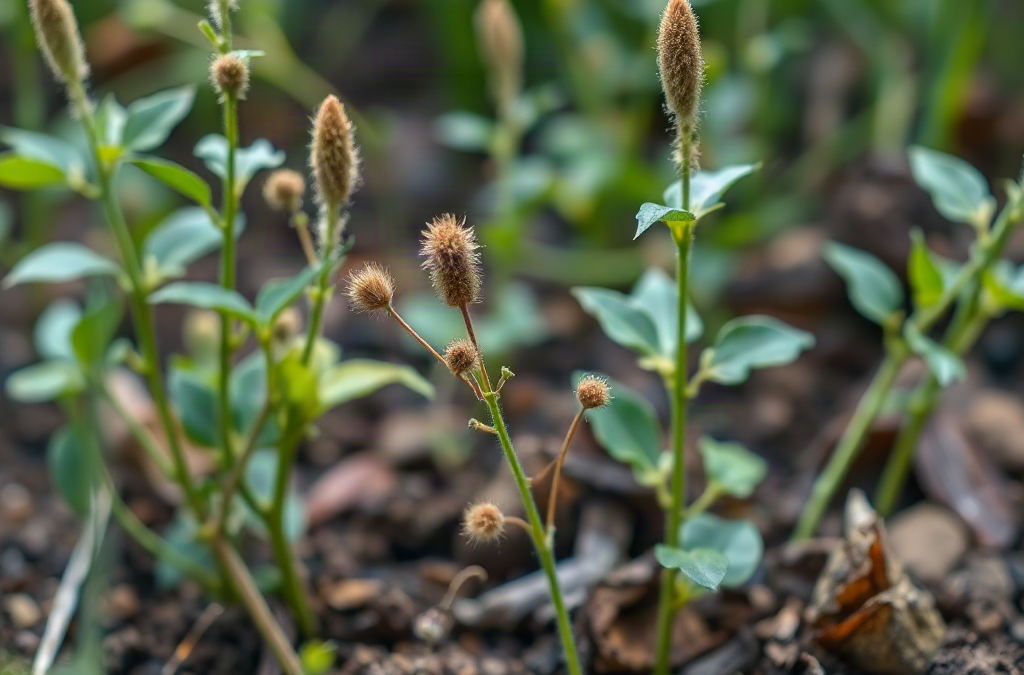
Identify the Competition Before Removing It
Weeds compete with garden crops for light, water, nutrients, and physical space, but the best response depends on the weed’s age and growth habit. A threadlike annual seedling in a row of carrots is a different problem from a mature crabgrass clump, a spreading bindweed vine, or a rhizomatous grass near perennial flowers. Correct identification prevents wasted effort and reduces the chance of damaging desirable roots.
Inspect the garden before reaching for a tool. Notice whether the unwanted plant has a single shallow root, a fibrous crown, a taproot, underground runners, or stems that root where they touch the soil. Annual weeds usually become easier to control when removed while small. Perennial weeds may return after their tops are cut because stored energy remains in the root system. A weed with flowers or seed heads deserves priority even if it occupies less space than a younger patch, since allowing it to mature increases future work.
Location also changes the decision. Weeds between widely spaced squash plants can be removed with a shallow hoe, while weeds close to lettuce or newly transplanted peppers are safer to pull by hand. In a path, mowing or edging may be adequate; beside a crop, those methods can scatter fragments or injure stems. If an unfamiliar plant is covered with berries, irritating sap, or sharp spines, avoid casual handling and consult a reliable local extension resource before removal.
A common mistake is treating every green plant as an emergency. Prioritize weeds that are close to seedlings, rapidly spreading, flowering, or large enough to shade crops. A few weeds at the edge of an established bed may pose less immediate competition than one vigorous plant emerging beside a young transplant. The weed-management process becomes more efficient when removal is based on risk rather than appearance alone.
Use the Right Removal Method for Weed Size and Root Type
Small annual weeds are usually controlled most efficiently with shallow disturbance. A hand hoe, stirrup hoe, or similar tool can sever seedlings just below the soil surface without turning over a large volume of earth. Work when the soil is neither powder-dry nor saturated. Lightly moist soil releases many young roots, while wet soil can smear into compacted layers and make walking through the bed damaging.
Hand-pulling is more appropriate when a weed is close to a crop, has a substantial taproot, or is growing in a loose mulch layer. Grip the plant near its base and pull steadily rather than snapping the stem. If the top breaks, locate the remaining crown and remove it when practical. Large taprooted weeds may require a narrow weeding knife or fork. Digging around them takes longer, but leaving the root crown can allow regrowth.
Perennial vines and creeping grasses require a different expectation. Cutting the foliage may make the bed look clean for a short time, yet the underground system can send up new shoots. Repeatedly removing new growth reduces the plant’s ability to replenish its roots, but it demands follow-up visits. Digging is useful where the entire root or runner can be extracted without breaking it into numerous pieces. In a planted bed, repeated top removal may be safer than aggressive excavation that disturbs crop roots.
Solarization, smothering, and carefully selected herbicide use can fit some unplanted areas, but they are not interchangeable with quick hand-weeding. Covering a vacant bed can suppress existing vegetation over time, whereas a contact treatment may affect only exposed foliage and may not resolve deep-rooted growth. Any herbicide must be used only according to its current label, with attention to crop compatibility, drift, and harvest restrictions. Never assume that a product suitable for paths is safe around edible plants.
Removal itself can spread problems. Do not leave mature seed heads on the soil surface, and do not place seedy weeds in ordinary compost unless the pile reliably reaches conditions capable of destroying viable seeds. Dispose of invasive fragments according to local guidance. The useful test is not whether the bed looks clear today, but whether the chosen method prevents the same weed from returning next week.
Close Bare Soil With Mulch, Spacing, and Ground Cover
Weed prevention becomes easier when less soil is exposed to light and repeated moisture changes. Mulch blocks light reaching the soil surface, cushions new seedlings, and reduces the need for frequent cultivation. Organic options such as clean straw, shredded leaves, or finished compost can work in different situations, but each has limitations. Straw may contain weed seed if its source is poor, leaves can mat when applied too thickly, and compost is better viewed as a soil amendment than a dependable light barrier.
Apply mulch after removing existing weeds rather than covering a flourishing patch and expecting it to disappear. A shallow layer may fail to block light, while an excessively deep or wet layer can stay against plant stems, encourage rot, or interfere with seedling emergence. Keep mulch pulled slightly away from the base of tomatoes, peppers, shrubs, and flowers. Around direct-sown crops, wait until seedlings are established and recognizable before applying a material that could bury or shade them.
Plant spacing is another form of weed management. Wide gaps between slow-growing crops leave a long window in which weeds can establish. Closer spacing can shade the soil sooner, but overcrowding increases humidity and makes harvesting or disease inspection harder. Follow the mature size of the crop rather than squeezing plants together simply to cover ground. A row of lettuce may close quickly; young cabbage, onions, and widely spaced winter squash leave more exposed soil and may need earlier cultivation or mulch.
Ground covers and living mulches can be useful beside, rather than inside, intensively managed vegetable rows. Low-growing flowers, herbs, or cover crops may protect open areas, but they also consume water and can become competitors if they spread into the crop zone. Choose them for a defined space and monitor their edges. In a vacant bed between seasons, a cover crop or opaque cover may be more practical than maintaining bare soil with repeated tillage.
Landscape fabric and plastic can suppress weeds effectively in some paths and long-term plantings, yet they may complicate planting, irrigation, and future soil work. Fabric also does not stop weed seeds from landing on its surface, where they can root in accumulated debris. Prevention works best as a combination: sensible spacing, targeted mulch, and removal of isolated weeds before they flower. The same garden check should include gaps beside beds, because edge weeds often reseed the cultivated area.
Build a Seasonal Routine and Correct Failures
A manageable weed routine is built around short inspections rather than occasional rescue sessions. Walk the beds during the growing season at least once a week, looking beneath crop leaves, along irrigation lines, and at the boundary between mulch and soil. Young weeds are faster to remove and less likely to have deep roots. After rain or irrigation, check the garden again when conditions permit; moisture often makes hand-pulling easier, but it can also trigger a new wave of seedlings.
Use a simple priority order: protect small or recently transplanted crops first, remove flowering and seed-bearing weeds next, then clean low-risk paths and bed edges. If time is limited, do not spend the whole session making one bed perfect while a mature weed is shedding seed in another. A ten-minute pass repeated regularly may produce better long-term control than a single afternoon of deep digging.
- Working: fewer seedlings appear near crop rows, pulled weeds do not return quickly, and mulch remains open enough for water to reach the soil.
- Failing: weeds emerge through thin mulch, crowns resprout after cutting, or cultivation produces repeated flushes of seedlings.
- Next adjustment: increase follow-up frequency, improve mulch coverage, change the tool or depth, or reserve a badly infested vacant area for a longer suppression method.
Repeated deep tillage is a frequent failure mode. Turning soil can temporarily bury weeds, but it may also bring dormant seeds into favorable light and moisture. Use deep digging when removing a known perennial root system or correcting a specific bed problem, not as the default response to every flush. Similarly, relying only on mulch fails when existing weeds are left underneath or when wind and rain thin the covering.
Gardeners also underestimate irrigation placement. Overhead watering wets the entire soil surface, while drip lines can concentrate moisture near crops and leave surrounding areas less favorable for germination. Drip irrigation is not a complete weed solution, but it can reduce unnecessary wetting when installed correctly. Avoid stressing crops in an attempt to starve weeds; a thirsty crop loses its competitive advantage and may be damaged before the weeds are controlled.
For a newly cleared bed, record which weeds appear and where. A recurring vine along one fence, a grass patch near a compost area, or seedlings concentrated where straw was added each points to a different source. This observation turns garden weed control from repeated reaction into source reduction. Remove seed sources, close bare spaces, and schedule the next inspection before the current success is forgotten.
Frequently Asked Questions
Should weeds be pulled or hoed?
Hoe small annual seedlings in open spaces, but pull or carefully dig weeds growing close to crop stems or weeds with persistent taproots.
When is the best time to remove garden weeds?
Remove them while they are young and before flowering. Lightly moist soil often makes hand-pulling easier without the smearing caused by saturated soil.
Can mulch stop weeds completely?
Mulch can reduce new germination and slow growth, but it will not reliably eliminate established perennial weeds or seedlings growing on top of the mulch.
Why do weeds keep returning after cultivation?
Cultivation may leave perennial roots behind and can expose buried weed seeds to light and moisture. Use shallower disturbance and schedule follow-up removal.
Should pulled weeds go into the compost pile?
Only add them when they have not formed viable seeds and the composting process is managed appropriately. Seedy or invasive weeds are safer to discard according to local guidance.
Conclusion
Effective weed management comes from reducing competition early and choosing a method that matches the plant’s growth habit. Protect young crops first, remove annual weeds before they set seed, and treat perennial vines or grasses as problems requiring follow-up rather than a single cleanup. Shallow hoeing suits open rows, careful hand-pulling protects crowded plantings, and mulch works best on already-cleared soil. Sensible spacing, targeted irrigation, and attention to bed edges reduce future pressure without forcing the garden into constant cultivation. Inspect the beds regularly, note where weeds return, and change the tactic when roots resprout or seedlings appear through thin cover. The goal is not spotless soil; it is keeping weeds below the level where they significantly compete with the crops you intend to grow.
Further Reading
Authoritative Sources
- EPA Safe Pest Control
epa.govOfficial information for safer pest-management decisions.
- Cooperative Extension Gardening Resources
extension.orgResearch-based gardening, soil, plant-care, and home-growing education.
- USDA National Agricultural Library
nal.usda.govAgricultural and plant-science research resources.
- USDA NRCS Soil Resources
nrcs.usda.govOfficial soil health, conservation, and water-management information.


