
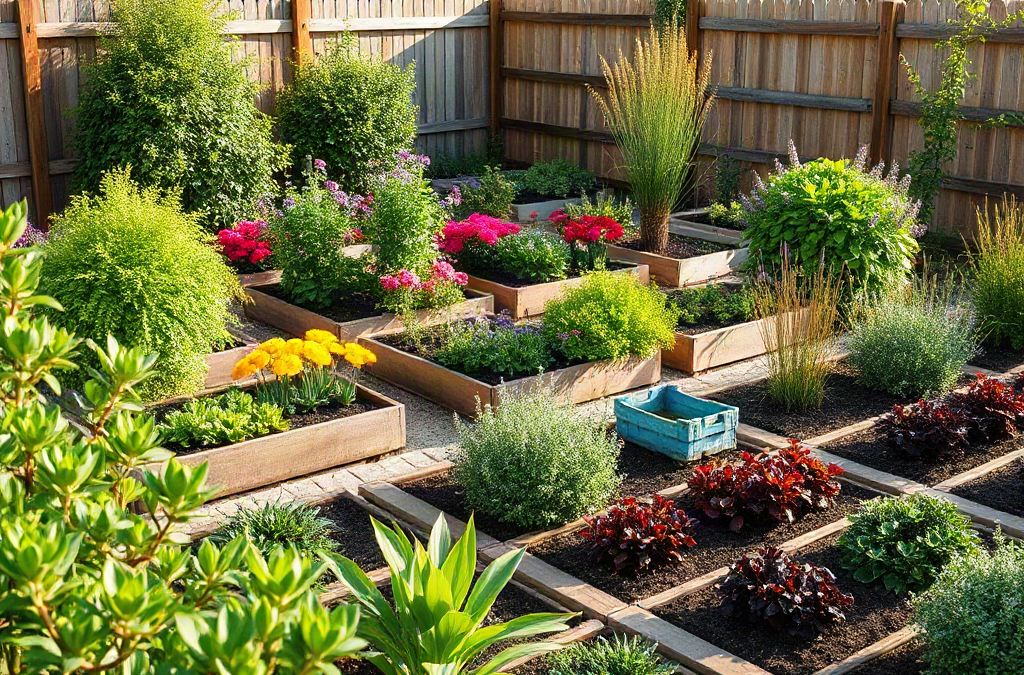
If your garden layout is ineffective, map the site’s sunlight, drainage, access, mature plant size, and water reach before moving crops or rebuilding beds. Crowding, shaded planting, poor circulation, root competition, and beds placed where runoff collects are common reasons a design underperforms. Relocate sun-loving crops, widen paths, group plants with similar water needs, and reserve trellises for the north side so tall growth does not shade shorter plants. Test the revised arrangement for one growing season, watching for uneven growth, standing water, difficult harvesting, and dry bed edges. Change the feature causing the problem first rather than redesigning the entire garden at once.
Find the Layout Problem Before Moving Plants
An ineffective garden layout usually reveals itself through uneven growth, wasted space, damaged plants, or daily tasks that feel awkward. Before shifting beds, identify the pattern rather than reacting to a single disappointing crop. A tomato bed that produces poorly may have a spacing problem, but it may also sit in afternoon shade, drain slowly, or be difficult to water evenly.
Walk the garden at different times of day and mark direct sun, filtered light, reflected heat, and persistent shade. Sun changes as trees leaf out and as structures cast longer shadows, so a map made in early spring may not describe midsummer conditions. Note where water pools after rain, where soil dries first, and whether a hose can reach every planting area without crossing beds.
Access is a design issue, not a cosmetic detail. If you must step into a bed to weed or harvest, compacted soil can reduce pore space and interfere with root growth. A narrow path may look efficient on paper but become unusable once foliage spreads. Conversely, oversized paths consume productive ground and increase mowing or edging work. The useful compromise is a path wide enough for the tools and containers you actually use.
Make a short diagnostic record before changing anything:
- Mark plants that are shaded, crowded, leaning, or repeatedly damaged.
- Circle wet spots, dry corners, erosion channels, and hose obstacles.
- Measure the width of beds and paths after mature foliage is considered.
- Record which crops require frequent harvesting or support.
Compare the evidence with the original purpose of the space. A layout designed for maximum planting density may conflict with easy harvesting. A decorative arrangement may place tall crops where they block shorter plants. Linking observations to the intended use prevents an expensive redesign that merely creates a different inconvenience. The internal discussion of what to do if your garden layout is ineffective should begin with this site assessment, because the best repair depends on the failure you can actually observe.
Rebuild Beds Around Sunlight, Drainage, And Access
Sunlight, water movement, and human access should determine the broad shape of a garden before crop preferences do. Place crops needing the strongest light in the least obstructed area, then position shorter plants where taller growth will not cast a long shadow across them. In many northern-hemisphere gardens, trellises and tall crops are often better placed toward the north side, although the exact arrangement depends on seasonal sun angles and nearby structures.
Drainage requires a different response from shade. Moving a bed away from a downspout may solve repeated saturation, while adding organic matter alone will not correct water entering from a slope or compacted subsoil. Where relocation is impossible, a raised bed, shallow diversion, or designated rain garden may be more appropriate than repeatedly replacing stressed plants. Avoid sending runoff toward a neighbor’s property or foundation.
Bed geometry affects both yield and maintenance. Rectangular beds can be productive, but excessive width makes the center hard to reach without stepping on soil. Curved beds may suit a landscape setting yet create small wedges that are difficult to irrigate and awkward for crop rotation. A simple bed with clear edges is often easier to manage than a complex pattern that looks attractive but produces inaccessible corners.
Consider two common redesign choices. Converting a lawn into several narrow beds may increase growing area and simplify rotation, but it also creates more edging and paths. Consolidating scattered containers into one accessible zone reduces hose runs and makes watering faster, though container crops may require more frequent attention because their soil volume is limited. Choose the option that reduces the recurring task causing the greatest frustration.
When reshaping the space, change one structural feature at a time where possible. Mark proposed bed lines with rope or a hose for several days before digging. Walk the route while carrying a basket, kneeling to inspect plants, and pulling a loaded watering can. This inexpensive trial exposes tight corners and blocked approaches better than a sketch alone. The same evaluation can inform what to do if your garden layout is ineffective when the problem is primarily physical rather than biological.
Match Plant Spacing And Watering Needs
A layout can have excellent sunlight and still fail when plants compete for air, roots, moisture, and working room. Use the mature spread of each crop, not the size of the transplant, to decide spacing. A small zucchini plant may appear harmless in May but can cover neighboring herbs within weeks. A compact pepper may fit beside a walkway early in the season and later block access to tomatoes behind it.
Spacing is a tradeoff. Close planting can shade soil and reduce bare ground, but dense foliage dries slowly after rain and makes inspection difficult. Wide spacing improves airflow and access, yet leaves more exposed soil and may require mulch or more frequent weed control. Follow the crop’s recommended mature dimensions as a starting point, then adjust for your climate, cultivar, trellis system, and ability to prune or harvest regularly.
Group plants by water demand rather than arranging them only by color or harvest date. Leafy greens and newly planted transplants may need steadier moisture than established herbs or drought-tolerant perennial crops. If both groups share one irrigation zone, the gardener must either overwater one group or under-water the other. Separate zones, shorter hand-watering areas, or containers can make a modest garden more reliable than a single elaborate system.
Root competition is easy to miss near trees, hedges, and vigorous perennial plants. Crops may germinate normally but remain small as surrounding roots take up available moisture. A bed beside a mature tree may need a different purpose, such as shade-tolerant ornamentals or containers, rather than repeated attempts to grow sun-loving vegetables there. Fabric barriers have limitations and may not solve competition for light or water above ground.
Look for signs that the arrangement, rather than the soil alone, is responsible: one side of a bed wilts first, leaves stay wet in a dense cluster, harvesting damages nearby stems, or plants become visibly larger at the open edge. Thin or relocate the most crowded plants first, then reassess irrigation coverage. Do not add fertilizer to compensate for shading or root restriction; extra nutrients cannot restore light or physical space.
Test The Revised Layout Through A Growing Season
A successful redesign is measured by performance and effort over time, not by how orderly the beds look immediately after construction. Keep a simple layout record showing planting dates, crop positions, watering zones, shaded periods, and recurring trouble spots. Photograph the garden from the same positions every few weeks. These records make gradual problems visible and prevent memory of a single good harvest from distorting the next plan.
Use a small trial before committing to a major rebuild. Move one crop group to a brighter position, widen one path, or separate one high-water planting from drought-tolerant neighbors. Compare the trial area with the original arrangement under similar soil preparation and care. If the revised section grows more evenly but requires more watering, the design may need mulch or a different crop rather than an immediate return to the old layout.
Set practical success measures. Plants should remain reachable without stepping into beds, irrigation should cover the root zone without repeatedly wetting paths, and mature foliage should not block essential light. Harvesting should be possible without breaking neighboring stems. A layout that produces slightly less per square foot but cuts daily maintenance may be the better choice for a gardener with limited time.
Review the design after heavy rain, during the hottest part of summer, and when crops reach full size. These moments reveal problems hidden by mild weather or young plants. Standing water after a storm points toward grading or drainage; crispy bed edges suggest uneven delivery; shaded lower leaves and elongated stems suggest obstruction; inaccessible fruit indicates a circulation failure.
Prioritize repairs in this order:
- Correct hazards and drainage that threaten structures, paths, or plant roots.
- Restore access to beds and harvesting areas.
- Resolve major sunlight conflicts involving tall crops or structures.
- Separate incompatible watering needs.
- Fine-tune spacing, crop rotation, and visual arrangement.
Large permanent changes deserve caution. Removing a hedge, installing extensive irrigation, or excavating a slope may require local advice about utilities, runoff, and property boundaries. For ordinary adjustments, seasonal observation is usually more informative than a one-day makeover. A revised layout should make the garden easier to read and maintain, not merely different. Revisit what to do if your garden layout is ineffective whenever a symptom returns, because repeated failure may indicate an unresolved site constraint.
Frequently Asked Questions
How can I tell whether poor growth is caused by the layout?
Compare affected plants with similar plants in another position. Uneven shade, wet soil, dry edges, crowding, or difficult irrigation access points to a layout issue rather than a uniform nutrient problem.
Should garden beds run north to south or east to west?
Either orientation can work. Arrange beds and supports so tall plants do not cast prolonged shade on shorter crops, then adjust for buildings, trees, slope, and seasonal sunlight.
What is the best bed width for easy maintenance?
Choose a width that lets you reach the center from the path without stepping on soil. The correct measurement depends on reach, bed height, and whether children or mobility aids need access.
Can mulch fix an ineffective garden layout?
Mulch can moderate soil moisture and reduce weeds, but it cannot correct blocked sunlight, poor access, standing water, or incompatible irrigation zones. Fix the structural problem first.
Is it worth rebuilding the whole garden?
Usually, test a small change first. A full rebuild makes sense when drainage, access, or the garden’s intended use has changed, but partial repairs reduce cost and reveal which adjustment actually works.
Conclusion
An ineffective garden layout is best repaired by observing the site in use, then correcting the constraint with the greatest consequence. Check sunlight, runoff, mature plant size, path access, and irrigation coverage before moving established plants or buying new materials. Give priority to safe drainage and reliable access, followed by tall-plant placement and water-demand grouping. Trial changes with temporary markers or one modified bed so you can compare results through heat, rain, and mature growth. A productive arrangement does not need maximum density or elaborate geometry; it needs reachable beds, suitable light, manageable watering, and enough room for plants to mature. Record what changes, what remains troublesome, and refine the layout next season.
Further Reading
Authoritative Sources
- Cooperative Extension Gardening Resources
extension.orgResearch-based gardening, soil, plant-care, and home-growing education.
- USDA National Agricultural Library
nal.usda.govAgricultural and plant-science research resources.
- EPA Safe Pest Control
epa.govOfficial information for safer pest-management decisions.
- USDA NRCS Soil Resources
nrcs.usda.govOfficial soil health, conservation, and water-management information.


