
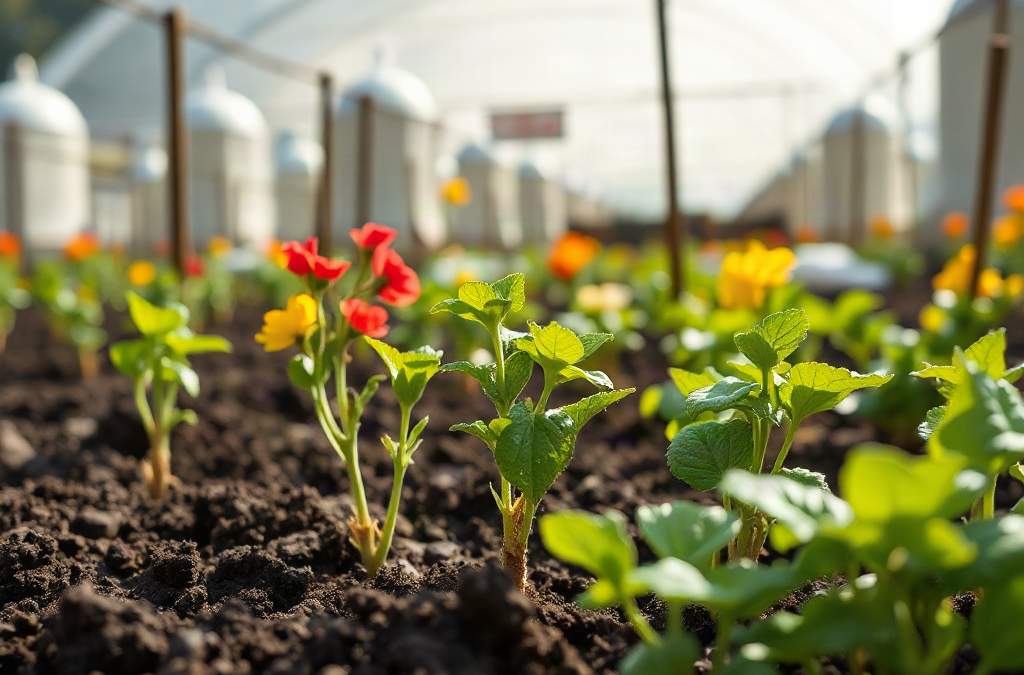
Balancing nitrogen and phosphorus in your garden means testing the soil first, then supplying only the nutrient the crop and soil actually lack. Nitrogen mainly drives leafy growth, while phosphorus supports roots, flowering, and seed formation, but excess phosphorus can accumulate and move into waterways. Compare the soil report with the needs of the crop, use compost cautiously, and select a fertilizer whose N-P-K numbers match the deficiency rather than choosing a high-phosphorus product by habit. Apply nitrogen in modest, crop-timed amounts, avoid fertilizing saturated or frozen ground, and retest after repeated amendments so a short-term correction does not become a long-term imbalance.
What Nitrogen And Phosphorus Do In Garden Soil
Nitrogen and phosphorus affect different parts of plant development, so balancing them does not mean applying equal amounts. Nitrogen is a major component of chlorophyll and plant proteins. Adequate supply supports green leaves, stems, and steady vegetative growth. Phosphorus participates in energy transfer and is associated with root development, flowering, fruiting, and seed formation. Plants need both, but the useful amount depends on the crop, soil reserves, organic matter, moisture, and pH.
A nitrogen shortage often appears as generally pale older leaves and slow growth, because nitrogen can move from older tissue toward newer growth. Too much nitrogen may produce soft, dark-green foliage with fewer flowers or delayed fruiting. Phosphorus deficiency can cause weak establishment and poor reproductive growth, although purple or reddish leaves are not a reliable diagnosis by themselves; cold soil, genetics, and other stresses can create similar colors.
Phosphorus also behaves differently from nitrogen in soil. Nitrogen can be lost through leaching, runoff, or conversion to gases under certain conditions, while phosphorus commonly binds to soil particles and may build up after repeated manure or high-phosphorus fertilizer applications. That difference creates a practical tradeoff: a gardener may need to replenish nitrogen periodically but should not automatically add phosphorus every season.
Consider a tomato bed amended with poultry manure every spring. The plants may receive plenty of phosphorus and still show pale growth later as available nitrogen declines. Adding more manure to correct the yellow leaves can intensify phosphorus accumulation. A targeted nitrogen amendment, guided by a soil report and crop stage, is more rational than treating every nutrient concern with the same organic product.
Use symptoms as prompts for investigation rather than proof. Drainage, root damage, compaction, drought, excessive watering, pH, and cold temperatures can all interfere with nutrient uptake. A balanced plan therefore begins by separating a true nutrient shortage from a condition that merely resembles one.
Use Soil Testing Before Choosing An Amendment
A soil test is the most dependable starting point for balancing nitrogen and phosphorus because visual diagnosis cannot show how much nutrient is already available. Choose a laboratory soil test that reports pH, organic matter when available, phosphorus, potassium, and nitrogen-related information appropriate to the region. Nitrogen is harder to measure accurately because its available forms change quickly, so a report may emphasize crop history and organic matter rather than provide a perfect seasonal nitrogen total.
Collect a representative sample instead of scooping soil from one unusual spot. Take several cores from the active root zone, mix them in a clean container, and remove surface debris. Keep separately managed areas apart: a compost-rich vegetable bed, lawn edge, and newly filled raised bed should not be combined into one sample. Follow the laboratory’s depth and sampling instructions, since local recommendations are calibrated to the testing method.
Read the phosphorus result in the context of the laboratory’s rating, not as a standalone number. A result marked high or excessive generally means phosphorus should not be added, even if a fertilizer label advertises it as helpful for roots. A low result may justify phosphorus, but the proper rate depends on the crop and soil conditions. Soil pH matters because it influences nutrient availability; adding more fertilizer will not reliably correct an availability problem caused by unsuitable pH.
Testing also changes the decision when organic amendments are involved. Finished compost improves organic matter and may contribute small, variable amounts of nutrients, but it is not a precision substitute for a mineral fertilizer. Manure can contain appreciable nitrogen and phosphorus, with concentrations varying by animal, bedding, storage, and analysis. Repeated applications can raise phosphorus even when the gardener is focused mainly on nitrogen.
Keep the report with notes about crops, amendments, and yields. If a bed receives the same amendment each year, compare tests over time rather than reacting to a single leaf symptom. The useful question is not whether a product is natural or synthetic; it is whether its nutrient content fits the soil’s measured condition and the crop’s immediate demand.
Match Fertilizer Choices To The Actual Deficiency
Fertilizer labels show the percentage of nitrogen, phosphate, and potash by weight in the N-P-K sequence. The middle number represents phosphate, reported as P2O5, rather than elemental phosphorus. That labeling convention matters when comparing products and interpreting a recommendation. A fertilizer with a high middle number is not automatically appropriate for seedlings, vegetables, or flowering plants.
When nitrogen is low but phosphorus is already adequate, choose a product with little or no added phosphorus. Depending on the crop and report, that might be a nitrogen-focused fertilizer such as blood meal, soybean meal, or a suitable conventional nitrogen source. Organic products release nutrients at different speeds and are influenced by temperature and microbial activity; a slow organic source may not correct a hungry, actively growing crop as quickly as a soluble source.
When phosphorus is low, use a measured fertilizer that supplies phosphorus without creating an unnecessarily large nitrogen dose. Bone meal is often promoted for roots, but its usefulness depends on the soil test, pH, product analysis, and the crop’s actual phosphorus requirement. Adding it to already phosphorus-rich soil is not a harmless insurance policy. In a bed with both nutrients at adequate levels, fertilizer may be unnecessary, and improving moisture, aeration, or pH may produce a better response.
Application rate should be based on the product analysis and the soil-test recommendation, not on the size of the scoop. A low-analysis organic fertilizer may require more material to deliver a given amount of nitrogen, while that larger quantity may also add phosphorus. This is why repeated use of composted manure can create a phosphorus problem even when each individual application seems modest.
Choose timing according to crop demand. Nitrogen is commonly most useful during active vegetative growth, but excessive late-season nitrogen can favor foliage over fruit maturity and make tissues more vulnerable to stress. Phosphorus is often incorporated or placed near the root zone when a confirmed deficiency exists, yet established plants cannot use unlimited extra phosphorus. The practical priority is a product that corrects the limiting nutrient while minimizing the one already abundant.
Apply Nutrients Safely And Check The Result
Apply fertilizer to moist soil when plants are actively growing, then water according to the label so nutrients reach the root zone without creating runoff. Do not fertilize frozen, waterlogged, or heavily compacted ground. Roots in saturated soil may lack oxygen, and adding fertilizer to that situation can increase salt stress without fixing uptake. Keep granules away from stems and foliage unless the product is specifically labeled for that use.
Split nitrogen applications when the crop has a long growing season or the soil is sandy. Smaller applications reduce the chance that a single heavy dose will leach below shallow roots or produce excessive top growth. A leafy lettuce crop and a fruiting tomato crop may both need nitrogen, but they differ in timing and in the consequences of overapplication. Use the crop’s growth stage, soil texture, rainfall, and irrigation pattern to refine the schedule.
Phosphorus needs more restraint because it often remains in the soil. Avoid applying phosphorus-containing starter products, manure, compost, and bloom fertilizers together unless the test and recommendation support that combination. Surface runoff from fertilized soil can carry phosphorus attached to sediment into drains and surface water. Maintaining plant cover, preventing erosion, and keeping fertilizer off paved areas are part of nutrient management, not separate cosmetic tasks.
Watch for evidence that the adjustment is working. New growth should develop with more appropriate color and vigor, while flowering or fruit set should progress according to the crop’s normal conditions. A response may be limited if the real problem is root disease, poor drainage, insect feeding, pH, or cold weather. Do not keep adding fertilizer because a plant fails to improve after one application; investigate the competing explanation first.
A compact decision check can prevent most mistakes:
- Test: confirm pH and phosphorus status, and use crop history to judge nitrogen supply.
- Identify: distinguish deficiency symptoms from water, root, temperature, or pest stress.
- Choose: select the lowest-input product that supplies the deficient nutrient without loading the other.
- Time: apply during active root uptake, in modest amounts, and away from runoff risks.
- Review: record the application and retest after the interval recommended by the laboratory or local extension service.
For a small home garden, this measured approach is usually more economical than buying several specialty fertilizers. It also works alongside how to balance nitrogen and phosphorus in your garden practices such as adding organic matter and reducing unnecessary inputs. If a soil report conflicts with a product label’s broad promise, give priority to the test and local crop guidance.
Frequently Asked Questions
Can nitrogen and phosphorus be applied together?
Yes, when a soil test and crop recommendation indicate that both are needed. Use a product whose analysis delivers appropriate amounts rather than assuming a balanced fertilizer is suitable for every bed.
Does phosphorus make plants flower more?
Extra phosphorus does not reliably increase flowering when soil phosphorus is already adequate. Light, temperature, cultivar, watering, and nitrogen supply may be more limiting.
Is compost enough to balance these nutrients?
Compost can add organic matter and some nutrients, but its analysis varies and it is not a precise nitrogen-to-phosphorus correction. Repeated manure-based compost applications may raise phosphorus.
What does a high-nitrogen garden look like?
Plants may have lush, dark-green foliage, weak or delayed flowering, and soft growth. Excess nitrogen can also increase the need for staking and make watering stress more noticeable.
How often should garden soil be tested?
Follow the laboratory or local extension recommendation. Retesting after several seasons of amendment, or sooner when a nutrient is high or deficient, is more useful than testing after every minor application.
Conclusion
Good nutrient balance comes from correcting a measured shortage, not from adding more fertilizer whenever growth looks disappointing. Test separate garden areas, interpret phosphorus carefully, and remember that nitrogen availability changes faster than phosphorus reserves. Choose amendments by their N-P-K analysis, account for nutrients supplied by compost or manure, and divide nitrogen applications when soil or weather makes leaching likely. If plants do not respond, inspect drainage, roots, pH, temperature, and pests before applying another dose. Record what was added so the next soil test reflects an understandable history. A restrained plan may produce less dramatic foliage at first, but it is more likely to support productive growth while limiting nutrient buildup and runoff.
Further Reading
Authoritative Sources
- USDA NRCS Soil Resources
nrcs.usda.govOfficial soil health, conservation, and water-management information.
- Cooperative Extension Gardening Resources
extension.orgResearch-based gardening, soil, plant-care, and home-growing education.
- EPA Safe Pest Control
epa.govOfficial information for safer pest-management decisions.
- USDA National Agricultural Library
nal.usda.govAgricultural and plant-science research resources.


