
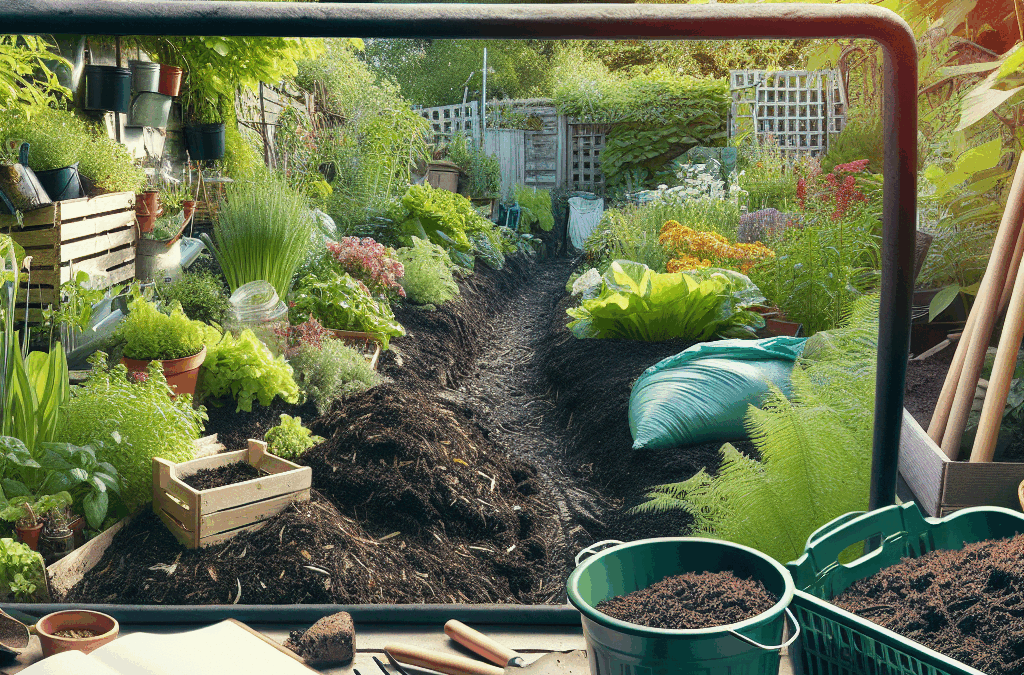
When your garden is too crowded, identify which plants are competing, then thin seedlings, transplant movable plants, prune only suitable mature growth, and remove weak or badly positioned specimens. Prioritize airflow around disease-prone crops and enough light for lower leaves rather than trying to preserve every plant. Water before moving plants, retain an intact root ball, and transplant during a cool part of the day to reduce stress. Avoid severe pruning as a substitute for proper spacing, because removing too much foliage can reduce flowering, expose fruit to sunscald, or weaken a plant that still lacks adequate root space.
Confirm That Crowding Is the Problem
Overlapping leaves alone do not prove that a bed is dangerously crowded. Many healthy vegetables and ornamentals form a continuous canopy once established. The stronger warning signs are persistent shade at the base of plants, leaves that stay wet long after watering, stems leaning away from competitors, poor access for harvesting, and repeated fungal spotting in the densest part of the planting.
Check the garden at midday, when sunlight reveals which plants are being suppressed. Look beneath the canopy rather than judging only the upper leaves. A tomato that towers over basil may not be suffering, but the shaded basil may have thin stems and sparse growth. Closely spaced carrots may produce abundant foliage while forming narrow or twisted roots underground. The visible top growth can therefore conceal the competition that matters most.
Root competition is harder to see. Plants sharing a small soil volume draw from the same water and nutrient reserve, so a crowded bed may wilt quickly even when the soil is reasonably fertile. Adding fertilizer does not create more root space, and excessive nitrogen may make the canopy denser. Before feeding, push a finger or trowel into several parts of the bed. If the soil dries rapidly around a thick network of roots, spacing and water demand deserve attention.
Distinguish crowding from other problems before removing anything. Yellow lower leaves may result from shade, but they can also indicate normal aging, saturated soil, or nutrient stress. Wilting may reflect damaged roots or drought rather than close spacing. Compare plants of the same kind in open and congested areas. If those with more room have sturdier stems, better flowering, or fewer leaf spots under otherwise similar conditions, competition is a likely contributor.
A quick inspection should answer four questions:
- Can air move through the foliage after rain or irrigation?
- Do productive leaves receive useful light for part of the day?
- Can each plant reach its expected mature width without crushing a neighbor?
- Can you water, weed, inspect, and harvest without breaking stems?
If several answers are no, corrective work is justified. If plants merely touch at the edges while remaining vigorous and dry, aggressive thinning may do more harm than leaving the canopy intact.
Decide Which Plants to Keep, Move, or Remove
The best candidates to keep are healthy plants that suit the site, contribute the most to the planting, and are difficult to relocate. Rank plants before reaching for pruners. A mature fruiting pepper generally deserves priority over a volunteer seedling growing against its stem. A well-established perennial may be worth preserving while nearby annuals can be removed at the end of their season.
Start with plants that are diseased, broken, badly placed, or markedly weaker than their neighbors. Removing those specimens usually creates space with the least loss. Next, identify duplicates. If six lettuce plants occupy room intended for three mature heads, retain the evenly spaced plants with strong centers and harvest the others young. Edible thinnings from lettuce, beet, radish, and some leafy greens may be usable if they are correctly identified, healthy, and at an appropriate stage.
Plant value is not the only consideration. Relocation tolerance varies widely. Young annuals with compact root systems often move more successfully than large plants already flowering or setting fruit. Cucurbits such as squash and cucumbers can resent root disturbance, especially after vines have developed. Established woody plants and tap-rooted species may require a larger root ball, dormant-season timing, or professional help. In those cases, removing a less valuable neighbor may be safer than moving the focal plant.
Use a simple order of priority when deciding what to do when your garden is too crowded:
- Remove hazards and disease sources. Cut out collapsed, rubbing, or infected growth and discard material appropriately.
- Thin undersized duplicates. Preserve the strongest plant at a spacing that reflects its mature size.
- Relocate young, adaptable plants. Choose specimens that can be lifted with enough roots and soil.
- Preserve hard-to-move anchors. Work around mature shrubs, vines, and established perennials unless they are the underlying problem.
Avoid trying to save every specimen by shifting each one a few inches. That approach disturbs many roots without creating meaningful space. One decisive removal often improves light and access more than several minor adjustments. Mark the plants to keep with stakes before working so that an attractive or productive specimen is not removed accidentally once foliage becomes tangled.
Thin and Transplant Without Causing More Damage
Thinning is safest when roots are small, while transplanting is more appropriate when a plant has enough value and vigor to justify the disturbance. For tightly packed seedlings, pulling can uproot the plant you intend to keep. Snip unwanted seedlings at soil level with clean scissors when their roots are intertwined. The cut roots will break down in place without tearing through the remaining seedling’s root zone.
Where seedlings are far enough apart to lift separately, water the bed beforehand and loosen soil around them with a narrow trowel. Hold plants by a leaf rather than squeezing a delicate stem. Replant them promptly at the same depth, except for species that tolerate or benefit from deeper planting. General rules should not override species-specific needs; burying a crown or stem that must remain above soil can lead to decay.
Larger plants need a destination prepared before excavation. Dig the receiving hole, water dry soil if needed, and confirm that the new location has suitable sun exposure and drainage. Lift a broad root ball instead of pulling on the stem. A cool, overcast period or late afternoon reduces immediate water loss from foliage, but timing cannot compensate for a badly damaged root system.
After transplanting, settle soil gently around the roots and water the root zone thoroughly. Temporary shade may help a leafy transplant during hot weather, provided it does not trap heat or remain indefinitely. Keep the soil evenly moist while roots re-establish, not continuously saturated. New upright growth and leaves that remain firm through the warm part of the day indicate progress. Persistent collapse, blackened stems, or a sour, waterlogged root zone signal failure rather than normal transplant shock.
Do not fertilize heavily in an attempt to force recovery. Damaged roots may not use concentrated nutrients effectively, and soluble fertilizer can increase stress in dry soil. Compost at the surface and appropriate watering are usually gentler than a strong corrective feeding. If the moved plant was already flowering or carrying fruit, removing some flowers or immature fruit may reduce demand, though that tradeoff sacrifices short-term production.
Transplanting also has seasonal limits. Moving a large plant during a heat wave is risky, while relocating tender annuals shortly before cold weather may provide little benefit. If the plant is near the end of its productive season, early harvest followed by removal is often more sensible. For additional planning context, use a spacing record alongside what to do when your garden is too crowded so that emergency corrections become less frequent.
Use Pruning and Support Where Spacing Cannot Change
Pruning can improve access and airflow, but it cannot correct inadequate root area or permanently reduce a plant’s natural size. Use it selectively on species that tolerate pruning and only where particular leaves, shoots, or stems create a defined problem. Clean cuts are preferable to shearing the entire bed into a smaller outline.
Begin with dead, damaged, diseased, or soil-contacting foliage. Removing low tomato leaves that rest on damp soil may reduce splashing onto the canopy, while taking healthy upper foliage can expose fruit to intense sun. On dense herbs such as basil, harvesting stems just above a leaf pair can reduce height and encourage usable branching. By contrast, cutting squash leaves merely because they overlap may reduce the plant’s photosynthetic capacity without meaningfully shrinking its root demand.
Support structures create vertical separation when horizontal room is limited. Trellises can lift cucumbers, pole beans, and suitable vining crops away from neighboring plants. Stakes or cages keep fruiting stems from collapsing into paths. Install supports carefully in an established bed because driving stakes through a crowded root zone can cause injury. Tie stems loosely with soft material, leaving room for thickening and movement.
Directing growth upward also changes shade patterns. A trellised vine may free ground space while casting a taller shadow across shorter crops. Position or train it so that sun-loving plants are not placed on the persistently shaded side. Vertical growing is therefore a redistribution of space, not the creation of unlimited capacity.
Severe pruning is a common failed response to crowding. Removing a large share of foliage at once may trigger tender regrowth, delay flowering, or leave bark and fruit exposed. It can also produce a tidy appearance while roots continue competing belowground. Spread optional cuts over time and stop if the plant loses vigor, develops scorched tissue, or produces weak new shoots. Never top a tree or indiscriminately cut woody shrubs to make a planting plan fit; renewal pruning, dormant-season work, or eventual relocation may be more appropriate for the species.
When access remains poor after modest pruning and support, accept that a plant must go. Permanent congestion cannot always be managed with repeated trimming, and continual pruning creates more labor while preserving the original spacing error.
Prevent Another Overcrowded Planting
Future spacing should be based on mature plant dimensions and garden conditions, not the appealing gaps visible on planting day. Nursery pots and seed packets show young plants, while mature foliage may occupy several times that volume. Record the actual width reached in your site because cultivar, sunlight, soil, and growing season all affect final size.
Spacing recommendations describe distance between plant centers, not the empty gap between leaf edges. Mark a grid or use a measuring tape before planting. For irregular beds, place empty pots at the intended centers and view them from several angles. This exposes conflicts with paths, irrigation lines, bed edges, and neighboring perennials before roots are involved.
Succession planting can use space efficiently without forcing multiple mature crops into it simultaneously. Fast radishes may finish before a slower crop expands, and spring greens can leave room for warm-season plants. The plan fails when the early crop remains beyond harvest and both plantings reach full size together. Put expected harvest or removal dates on the garden calendar rather than relying on memory.
Seed generously only when you are willing to thin promptly. Dense sowing can protect against uneven germination, but delaying the decision creates tangled roots and elongated seedlings. Check direct-sown rows as soon as true leaves develop and thin in stages if identification or pest pressure makes an immediate final spacing unwise. The remaining plants should show stronger stems and more balanced growth within their normal growth cycle; continued stretching suggests that spacing or light is still inadequate.
Mixed plantings require attention to timing as well as compatibility. Pairing plants because one is tall and one is short does not guarantee success. They may still compete heavily for moisture, or the tall crop may shade the shorter one during its most productive period. Choose combinations whose mature shapes and peak growth periods complement one another, and retain enough path space to inspect both.
Finish the season with a simple bed map. Note which plants overwhelmed their allotted area, where watering became difficult, and which removals improved production or disease pressure. Next season, reduce the number of large plants before shrinking every spacing equally. Leaving one tomato out of a small bed can be more effective than placing all tomatoes slightly closer and repeating the same congestion.
Frequently Asked Questions
Should I pull crowded plants or cut them at soil level?
Cut small seedlings at soil level when their roots are intertwined. Pull or transplant them only when the surrounding soil can be loosened without uprooting the plants you want to retain.
Can crowded plants be transplanted after they begin flowering?
Some can, but flowering and fruiting plants often experience greater stress because damaged roots must support active growth. Move them with a generous root ball during cool conditions, or remove a less established neighbor instead.
Will fertilizer fix an overcrowded garden?
No. Fertilizer may address a verified nutrient shortage, but it does not create root room, sunlight, airflow, or harvesting access. Excess nitrogen can make congested foliage even denser.
How much foliage can I prune from crowded plants?
The safe amount depends on the species and season. Start with dead, diseased, damaged, or soil-contacting growth, then make limited selective cuts rather than removing a large portion of healthy foliage at once.
When is it too late to correct crowding?
Late-season correction may not justify transplant stress. Harvesting early, removing exhausted annuals, or postponing perennial division until a suitable season can be safer than forcing immediate relocation.
Conclusion
A crowded bed needs selective correction, not indiscriminate cutting. Compare plant performance in open and congested areas, protect the healthiest and hardest-to-move specimens, and remove weak duplicates first. Thin intertwined seedlings by cutting them, transplant adaptable plants with intact root balls, and reserve pruning for specific airflow, access, or support problems.
Watch the bed after each change rather than performing every intervention at once. Faster drying foliage, firmer growth, improved access, and reduced leaning suggest that the remaining plants have enough room. Persistent shade, rapid wilting, or recurring disease means the correction was too modest. Record mature widths and removal dates while the evidence is visible, then plant fewer large specimens or use better-timed succession planting next season.


