
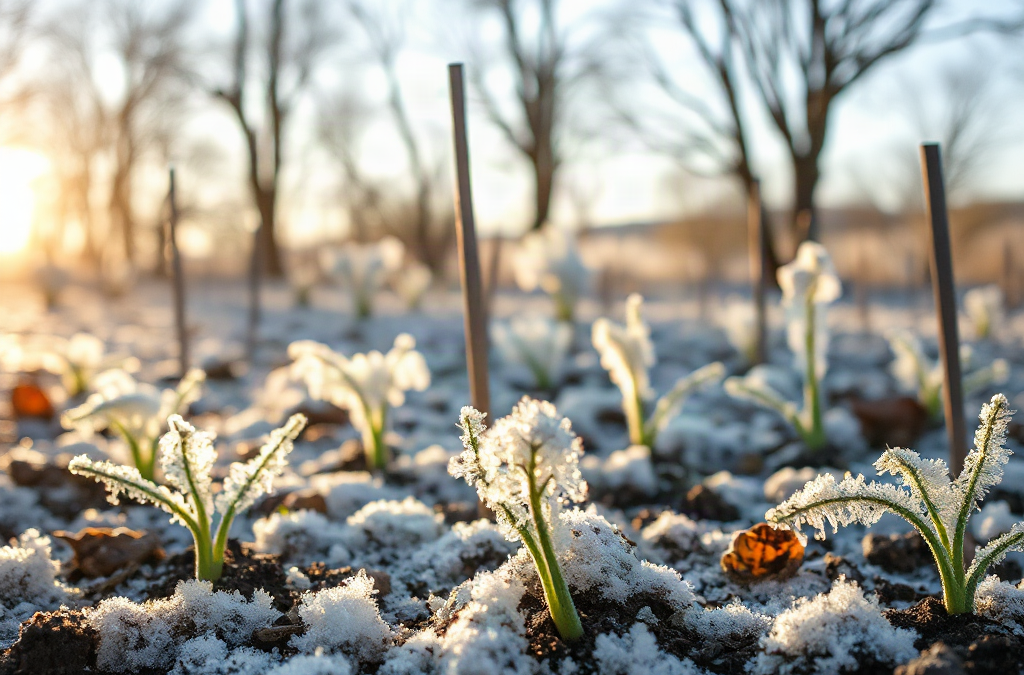
Deal with unexpected frost in spring by watering dry soil before sunset, covering vulnerable plants before temperatures fall, and anchoring each cover to the ground so stored soil warmth cannot escape. Use frost cloth, sheets, blankets, or inverted containers, but keep plastic from touching foliage because contact points can become colder and damage leaves. Remove or vent protection after temperatures rise the next morning, then wait several days before pruning injured growth. Prioritize seedlings, flowering fruit crops, and tender transplants; established cool-season plants often tolerate a light frost without intervention.
Identify the Plants and Conditions at Greatest Risk
Frost risk is determined by more than the temperature shown in a general forecast. Plant tenderness, growth stage, wind, cloud cover, soil moisture, elevation, and the location of each bed all influence whether exposed tissue freezes. A forecast near 36°F can still produce frost at plant level on a clear, calm night because leaves radiate heat toward the open sky and may become colder than the surrounding air.
Start by separating vulnerable plants from those likely to tolerate a brief cold event. Tomatoes, peppers, basil, cucumbers, squash, beans, impatiens, and many warm-season annuals can be injured at temperatures above a hard freeze if frost forms directly on their tissues. Recently transplanted seedlings and plants carrying blossoms deserve priority because their soft new growth contains abundant water and has little cold tolerance. Peas, spinach, kale, onions, carrots, and established hardy perennials generally tolerate a light frost better, although flowers and new shoots may still be damaged.
Location changes the risk within a single property. Cold air flows downhill and settles in low pockets, while beds beside south-facing masonry may remain warmer because walls release heat accumulated during the day. An open bed under a clear sky usually cools faster than a planting beneath a tree canopy or covered porch. Wind complicates the picture: a light breeze may prevent frost crystals from settling, but a strong influx of freezing air can create a damaging freeze that simple covers cannot fully overcome.
Check the forecasted overnight low, the expected duration of cold, wind speed, and whether a frost advisory or freeze warning has been issued. Then inspect actual garden conditions. Dry soil, exposed containers, low-lying beds, and tender new growth all increase urgency. Container plants cool rapidly because cold air surrounds much of the root zone; move manageable pots into an unheated garage, shed, enclosed porch, or sheltered position against the house.
A practical priority order keeps a sudden warning manageable:
- Move portable tender plants into protected, unheated shelter.
- Cover flowering and fruiting warm-season crops whose current growth cannot be replaced quickly.
- Protect new transplants and seedlings with limited root systems.
- Leave established cold-tolerant crops until last unless a harder or longer freeze is predicted.
A common mistake is covering every plant indiscriminately while overlooking the most sensitive pots or blossoms. When time and materials are limited, matching protection to plant tolerance is more effective than spreading thin covers across the entire landscape. That triage is central to how to deal with unexpected frost in spring when the warning arrives late in the day.
Protect Plants Before the Temperature Falls
Preparation should be completed before sunset because the soil begins losing stored daytime warmth once sunlight fades. Covers do not produce heat; they slow heat loss and hold warmer air around the plant. Installing them after frost has already formed captures less ground warmth and increases the chance of breaking cold, brittle stems while working in darkness.
If the soil is dry, water the root zone during the afternoon rather than spraying foliage late at night. Moist soil generally stores and releases more heat than loose, dry soil. Apply enough water to moisten the bed without saturating it or leaving puddles. Wetting leaves is not a substitute for irrigation and may create additional problems if water freezes on tender tissue. Commercial frost-protection irrigation is a specialized, continuous process; briefly turning on a household sprinkler before bed does not reproduce it safely.
Gather supports, covers, clips, stones, boards, or soil before temperatures drop. Place stakes, hoops, tomato cages, or overturned crates around delicate plants so heavy fabric does not flatten stems. Drape the material over the support and extend it all the way to the ground. Secure every edge. An open gap near the soil acts like a chimney, allowing the warmer air the cover was meant to retain to escape.
Low tunnels work well for rows of vegetables, while individual buckets, nursery pots, cardboard boxes, or cloches suit scattered seedlings. Remove lids from airtight containers or uncover plants promptly in the morning; even cool spring sun can raise temperatures quickly beneath a sealed cover. For small transplants, mark the covered locations so no one steps on a low container before daylight.
When a colder event is expected, layering offers more protection than a single thin sheet. A supported inner layer of frost cloth plus a heavier outer blanket can trap additional air, provided the materials remain dry and the structure can bear their weight. A string of outdoor-rated incandescent holiday lights beneath a large cover may add modest warmth, but only equipment approved for outdoor use should be considered. Keep hot bulbs away from fabric and foliage, protect electrical connections from moisture, and never use fuel-burning heaters under improvised covers.
The weak assumption is that covering only the leaves is enough. The useful heat source is usually the ground, so a cover tied tightly around the stem protects less effectively than a tent sealed at soil level. Success is indicated by intact, firm foliage after thawing. A loose cover flapping in the wind, exposed edges, or fabric soaked by rain signals that protection may be failing and needs reinforcement before the coldest predawn hours.
Choose Covers That Trap Heat Without Causing Damage
The best cover is lightweight enough for the plant or properly supported, wide enough to reach the ground, and able to reduce heat loss without pressing cold material against tender leaves. Purpose-made frost cloth is convenient because it is breathable, reusable, and available in different weights. Its effectiveness still depends on installation: a small piece suspended above the foliage but open around the base provides little protection.
Bed sheets, lightweight blankets, towels, and burlap can work during an emergency. Sheets are easier to support over seedlings, while blankets provide more insulation for shrubs or sturdy frames. Heavy materials become much heavier when wet, so they should not rest directly on delicate branches. Cardboard boxes and inverted plastic pots are useful for individual plants, but both need weights to stop wind from dislodging them. Avoid metal containers, which conduct cold readily and can chill any foliage touching their sides.
Plastic sheeting blocks wind and rain but creates a distinct contact hazard. Where plastic touches a leaf, the tissue may lose heat rapidly and suffer damage at that point. If plastic is the only option, suspend it over hoops or stakes and add a fabric layer beneath it. Seal the outer edges at ground level, then remove or open the plastic after sunrise to prevent condensation and overheating. Plastic should be treated as an outer weather barrier, not wrapped directly around the plant.
Mulch protects roots and crowns but does not reliably shield exposed flowers and leaves. A layer of straw, shredded leaves, or other loose mulch may help strawberries, newly emerging perennials, and shallow-rooted plants by moderating soil temperature. Do not bury the foliage of tender vegetable transplants under dense, wet mulch; compressed material can snap stems, retain excessive moisture, and be difficult to remove without damage. For a single cold night, an aboveground cover is usually the cleaner choice.
Scale the material to the forecast. A light radiational frost on a calm night may call for ordinary frost cloth sealed around the bed. Several hours below freezing, persistent wind, or a hard freeze calls for thicker layers, added protected heat, or moving plants indoors. No household cover can guarantee survival during prolonged severe cold, especially for tropical plants or exposed blossoms.
Material choice also affects morning labor. Breathable frost cloth may remain temporarily in place during a cool, cloudy day, but plastic and sealed containers require prompt venting. Gardeners who cannot uncover plants early should favor breathable material and avoid airtight enclosures. For more planning detail, keep a dedicated set of labeled covers and anchors with your supplies for the next alert about how to deal with unexpected frost in spring.
Assess Frost Damage and Support Recovery
Wait until frozen tissue has thawed before deciding what survived. Leaves may look dark, water-soaked, limp, or translucent shortly after exposure, while stems can remain firm and viable. Damage often becomes clearer over the next several days as injured tissue dries and healthy buds resume growth. Immediate pruning can remove living tissue and expose lower growth to another cold night.
After temperatures rise above freezing, uncover plants gradually and let any surface ice melt naturally. Do not wash frost away with warm water, rub frozen leaves, or handle brittle stems. If bright sun follows a severe frost, leaving a breathable cover loosely in place for part of the morning may slow thawing and reduce abrupt stress. Sealed plastic must still be opened so heat and condensation do not accumulate.
Check the growing point, stem, and buds rather than judging the plant by its oldest leaves. A tomato with blackened upper foliage but a firm green stem may produce new shoots from lower nodes. A pepper whose stem has become soft and dark down to the soil line is less likely to recover. Strawberry blossoms with black centers may not form fruit even when surrounding leaves appear healthy. Cool-season crops such as spinach can show scorched leaf edges yet continue producing from an undamaged crown.
Maintain even soil moisture during recovery, but do not flood cold soil. Damaged roots and leaves use water slowly, and saturated conditions can compound stress. Avoid a heavy fertilizer application immediately after frost. Fertilizer cannot repair ruptured cells, and pushing soft new growth before the weather stabilizes may increase vulnerability to the next cold spell. Resume normal feeding only after active growth is visible and temperatures are suitable for the crop.
Prune soft, collapsing annual foliage once the full extent of injury is clear and another freeze is not imminent. For woody shrubs and perennials, scratch a tiny area of questionable bark with a clean tool; green tissue beneath suggests that section remains alive. Delay major shaping until buds reveal where viable growth begins. Clean tools between plants when removing decayed material, and discard tissue that has become slimy or moldy rather than adding it to a crowded bed surface.
Recovery is working when stems remain firm, buds swell, or new leaves emerge from healthy nodes. Continuing blackening down the stem, a foul odor, crown collapse, or no new growth after suitable warmth returns points toward replacement. Record which beds frosted first and which protection held securely. Those observations are more useful for future placement and preparation than relying only on a regional forecast.
Frequently Asked Questions
At what temperature should spring plants be covered?
Cover tender plants when local conditions may approach the mid-30s Fahrenheit, especially on clear, calm nights. Plant-level temperatures can fall below the forecasted air temperature, while hardy cool-season crops may need protection only for a stronger freeze.
Can garbage bags protect plants from frost?
Plastic bags can block wind but should not touch foliage. Support them over the plant, secure the edges at ground level, and remove them promptly after sunrise. A sheet or frost cloth is generally safer for direct contact.
Should plants be watered after frost damage?
Check soil moisture first and water moderately if the root zone is dry. Avoid soaking already cold, wet soil; damaged plants transpire slowly and cannot use excess water efficiently.
Will one night of frost kill tomato plants?
A light frost may kill exposed tomato leaves and growing tips without killing every stem. Wait for thawing, inspect for firm green tissue, and watch for new shoots before deciding whether to replace the plant.
When should frost covers be removed?
Remove or vent covers after the air rises safely above freezing. Plastic and sealed containers need early attention because sunlight can overheat plants, while breathable frost cloth may remain briefly during a cold, cloudy morning.
Conclusion
A late cold alert calls for triage rather than blanket treatment. Move tender containers first, protect flowers and warm-season transplants, moisten dry soil in the afternoon, and install supported covers before the bed loses its daytime warmth. The edges matter as much as the material: a cover that reaches and seals against the ground retains more useful heat than one wrapped around foliage.
Open protection once temperatures recover, handle frozen plants as little as possible, and postpone major pruning until surviving buds and stems reveal themselves. Even careful protection has limits during prolonged freezes, so replacement may be more practical when crowns or stems collapse completely. Record the cold pockets, damaged crops, and successful cover combinations while the event is fresh; that site-specific information will make the next spring frost warning faster and easier to manage.


