
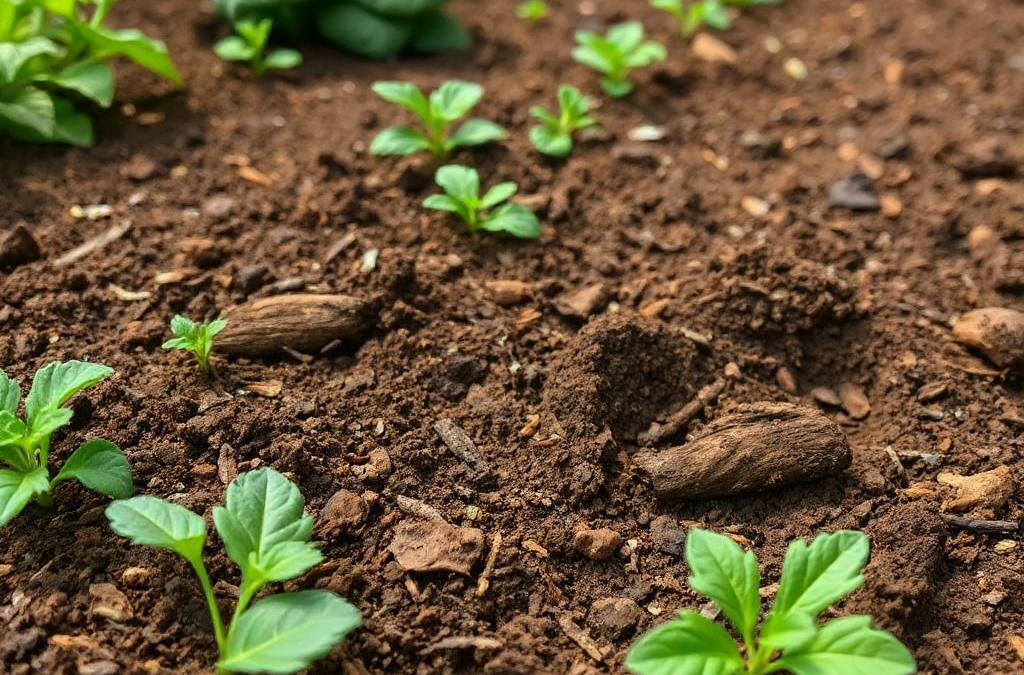
Manage soil erosion in vegetable gardens by slowing runoff, keeping soil covered, and directing excess water away from planting beds. Use organic mulch, living cover crops, contour-aligned rows, and stable paths to protect loose topsoil from raindrop impact and flowing water. On sloped ground, shorten the distance water travels with raised contour berms or small diversion channels, while dense crops and deep-rooted cover plants help hold soil in place. Avoid relying on mulch alone where water concentrates, because it may wash away without a drainage correction. Inspect after heavy rain for exposed roots, sediment deposits, rills, and clogged outlets, then repair the source before adding more soil or compost.
Find the Source and Severity of Erosion
Soil erosion in a vegetable garden usually begins when rainfall or irrigation strikes bare soil faster than the ground can absorb it. Raindrops break apart surface aggregates, and moving water carries the loosened particles downhill. Compacted soil, a steep grade, sparse plant cover, and poorly placed paths all increase the speed and volume of runoff. The first useful step is not adding fertilizer or replacing washed soil; it is tracing where water enters, where it concentrates, and where sediment leaves the bed.
Inspect the garden during or soon after a strong rain. Fine channels, exposed roots, muddy deposits at the lower edge, splashed soil on leaves, and puddles that remain after nearby ground drains are practical clues. A broad shallow sheet of soil loss calls for surface protection and improved infiltration. A defined groove several inches deep signals concentrated flow and may require grading or a diversion feature. A garden hose set to a gentle flow can help reveal the route without reproducing a damaging downpour.
Compare the bed with nearby areas. Water may be coming from a roof downspout, lawn, driveway, upper terrace, or compacted walkway rather than from the bed itself. If a lower bed receives runoff from a higher one, covering the lower bed more heavily will only treat the symptom. Redirecting clean water around the growing area is usually more effective than trying to absorb every drop inside it.
A common mistake is tilling eroded ground repeatedly to make it look level. Tillage can temporarily hide channels but leaves the surface loose and vulnerable to the next storm. Preserve remaining structure, remove only obviously deposited debris, and use a straightedge or simple level to identify the direction of fall. If water undermines a retaining edge or threatens a foundation, consult a qualified drainage or soil professional rather than improvising a deep channel.
Keep Vegetable Beds Covered and Rooted
Ground cover protects soil in two different ways: mulch absorbs the force of falling water, while living roots bind particles and create pores that let water enter. A layer of clean straw, shredded leaves, finished compost, or other suitable organic material can reduce splash and slow shallow runoff between plants. The best material depends on availability and crop needs. Coarse straw stays in place better than fine leaves during heavy rain, while partially decomposed leaves may form a water-shedding mat if spread too thickly.
Apply mulch after the soil has been watered or has settled, rather than covering saturated ground with a dense layer. Keep it slightly away from plant stems to reduce prolonged moisture around the crown and discourage pest habitat. In a bed growing tomatoes at wide spacing, mulch the exposed strips between plants; in a closely planted bed of greens, the canopy itself may become the main rain shield once established. Replace material that has thinned near the downhill edge, but investigate repeated loss instead of continually adding more.
Living cover is especially valuable between vegetable crops. Winter rye, oats, field peas, buckwheat, or other locally suitable cover crops can protect an empty bed when annual vegetables are absent. Choose species according to winter conditions, termination timing, and the next crop’s planting date. A vigorous cover crop that is difficult to terminate can create a scheduling problem, so a modest stand timed for easy mowing or cutting may be wiser than maximum biomass. Cut or terminate it early enough to prevent mature seed or excessive residue from interfering with planting.
Roots improve infiltration, but plants alone cannot stop water flowing down a steep, narrow channel. Dense lettuce will not replace a stable path, and a cover crop may be stripped from a saturated slope if runoff enters from above. The practical combination is living cover or mulch on the soil surface, permanent vegetation or a durable surface on traffic lanes, and a separate plan for concentrated water.
Use how to manage soil erosion in vegetable gardens as a seasonal decision rather than a one-time repair: cover soil before it is bare, especially after harvest, and check that the cover remains in place after storms.
Control Runoff on Sloped or Waterlogged Sites
Sloping gardens need a way to reduce the length and speed of the water’s journey. Aligning beds, furrows, and rows across the slope rather than straight downhill can interrupt flow, provided the arrangement does not create a new channel toward a house or neighboring property. On a gentle grade, contour planting combined with mulch may be enough. On a sharper grade, short terraces, broad level beds, or carefully built berms can spread water across a wider area and reduce its velocity.
Raised beds are not automatically an erosion solution. A raised bed with bare sides can shed water from its top and collapse at the downhill edge. If you use raised beds, keep their sides stable with appropriate untreated materials, leave enough width for water to infiltrate, and protect the lower edge with vegetation or mulch. A shallow swale may intercept runoff above the garden, but it must have a safe, stable outlet. A ditch that simply moves water faster toward the next bed transfers the damage rather than solving it.
Drainage and erosion are related but not identical. Waterlogged soil may need improved infiltration, a surface drain, or a corrected grade; fast-moving surface water needs to be slowed and dispersed. Adding sand to clay soil is rarely a dependable backyard fix and can create a dense mixture when the proportions are wrong. Incorporating organic matter can improve aggregation over time, but it will not repair a blocked outlet or a downspout discharging into the bed.
Consider a garden on a moderate backyard slope with a shed above it. During storms, the shed roof sends a concentrated stream into the top row, which then cuts channels through lower rows. Moving the downspout discharge to a stable, vegetated area, shortening the rows across the slope, and maintaining mulch between crops addresses the sequence of causes. By contrast, installing only a heavier mulch layer at the bottom leaves the upper impact and concentrated entry point untouched.
Use stone, wood, or other durable edging selectively. Hard edging may protect a vulnerable corner, but continuous impermeable borders can trap water and increase pressure behind them. Any structure that retains soil needs a safe drainage path. For substantial slopes, deep gullies, or runoff that leaves the property, local conservation guidance or a landscape professional can prevent a small garden repair from becoming a failed retaining system.
Build a Practical Erosion-Management Routine
Effective erosion control is a sequence of small checks tied to the growing calendar. Before planting, inspect the upper boundary, clean or redirect downspouts, repair rills, and firm traffic routes. During crop growth, keep exposed soil covered and avoid walking on wet beds, since compaction reduces infiltration and sends more water across the surface. After harvest, remove diseased plant material as appropriate, then establish mulch or a cover crop before seasonal rain leaves the soil exposed.
Prioritize repairs in this order:
- Stop concentrated water: Correct roof, driveway, path, or upper-slope runoff entering the bed.
- Protect bare soil: Use mulch, crop residue, or a suitable living cover before the next heavy rain.
- Improve traffic and grade: Keep paths stable and arrange rows to avoid downhill channels.
- Stabilize outlets: Ensure redirected water reaches a safe, non-eroding area.
Watch for evidence that the approach is working. Clear water at the lower edge, fewer splash marks, intact mulch, and no new channels after rain indicate improvement. Persistent muddy discharge, exposed roots, or mulch collecting in one pile means water is still moving too quickly or entering from the wrong place. Replace lost soil only after the flow is controlled; otherwise, new compost or topsoil becomes another layer to wash away.
Crop planning also affects risk. Closely spaced leafy crops cover soil quickly, while widely spaced squash, tomatoes, and newly planted seedlings leave larger vulnerable areas. Temporary mulch between young plants can bridge that gap. Avoid cultivating the surface immediately before a forecast storm, and do not assume a dry-looking bed is safe to work if deeper soil remains saturated. A simple rain inspection log—recording where sediment appears and which measures held—can reveal patterns that are easy to miss from day to day.
For more context, compare erosion control with how to manage soil erosion in vegetable gardens when planning crop rotation, cover-crop timing, and bed maintenance. The strongest routine combines prevention before storms with quick repairs afterward, rather than waiting for visible damage to become severe.
Frequently Asked Questions
What is the fastest way to reduce erosion in a vegetable bed?
Cover bare soil with a suitable mulch and stop concentrated runoff from entering the bed. Mulch reduces raindrop impact, but it will not correct a downspout or steep channel by itself.
Should vegetable rows run up and down a slope?
Usually, rows across or near the contour slow water better than rows running straight downhill. On steep ground, use short beds or terraces and provide a safe outlet rather than creating a channel across the slope.
Can compost prevent soil erosion?
Finished compost can contribute to better soil aggregation when incorporated appropriately, but it is not a standalone erosion barrier. Surface cover, roots, reduced compaction, and runoff control are still needed.
Which mulch stays in place best during heavy rain?
Coarse, interlocking materials such as clean straw or larger shredded leaves often resist movement better than fine loose material. If any mulch repeatedly washes away, correct the water concentration first.
When should washed-away soil be replaced?
Replace soil after the runoff route has been corrected and the bed edge is stable. Otherwise, new soil or compost may be carried away again during the next storm.
Conclusion
Managing erosion in a vegetable garden begins with observing water, not simply adding soil. Trace runoff from roofs, paths, and upper ground; then slow or redirect concentrated flow before protecting the bed with mulch, living roots, and stable traffic lanes. Arrange rows across gentle slopes, use short terraces where appropriate, and treat raised-bed sides and drainage outlets as part of the system. Check the garden after heavy rain for new rills, sediment piles, exposed roots, or displaced mulch. Those signs show whether the repair is working or whether water is still arriving too quickly. A practical next step is to photograph the bed after the next storm, mark the entry and exit points, and correct the highest-risk source before the next planting or harvest cycle.
Further Reading
Authoritative Sources
- USDA NRCS Soil Resources
nrcs.usda.govOfficial soil health, conservation, and water-management information.
- EPA Safe Pest Control
epa.govOfficial information for safer pest-management decisions.


