
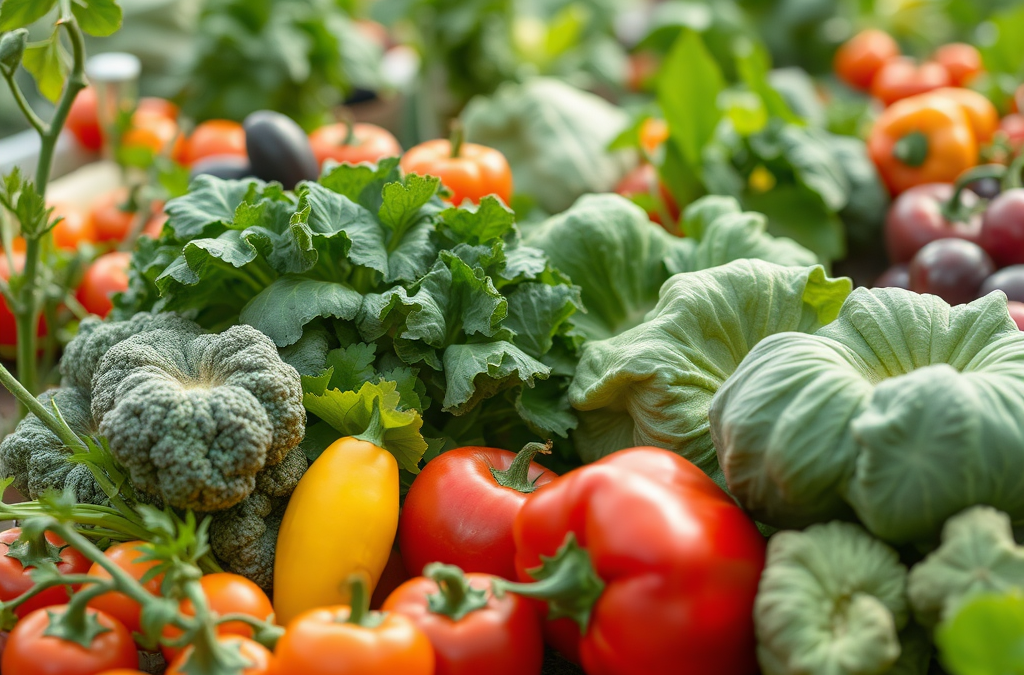
Select vegetable varieties by matching your local climate, frost dates, growing-season length, soil conditions, disease pressures, and available space—not by popularity alone. Check your area’s average last and first frost dates, then compare each variety’s days to maturity with the reliable frost-free window. Favor heat-tolerant types for hot summers, cold-tolerant selections for short or cool seasons, and disease-resistant varieties when local problems recur. Seed packets and regional university extension recommendations can reveal useful traits, but small trial plantings are often the best test because gardens differ in drainage, shade, and microclimate.
Match Varieties to Climate and Season Length
Local climate is the first filter because a vegetable variety can be well bred yet poorly suited to the time and temperatures available in your garden. Find your average last spring frost and first autumn frost, then estimate the dependable growing window between them. Compare that period with the variety’s days to maturity, while allowing extra time for transplant shock, cool starts, cloudy weather, or interruptions in watering.
Days to maturity are not a guarantee. A tomato listed at 70 days may take longer in cool soil, while a lettuce variety may bolt rapidly when temperatures rise. For a short-season area, early peas, compact bush beans, short-season carrots, and quick-producing cucumbers may be more dependable than long-season alternatives. Gardeners with extended warm weather can consider larger tomatoes, winter squash, storage onions, or long-season peppers, provided water and disease management are adequate.
Temperature preference matters beyond frost dates. Cool-season crops such as spinach, kale, radishes, and peas may lose quality during sustained heat. Warm-season crops such as eggplant, peppers, okra, and melons need warm soil and nighttime temperatures before they grow steadily. A variety described as heat tolerant may keep producing longer during hot weather, whereas a cold-tolerant selection may withstand cool nights without stopping completely.
A common mistake is choosing by maturity number alone. A 55-day variety is not automatically better than an 80-day variety if the shorter crop has poor flavor, low disease resistance, or a harvest period that conflicts with your schedule. Use maturity as a feasibility check, then weigh the traits that determine whether the crop will remain productive in your actual season.
Read Seed Packets for Useful Traits
Seed packets and catalog descriptions contain decision-making details, but the wording must be interpreted rather than skimmed. Look for days to maturity, recommended planting season, mature plant size, disease resistance codes, heat or cold tolerance, and whether the variety is open-pollinated, hybrid, determinate, indeterminate, bush, vining, or suitable for containers.
Disease resistance is particularly valuable when the same problem appears repeatedly in your area. Codes for diseases such as verticillium wilt, fusarium wilt, powdery mildew, or downy mildew indicate breeding for resistance, not complete immunity. A resistant cucumber can still struggle in waterlogged soil, and a tomato with resistance to one wilt disease may remain vulnerable to another. Match the resistance trait to a problem you have actually observed or one documented by a reliable local source.
Growth habit changes the practical value of a variety. Determinate tomatoes produce a concentrated crop and may suit containers or gardeners who want to preserve food at once. Indeterminate tomatoes continue extending and fruiting, but they need stronger support and regular pruning or tying. Bush beans fit smaller beds, while pole beans use vertical space and may produce over a longer period. Neither choice is universally superior; the better option depends on harvest goals, supports, and available room.
Flavor, storage, harvest form, and use should influence selection as much as yield. A paste tomato may be more useful for sauce than a high-yield slicing type. A cut-and-come-again lettuce can provide repeated salads, while a heading variety may produce one larger harvest. Avoid assuming that an award label, attractive photograph, or popular name predicts performance in your garden. Trait descriptions are more useful when connected to a specific constraint.
Use how to select the best vegetable varieties for your area as a planning reference, then compare several candidates instead of ordering the first appealing packet.
Account for Soil, Space, and Microclimates
Your garden’s conditions can differ sharply from the broader climate zone used in seed catalogs. A sunny raised bed with sandy soil warms earlier than a shaded low spot with heavy clay. Slopes, walls, fences, pavement, wind exposure, and nearby trees all alter temperature, moisture, and the length of usable sunlight. Variety selection should respond to those conditions rather than relying on a regional label alone.
Space is a major selection constraint. Compact zucchini, patio tomatoes, dwarf peppers, bush cucumbers, and small-rooted carrot types may be sensible in containers or narrow beds. A vigorous pumpkin or sprawling winter squash may be productive but unsuitable for a small plot. Check mature spread, not just the spacing for young plants. Crowding reduces airflow, complicates harvesting, and can make foliage stay wet longer after irrigation or rain.
Soil texture and drainage also affect which choices are practical. Root vegetables often produce more uniform results in loose, stone-free soil, while leafy crops can tolerate a wider range if moisture is steady. Crops that dislike wet roots should not be selected for a poorly drained bed merely because the variety is advertised as vigorous. Improving drainage or using a different planting area may solve more problems than changing seed.
Containers require additional judgment. Their soil heats and dries faster than ground soil, so compact varieties are helpful but do not remove the need for frequent monitoring. A full-sized indeterminate tomato may outgrow a small pot even if it begins well. Conversely, a container-grown herb-like vegetable or dwarf pepper may perform better because its root and canopy size match the available volume.
Observe your site at different times of day before buying. If a bed receives only four or five hours of direct sun, select crops that tolerate partial light rather than expecting full-sun varieties to produce normally. The best local choice is often the one that fits a modest site well, not the one with the highest theoretical yield.
Test, Compare, and Record Local Performance
A small comparison trial turns variety selection into a practical process. Choose two or three candidates for one crop, plant them under similar conditions, and keep the planting sizes manageable. Compare germination, transplant survival, vigor, disease symptoms, flowering, harvest timing, flavor, and the length of productive harvest. This approach reveals differences that a catalog cannot predict.
For example, two pepper varieties may both mature within your season, but one may set fruit during a cool spring while the other waits for sustained heat. A tomato may have excellent flavor but crack after irregular watering, whereas another may be less flavorful yet more reliable for fresh eating. A lettuce variety may produce attractive leaves in April but bolt before you can harvest it in June. These are not abstract distinctions; they determine whether the crop earns space next year.
Keep a simple record with the variety name, seed source, planting date, weather notes, harvest dates, and problems observed. Record conditions such as unusual heat, late frost, drought, shade from a new tree, or heavy rain. Without those notes, gardeners often blame a variety for a site problem or reject a good selection after an unusually difficult season.
Prioritize reliability when the crop occupies valuable space. A slightly lower-yielding variety that resists a recurring disease, tolerates your planting window, and produces usable food may be a better choice than a high-yielding type that fails unpredictably. For crops grown mainly for flavor or novelty, reserve a small section for experimentation and use proven varieties for the remainder.
Do not change every variable at once. If one variety receives different soil, irrigation, or planting dates, the comparison becomes difficult to interpret. Start with a dependable baseline, test one new selection beside it, and expand only when the difference is meaningful. That method is more informative than relying on online rankings or a single enthusiastic recommendation.
For additional planning context, review how to select the best vegetable varieties for your area alongside regional planting calendars and local crop-disease information.
Build a Practical Variety-Selection Plan
Make the final decision by ranking constraints rather than trying to find a perfect variety. First remove options that cannot mature before severe cold or cannot tolerate the crop’s temperature range. Next remove choices that exceed your space, require support you cannot provide, or lack resistance to a confirmed recurring disease. Compare the remaining varieties by intended use, harvest timing, flavor, storage, and seed cost.
A useful shortlist can contain one dependable choice, one variety selected for a specific trait, and one small experimental option. For a short-season garden, the dependable choice might be an early tomato, the trait choice a cold-tolerant leafy crop, and the experiment a larger-fruited tomato grown in a sheltered bed. In a hot region, the trait choice might be a heat-tolerant lettuce or bean rather than another crop that already performs reliably.
- Season: Does maturity fit the reliable frost-free or cool-season window?
- Site: Does the mature size suit sunlight, soil, drainage, and container or bed space?
- Risk: Does the variety address known heat, cold, disease, or cracking problems?
- Use: Will the harvest form match fresh eating, preserving, storage, or repeated picking?
- Evidence: Is the recommendation supported by local trials, extension information, or your own records?
The usual failure is treating a plant label as a promise. Variety performance remains dependent on planting date, soil preparation, irrigation, fertility, pests, and weather. Use the label to narrow the field, not to replace observation. A seasonal record, combined with information from a nearby university extension or public horticulture program, becomes increasingly valuable after two or three growing cycles.
Readers comparing crops, seed sources, and planting timing can return to how to select the best vegetable varieties for your area before finalizing a purchase list.
Frequently Asked Questions
Should days to maturity determine my choice?
Use days to maturity to check whether a variety fits your season, but also consider transplant recovery, temperature, disease resistance, harvest purpose, and local conditions.
Are hybrid varieties better for every garden?
No. Hybrids may offer useful traits such as uniformity or disease resistance, while open-pollinated varieties may suit gardeners who value seed saving or particular flavors.
How can I choose varieties for a hot climate?
Look for heat-tolerant or slow-to-bolt descriptions, adjust planting dates for the local season, and choose crops that can maintain flowering or leaf quality during sustained warmth.
What if my garden has limited space?
Favor bush, dwarf, patio, compact, or container-suitable varieties after checking mature dimensions. Vining crops can work when you have sturdy vertical supports and adequate sunlight.
How many varieties should I test?
Two or three varieties per crop are usually enough for a useful comparison. Grow them under similar conditions and record harvest timing, quality, problems, and overall reliability.
Conclusion
Successful variety selection comes from matching a crop to the conditions it will actually face. Check the dependable growing window first, then examine temperature tolerance, disease resistance, mature size, growth habit, intended use, and soil or sunlight limits. Treat catalog descriptions as useful evidence rather than guarantees, especially when your garden has unusual shade, wet soil, strong heat, or limited space. A small side-by-side trial can reveal more than a popularity ranking because it shows how each selection behaves in your microclimate. Keep records of planting dates, harvest quality, weather, and failures. Next season, keep the varieties that were reliable, replace those that repeatedly conflicted with your conditions, and reserve a small area for carefully chosen experiments.


