
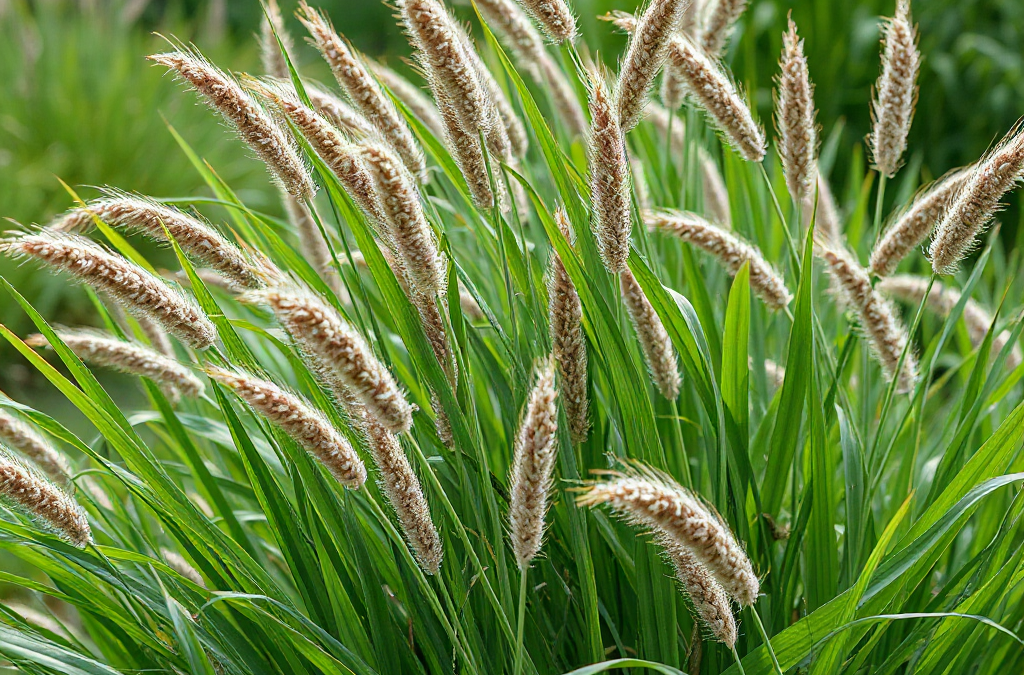
Native grasses suited to rain garden conditions include switchgrass, prairie cordgrass, bluejoint, Virginia wildrye, little bluestem, and tufted hairgrass, but each belongs in a different flooding zone, soil type, and light exposure. Moisture-tolerant species should occupy the basin, while grasses that need periodic drying belong on the side slopes or rim. Selection must account for how long water remains after storms, not simply whether the site is described as wet. Matching mature height and spread to the available space also prevents flopping, crowding, and blocked inlets. Confirm regional native status before planting because native ranges and local ecological suitability vary.
Match Grasses to Rain Garden Moisture Zones
A rain garden is not uniformly wet. Its lowest area receives runoff first and usually dries last, the side slopes experience shorter periods of saturation, and the upper rim may remain almost as dry as the surrounding landscape. Treating the entire depression as one planting environment is a common reason grasses decline after the first season.
The basin needs species that tolerate short-term inundation as well as the oxygen-poor soil conditions that accompany saturation. Prairie cordgrass, switchgrass, bluejoint, and some locally native sedges can handle this position better than upland prairie grasses. Tolerance does not mean they should stand in water indefinitely. A functioning rain garden generally drains between storms; persistently ponded water may indicate compacted subsoil, a blocked outlet, an undersized overflow route, or a location with a seasonally high water table.
Side slopes provide a transition between wet and dry conditions. Virginia wildrye and tufted hairgrass may fit this zone where their native ranges, light requirements, and soil preferences align with the site. Switchgrass can also bridge the lower and middle zones because established plants tolerate both periodic saturation and dry intervals. That adaptability is useful, but its eventual height and vigor can overwhelm a small residential basin.
Little bluestem and similar dry-prairie grasses belong near the upper edge rather than at the bottom. Their roots can stabilize the rim, yet repeated ponding around their crowns often causes thinning or rot. Placing an upland species in the basin merely because it has a deep root system confuses drought resilience with flood tolerance. Deep roots do not automatically protect a crown from oxygen-starved soil.
Observe the site during several storms before finalizing the layout. Mark where water collects, record whether it is gone later that day or remains into subsequent days, and note channels where runoff has enough force to expose roots. These observations make Native grasses suited to rain garden conditions easier to place accurately than a generic wet-versus-dry label. If water routinely remains for multiple days, correct drainage or sizing problems before relying on plants to compensate.
Choose Species for Sun, Soil, and Available Space
Flood tolerance narrows the choices, but sunlight, soil texture, and mature size determine whether a suitable grass will perform well in a particular yard. A species adapted to temporary flooding may still lean, flower poorly, or lose density when planted in more shade than it tolerates.
Full-sun basins offer the broadest range of warm-season grasses. Switchgrass and prairie cordgrass generally develop stronger stems and denser growth with ample sun. Little bluestem also needs substantial light and is most appropriate on a well-drained rim. In partial shade, cool-season grasses such as Virginia wildrye may be more dependable, although its relatively short life span means it often works best as an early-establishing component rather than the sole structural plant.
Soil texture changes how long roots remain saturated. A sandy basin may drain rapidly and become droughty between storms, favoring adaptable species over plants that require consistently moist soil. Clay holds water longer and can become dense if walked on or worked while wet. Adding a thin layer of compost does not correct a severely compacted subsoil by itself. A drainage test and inspection of the soil profile are more useful than assuming every rain garden needs the same amendment recipe.
Scale also matters. Prairie cordgrass can spread by rhizomes and form a forceful colony, making it useful in a broad basin or along an erosion-prone flow path but difficult beside a narrow walkway. Tall switchgrass cultivars may obstruct windows, cover smaller flowering plants, or lean into an outlet. Tufted hairgrass has a finer form and may fit smaller compositions, but it is not interchangeable with a large, deep-rooted grass where runoff arrives with considerable force.
Use this compact selection check before buying plants:
- Hydrology: Identify basin, slope, or rim placement and the typical ponding duration.
- Light: Record direct summer sun rather than relying on a broad sun-or-shade impression.
- Soil: Check texture, compaction, drainage rate, and seasonal wetness.
- Scale: Compare mature height and spread with paths, inlets, outlets, and sightlines.
- Range: Verify that the species is native to the region, not merely to the continent.
A mixed planting is usually more resilient than a single-species stand because the basin contains multiple microconditions. Diversity should still be deliberate. Combining aggressive rhizomatous grasses with small, slow clump-formers can result in domination rather than balance.
Reliable Native Grass Options by Planting Position
Species names are most useful when paired with a specific position and constraint. Native status also varies geographically, so local extension resources, conservation districts, native plant societies, or regional floras should confirm that each candidate belongs in the intended area.
Lower Basin Candidates
Prairie cordgrass (Spartina pectinata) tolerates wet ground and moving runoff once established. Its dense, spreading growth can reinforce larger basins, but rhizomes may carry it beyond a small planting pocket. Use it where expansion is acceptable and where its tall foliage will not block an overflow or crowd a path.
Bluejoint (Calamagrostis canadensis) is associated with moist ground and can suit cool-region rain gardens. It can also spread, and its regional availability may be limited. It is a stronger candidate for a naturalistic basin than for a tightly controlled ornamental arrangement.
Switchgrass (Panicum virgatum) tolerates variable moisture after establishment and offers upright structure. It fits a sunny lower or middle zone when the basin drains between storms. The species and its cultivars differ in height, form, and provenance, so a compact selection may be preferable in a small yard. A named cultivar should not automatically be assumed to have the same local ecological value or genetic origin as regional seed-grown material.
Side Slope and Upper Edge Candidates
Virginia wildrye (Elymus virginicus) can establish in moist, partly shaded settings and provides early cover while slower perennials develop. It may decline as a planting matures, especially under competition or unsuitable moisture. That behavior is not necessarily a failure if longer-lived plants are filling the space.
Tufted hairgrass (Deschampsia cespitosa) forms fine-textured clumps and favors moist conditions, with regional and site suitability varying. It can be useful along a damp slope where standing water is brief. Hot, dry exposures may stress it, particularly outside climates where it naturally occurs.
Little bluestem (Schizachyrium scoparium) supplies upright texture and seasonal color on sunny, drier rims. It should not be used as evidence that any native prairie grass can occupy the basin. Put it above the usual ponding line, especially in clay-heavy sites.
Grasses are not the only graminoids worth considering. Sedges often handle shaded or wetter niches that are less suitable for warm-season grasses. A planting plan centered on Native grasses suited to rain garden conditions can still include sedges and flowering forbs to cover bare soil, support seasonal interest, and reduce dependence on one growth form.
Plant and Manage Grasses for Long-Term Performance
Successful establishment depends more on correct grading, plant spacing, and early weed control than on heavy fertilization. Grasses cannot repair a basin that sends concentrated runoff directly against exposed crowns or allows sediment to bury young plants.
Set container-grown plants at the same depth they occupied in the pot, keeping the crown at the finished soil surface. Planting too low encourages crown problems in saturated ground; planting too high exposes roots as water moves through the basin. Space plants according to mature width rather than their size at purchase. Tight spacing gives faster visual coverage but increases cost and can create crowding when robust species reach maturity.
Mulch must remain stable without sealing the surface. Coarse shredded wood often stays in place better than lightweight chips, but any mulch can float if runoff enters with excessive velocity. Keep it away from grass crowns. Where inflow is forceful, stone at the inlet or another site-appropriate energy-dissipation measure may be needed before vegetation can establish. Landscape fabric is usually a poor fit beneath a planted rain garden because it interferes with planting, can collect sediment, and complicates later division or replacement.
Water new plants during dry periods through their first growing season even though they occupy a runoff feature. Storms may be irregular, and newly planted roots have not yet explored the surrounding soil. Watch for fresh upright growth and resistance when a plant is gently tested as signs of rooting. Persistent wilting after the soil has drained may indicate drought stress, while yellowing combined with continuously saturated soil can point to poor drainage or an unsuitable species position.
Weeding is most demanding before the grasses fill in. Learn the appearance of the planted species so seedlings are not removed accidentally, and eliminate invasive weeds before they set seed. Avoid routine high-nitrogen feeding; excessive fertility can produce soft, floppy growth and favor aggressive weeds. Leave standing stems through winter when their structure is welcome, then cut them back before spring growth begins. Remove accumulated sediment from the inlet before it redirects water or smothers crowns.
Review performance after major storms and at the end of each season. Bare channels, exposed roots, mulch piled against the outlet, or one species rapidly occupying neighboring clumps are early warnings. Move moisture-stressed plants upslope, divide excessive spreaders, and repair flow paths instead of waiting for widespread loss. This adaptive approach is more reliable than expecting the original plan to remain unchanged as shade, runoff, and plant competition evolve.
Frequently Asked Questions
What native grass is best for the bottom of a rain garden?
Switchgrass, prairie cordgrass, and bluejoint are possible lower-basin choices where they are regionally native. The best option depends on ponding duration, sunlight, soil texture, available room, and whether the basin drains fully between storms.
Can little bluestem grow inside a rain garden?
Little bluestem is better placed on a sunny upper rim or well-drained side slope. Repeated saturation around its crown makes the lowest part of the basin a poor location, especially in heavy clay.
How many grass species should a rain garden include?
A small basin may use two or three compatible grasses across different moisture zones, supplemented with sedges and flowering plants. Choose species by function and mature size rather than pursuing an arbitrary diversity target.
Do rain garden grasses need fertilizer?
Established native grasses usually do not need routine fertilizer when matched to the site. Excess nitrogen may encourage weak, floppy growth and weeds; correct drainage, appropriate placement, and early weed control deserve priority.
When should native grasses be cut back?
Cut dormant stems in late winter or early spring before new shoots become tall enough to damage. Leaving stems through winter preserves structure, while local maintenance rules and wildfire considerations may affect timing.
Conclusion
Begin with the basin’s actual water behavior, then match each grass to its position rather than applying one plant list across the entire depression. Moisture-tolerant, spreading species can stabilize a roomy lower zone, adaptable clump-formers fit many slopes, and drought-tolerant prairie grasses belong above the regular ponding line. Sun exposure, compacted clay, mature height, regional native range, and runoff force can eliminate an otherwise promising choice.
Before purchasing plants, observe drainage after storms and map the basin, slopes, inlet, outlet, and dry rim. Verify species ranges through regional references, correct persistent ponding or erosion, and plan for establishment watering and weed control. Seasonal inspection should then guide small adjustments—moving stressed plants, containing spreaders, and clearing sediment—before those issues compromise the planting.


