
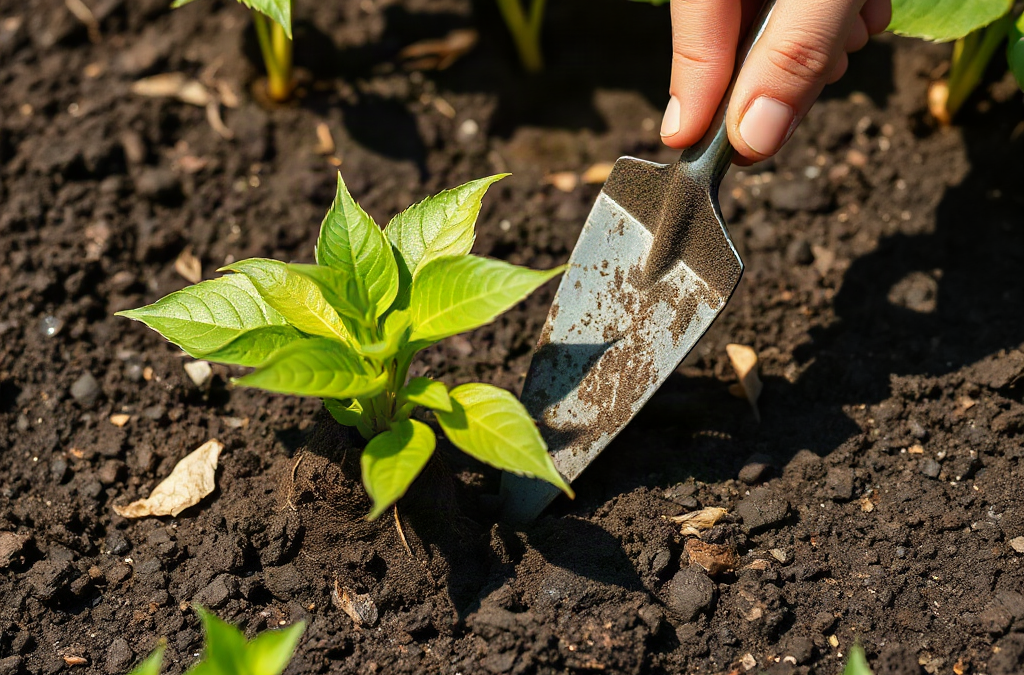
To tell if your garden is overwatered, check whether the soil stays wet, leaves turn yellow while remaining soft, growth slows, and roots smell sour or appear brown and mushy. Push a finger or trowel several inches into the root zone rather than judging by the surface alone, because damp soil can look dry after a sunny day. Compare affected areas with healthy ones, inspect drainage after watering, and pause irrigation while the soil remains saturated. Remove standing water and improve drainage where needed, but do not let drought-sensitive plants become bone-dry. Persistent wilting in wet soil can indicate damaged roots, so recovery depends on correcting the moisture problem before adding more water.
Read Soil Moisture Beyond the Surface
The most dependable first check is the moisture level several inches below the surface, where most feeder roots are active. A garden bed can look dry on top while remaining saturated underneath, especially after heavy rain, frequent shallow irrigation, or watering in compacted soil. Conversely, a dark surface does not always mean the entire root zone is too wet. Dig a narrow hole with a trowel, or push a finger into the soil near—but not directly against—the plant. Soil that feels cool and muddy, clings heavily to the tool, or releases water when squeezed has more moisture than many established garden plants can use immediately.
Compare the suspect area with a nearby section that receives similar sunlight but has healthier growth. The comparison helps reveal whether the issue is a garden-wide watering schedule or a local drainage pocket. Low spots, areas beside downspouts, raised-bed edges that receive runoff, and soil beneath dense mulch often stay wet longer than the rest of the plot. A moisture meter can provide a rough reading, but it should not replace a physical inspection because readings vary with soil texture, probe placement, and calibration.
Watering frequency is a weaker guide than soil condition. A fixed schedule may work during a dry, warm period and become excessive after several rainy days or a sudden drop in plant demand. Clay-heavy soil drains slowly and may need longer intervals between irrigation, while sandy soil often loses water more rapidly. The common mistake is adding water when leaves wilt without checking the ground first. Roots damaged by saturated soil may cause wilting even though additional irrigation worsens the underlying problem.
Check the bed at more than one depth and location. If the upper few inches are wet but the deeper layer is dry, the issue may be shallow watering rather than overwatering. If both layers remain saturated for days, focus on drainage and timing before changing fertilizer or adding more mulch. A useful related reference is how to tell if your garden is overwatered when symptoms appear unevenly across one planting area.
Recognize Leaf, Stem, And Growth Symptoms
Overwatered garden plants commonly show soft yellowing leaves, limp foliage, slowed growth, and a general lack of vigor. The pattern differs from ordinary drought stress: underwatered leaves are more likely to feel thin, dry, or crisp, while excess moisture often leaves them soft, heavy, or droopy. Older leaves may yellow first as roots struggle to function, though young growth can also become pale when prolonged saturation interferes with nutrient uptake. These visual clues are useful, but no single symptom proves that excess water is the cause.
Look at the whole plant rather than focusing on one leaf. A plant that wilts during the hottest part of the day but recovers by evening may be responding to normal heat demand. A plant that remains limp in cool conditions while the soil is wet deserves closer inspection. Stunted growth, leaf drop, stem discoloration near the soil line, and water-soaked patches can indicate that persistent moisture is creating conditions favorable to root or crown problems. Missouri Botanical Garden identifies slow growth and yellowing among symptoms associated with overwatering, which makes growth rate a useful companion clue to soil inspection.
Different crops tolerate wet conditions differently. Lettuce may endure brief moisture excess better than a Mediterranean herb such as rosemary, while many root crops suffer when dense soil prevents oxygen from reaching developing roots. Seedlings are especially vulnerable because their small root systems occupy a shallow, easily saturated layer. A raised bed may drain adequately in one section yet stay waterlogged near a blocked outlet. Planting species with different moisture needs on one automatic irrigation zone can create the same mismatch: one crop receives sufficient moisture while another is repeatedly overwatered.
Do not treat yellow leaves as a signal to apply fertilizer immediately. Poor root aeration can limit nutrient uptake, so feeding a stressed plant may add soluble salts without correcting the cause. First note the soil moisture, recent rainfall, irrigation output, and symptom location. Photographing the plant over several days can show whether yellowing is spreading, new growth is improving, or wilting continues despite wet ground. Those changes are more informative than a single snapshot.
Inspect Roots And Separate Overwatering From Other Problems
Roots provide the clearest confirmation when surface evidence is mixed. Carefully loosen soil beside a plant and examine a few roots without tearing the main root ball apart. Healthy roots are generally firm and light-colored, although natural color varies by species and soil. Roots harmed by prolonged saturation may be brown, gray, soft, or slimy, with an unpleasant odor. A plant can remain wilted in wet soil because damaged roots no longer move water effectively; that apparent contradiction is one reason repeated watering often accelerates decline.
Root inspection matters most when the symptoms could have another explanation. Yellowing can result from aging foliage, nutrient imbalance, cool weather, pests, or disease. Wilting can follow heat, transplant shock, root-feeding insects, or physical root damage. A sour smell, collapsing roots, and consistently wet soil together point more strongly toward a moisture-related root problem than yellow leaves alone. Check stems at the soil surface for dark, soft tissue as well, especially on seedlings and plants with crowns that sit close to the ground.
Consider the timing. Symptoms that emerge shortly after installing a timer may reflect excessive irrigation, while symptoms appearing after prolonged rain may be tied to temporary saturation or poor site drainage. If only plants in one container, bed corner, or compacted path edge are affected, a local water pathway is more likely than a garden-wide shortage of nutrients. If every plant is affected, inspect the irrigation system for leaking emitters, overlapping spray patterns, or a controller that runs after rainfall.
A practical diagnosis uses several observations together:
- Soil: Determine whether the root zone is still saturated below the surface.
- Plant tissue: Look for soft yellow leaves, persistent wilting, and stem damage.
- Roots: Check firmness, color, odor, and whether fine roots are disappearing.
- Site: Identify low spots, compacted soil, blocked drains, and irrigation overlap.
Do not pull up an entire mature plant merely to confirm a suspicion. Start at the edge of the root zone and inspect selectively. If roots are healthy but soil is temporarily wet, improving airflow and withholding irrigation may be enough. If roots are decayed, recovery is less predictable and may require pruning damaged portions, correcting the soil environment, or replacing a severely affected plant.
Correct Saturated Soil Without Overcorrecting
Correction begins by stopping new water from entering the problem area until the root zone has partially dried. That means pausing sprinklers, drip emitters, and hand watering—not simply reducing the duration while continuing the same daily schedule. Move containers out of saucers filled with water, clear blocked drainage openings, and redirect runoff away from the bed. Avoid walking on saturated soil because foot traffic compresses pore spaces and makes it harder for air and water to move through the root zone.
Short-term drying must be balanced against the plant’s normal moisture needs. A drought-sensitive seedling should not be left in bone-dry soil after a brief correction period, but it also should not receive another dose while the root zone remains muddy. Test moisture again before watering. When irrigation resumes, apply enough to wet the intended root depth, then allow the soil to approach the plant’s appropriate dry threshold rather than watering by the calendar.
Drainage changes require judgment. Incorporating organic matter into a garden bed may improve structure over time, but adding a thin layer of compost to the surface will not quickly fix a compacted subsoil or a bed positioned below surrounding grade. Digging a channel can move water but may also direct it toward another planting area or a foundation. Raised beds, amended planting zones, or relocating moisture-sensitive crops may be more practical than trying to change an entire yard’s soil profile. Never assume gravel placed beneath a container will solve poor drainage; a blocked or undersized drainage hole remains the primary problem.
Plants with damaged roots may need reduced leaf demand while they recover. Remove only clearly dead or collapsing foliage, keep the plant out of additional stress where feasible, and avoid heavy fertilizer until new growth shows that roots are functioning. Signs of improvement include firmer new leaves, renewed growth from the center, less persistent wilting, and soil that drains at a predictable rate. Continued odor, spreading stem rot, or worsening collapse after the soil has dried suggests that the damage or disease is advanced.
Prevent Repeat Waterlogging In The Garden
Prevention depends on matching irrigation to soil, weather, crop stage, and site drainage. Group plants with similar moisture requirements rather than placing herbs that prefer drier conditions on the same zone as thirsty vegetables. Inspect emitters and spray heads at the start of the growing season and after repairs; a clogged head can create dry areas, while a cracked line can saturate one small section. Rain sensors or a manual pause after substantial rainfall can prevent an otherwise reasonable schedule from becoming excessive.
Observe how water behaves during and after irrigation. Healthy infiltration leaves the surface moist without creating prolonged puddles, while runoff indicates that the application rate exceeds the soil’s ability to absorb water or that compaction is limiting movement. Watering in shorter cycles with an absorption pause may help on slopes or dense soil, but repeated shallow cycles can keep the upper root zone constantly wet and encourage roots to remain near the surface. The best approach depends on whether the limitation is application speed, soil structure, or an underlying high-water table.
Mulch can moderate evaporation, yet a thick layer against stems or crowns can hold excessive moisture at the plant base. Keep mulch slightly away from stems and adjust its depth in poorly drained areas. Before planting, observe the site after a storm, identify where water collects, and reserve those locations for moisture-tolerant plants if improving drainage is impractical. Local university extension services and USDA soil resources can help interpret soil texture and site-management options without treating one watering formula as suitable for every garden.
Use a simple priority order when conditions change: check the root-zone moisture, stop unnecessary irrigation, locate the water source, improve drainage or airflow, and then reassess the plant before feeding or replanting. That sequence avoids the costly mistake of treating symptoms with fertilizer, pesticides, or more water. For a broader troubleshooting reference, revisit how to tell if your garden is overwatered after the next watering cycle and compare the soil response with the plant’s new growth.
Frequently Asked Questions
Can a plant be overwatered even when its leaves are wilting?
Yes. Saturated soil can deprive roots of oxygen and damage the tissues that absorb water, causing wilting despite abundant moisture. Check the root zone before watering again.
How long should soil take to dry after excessive watering?
Timing varies with soil texture, weather, plant size, and drainage. Sandy beds may drain quickly, while compacted clay or low spots can remain wet for several days. Test below the surface rather than relying on a fixed number of hours.
Are yellow leaves always a sign of overwatering?
No. Yellowing may also reflect aging, pests, nutrient problems, cool temperatures, or disease. Wet soil, soft foliage, slowed growth, and unhealthy roots make excess moisture more likely.
Should fertilizer be applied to an overwatered garden plant?
Usually not while the soil is saturated or roots are damaged. Correct moisture and drainage first, then wait for signs of renewed growth before considering a light, appropriate feeding.
What is the fastest way to reduce excess water in a garden bed?
Pause irrigation, remove standing water, clear blocked outlets, and redirect runoff. Do not till or walk heavily on saturated soil, since compaction can slow drainage further.
Conclusion
Reliable diagnosis comes from combining root-zone moisture with plant symptoms and site conditions. Wet soil alone does not prove damage, and yellow leaves alone do not identify the cause. Look below the surface, compare affected and healthy areas, inspect roots when symptoms persist, and trace the source of excess water before changing fertilizer or applying treatments. Pause irrigation while the bed remains saturated, protect the soil from compaction, and make drainage changes that fit the site rather than relying on a quick layer of surface material. Once the soil begins behaving normally, resume watering according to root depth, weather, and crop needs. Watching for firmer new growth and reduced wilting will show whether the correction is working.
Further Reading
Authoritative Sources
- Reading the Leaves: Signs of Overwatering and ...
rockledgegardens.com1. Yellowing Leaves: One of the most common signs of overwatering is leaves turning yellow. · 2. Wilting: Paradoxically, overwatered plants often ...
- 5 Telltale Signs of Overwatered Plants
bloomscape.comIf a plant is overwatered, it will likely develop yellow or brown limp, droopy leaves as opposed to dry, crispy leaves (which are a sign of too little water).
- Overwatered vs Underwatered Plants
myplantin.comA quick way to tell is by checking both the soil and leaf feel. Overwatered peace lily leaves tend to be soft and limp, while underwatered ...
- Cooperative Extension Gardening Resources
extension.orgResearch-based gardening, soil, plant-care, and home-growing education.
- USDA NRCS Soil Resources
nrcs.usda.govOfficial soil health, conservation, and water-management information.


