
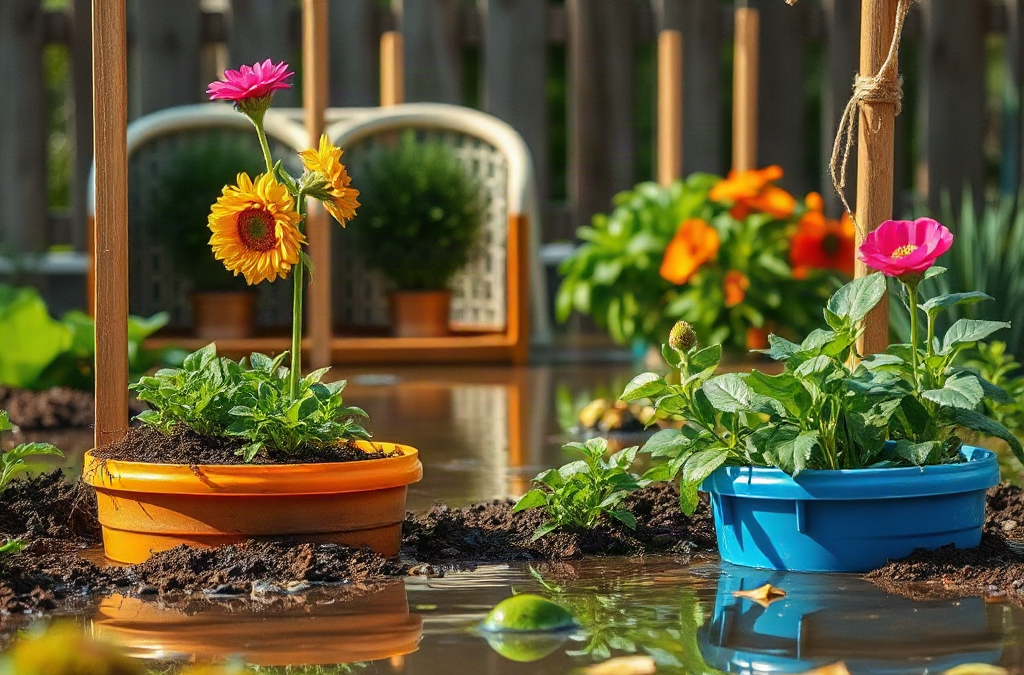
When your garden floods, protect yourself first, stop additional water from entering, then let standing water drain naturally before checking roots, soil structure, and plant damage. Floodwater can remove oxygen from the root zone, spread contaminants, erode soil, and leave plants vulnerable to rot even after the surface dries. Avoid walking through saturated beds, digging wet soil, washing edible crops for immediate use, or applying fertilizer to stressed roots. Photograph damage, clear blocked outlets, gently remove debris, and reassess each plant after several days of drainage. Salvage decisions depend on floodwater source, crop contact, duration of saturation, and whether roots remain firm and odor-free.
Make the Flooded Area Safe and Stop Further Damage
Safety and water control come before plant rescue. Floodwater may contain sewage, fuel, animal waste, sharp debris, or electrical hazards, particularly when it has crossed roads, utility areas, or neighboring properties. Keep children and pets away until the water has gone and contaminated objects have been removed. Wear waterproof gloves and sturdy footwear when handling debris, and avoid entering moving water or areas near damaged electrical equipment.
Once the area is safe, identify where the water came from. A blocked downspout, overflowing rain barrel, compacted path, failed retaining edge, or runoff from a higher part of the property may still be feeding the garden. Clear leaves from drains and redirect roof discharge to a stable location, but do not pump a large volume of water onto another bed or a neighbor’s property. A temporary shallow channel can guide clean rainwater away from the planting area if it does not cause erosion.
Do not rush to rake, hoe, or dig while the soil is saturated. Wet soil loses its pore structure when compressed, creating dense layers that restrict air and later shed water from the surface. Walking through a bed can do more lasting damage than the original rainfall. Use existing boards or stepping stones if access is unavoidable, and postpone cultivation until a handful of soil crumbles rather than smearing into a glossy ball.
Photograph the water line, eroded areas, damaged supports, and affected crops before cleanup. Those records can help you compare recovery over time and may be useful if a landlord, insurer, municipality, or contractor needs evidence of property damage. Remove plastic, glass, treated wood, and other nonorganic debris first. Leave a thin layer of clean sediment in place only if it has a known, uncontaminated source; unknown sediment should be treated cautiously rather than mixed into the bed.
A common mistake is using fertilizer or compost immediately. Neither product replaces oxygen around roots, and soluble fertilizer can move unpredictably through flooded soil. Drainage, drying, and inspection should determine the next action.
Assess Soil, Roots, and Plant Survival
Flooding damages plants mainly by displacing oxygen from the root zone, not simply by making leaves wet. Roots need air-filled spaces to function, and prolonged saturation can weaken fine roots before visible wilting appears. Plants may look limp because damaged roots cannot supply water, even though the surrounding soil is soaked. After the surface drains, inspect representative plants rather than pulling every specimen at once.
Check whether stems are upright, leaves are collapsing, and new growth remains firm. A plant that regains some turgor as the soil drains has a better recovery prospect than one with a soft crown, sour odor, blackened roots, or a stem that separates easily at ground level. Gently expose a small section of root near the edge of the root ball. Healthy roots are generally firm and light-colored for many species; brown or black roots are not automatically dead, so texture matters more than color alone.
Separate immediate cleanup from delayed decisions. Remove mud and silt from foliage with clean water only when the plants are sturdy enough to tolerate handling, and cut away broken stems with sanitized pruners. Do not prune heavily just because leaves are dirty or wilted. Removing too much living foliage reduces the plant’s ability to rebuild roots. For small annuals, replacing a badly damaged plant may be more sensible than nursing it for weeks. Established shrubs and perennials usually justify a longer observation period.
Flood duration changes the outlook. A brief ponding event in loose, well-drained soil may leave limited root damage, while several days of saturation in compacted clay can cause crown and root decay. Raised beds are not automatically protected: their sides can hold water if the surrounding ground is saturated, and a plastic-lined base may prevent drainage. Conversely, a low bed with open subsoil may recover quickly after a short storm.
Wait until the soil is workable before adding amendments. Mixing organic matter into mud creates clods rather than improving structure. When it dries enough to handle, loosen only severely crusted surface areas and use mature compost modestly. The useful signal is renewed growth or firm new tissue, not a quick flush of weeds after the flood. If a plant continues declining after drainage, inspect the crown and roots before increasing water, feeding, or pruning.
Handle Food Crops After Floodwater Recedes
Edible crops require a stricter decision than ornamental plants because floodwater can deposit microorganisms and chemical contaminants that cannot be judged by appearance. Treat water from an overflowing stream, drainage ditch, sewage backup, road, animal area, or unknown source as contaminated. Crops whose edible portions touched that water should not be harvested for eating. Washing, peeling, cooking, or applying disinfectant is not a dependable way to make every contaminated crop safe.
Produce above the waterline still needs careful evaluation. Splashing mud may reach leaves, fruit, or harvested portions, and contaminated sediment can remain on low-growing crops. Leafy greens, strawberries, herbs, and root vegetables are especially difficult to clean reliably because their edible surfaces are close to soil. Firm fruit that remained well above the water may have a different risk profile, but the source of the flood and local public-health guidance should control the decision.
Do not place questionable produce in the household compost pile. Home composting may not reliably reach or maintain conditions needed to address every contaminant, and distributing that compost later can spread the problem around the garden. Bag and dispose of affected material according to local guidance. Wash hands, tools, harvest containers, and footwear after handling muddy crops; keep dirty equipment away from clean produce and food-preparation surfaces.
Flooded soil can also affect crops that were not visibly submerged. Soil splashes onto edible portions, roots may have been exposed by erosion, and damaged plants may deteriorate rapidly during warm weather. Mark the date of the event and the affected beds so you do not accidentally harvest from them later. If the water came from a known clean source such as a temporarily overflowing rain garden, the risk assessment may differ, but clean-looking water is not proof of safety.
A frequent misconception is that waiting a short period makes all flooded produce safe. Time may reduce some biological hazards, but it does not remove chemical residues or guarantee that contaminated surfaces were never penetrated. When the source is uncertain, sacrificing a crop is a more defensible choice than relying on visual inspection. For future plantings, keep edible crops away from known runoff paths and use clean mulch to reduce soil splash.
Restore Drainage and Prevent the Next Flood
Recovery is incomplete until the reason water collected has been addressed. Map the lowest points, the direction of surface flow, downspout outlets, compacted paths, and places where soil washed away. Observe the garden during the next moderate rain rather than waiting for another extreme storm. Water that enters from a roof should be managed separately from water that rises through saturated ground; a swale may help with the first problem but do little for the second.
Start with low-cost corrections that do not trap water elsewhere. Extend downspouts to stable, planted areas, clean blocked grates, repair leaking hoses, and remove barriers from established drainage routes. Regrade small depressions only after the soil is dry enough to work without smearing. If runoff crosses a slope, dense groundcover, contour planting, or a properly designed shallow swale may slow flow. A French drain, dry well, or retaining structure needs site-specific design because poorly placed drainage can send water toward foundations or neighboring land.
Soil structure determines how quickly a bed accepts and releases water. Repeated tilling of wet ground, heavy foot traffic, and vehicles can create compaction below the surface. Improve future infiltration by keeping traffic on defined paths, adding organic matter when appropriate, maintaining living roots, and avoiding bare soil on exposed slopes. These measures are not instant fixes: clay soil may remain slow-draining even after improvement, while sandy soil can shed water quickly but still erode during intense flow.
Choose replacement plants according to the site’s actual moisture pattern rather than assuming every flood-prone location should become a wet garden. A spot that floods briefly after storms may suit moisture-tolerant plants, while a location with stagnant water and poor sunlight may need drainage work before replanting. Raised beds can protect roots from shallow runoff, but they should have open drainage and stable sides. Containers need unobstructed holes and should not sit in saucers filled by stormwater.
Use a short post-flood checklist: confirm the water source is stopped, remove hazardous debris, mark contaminated crops, wait for workable soil, inspect roots, and document areas that stayed wet longest. If water repeatedly reaches a foundation, septic system, electrical installation, or retaining wall, consult the appropriate local professional rather than relying on garden amendments. The best prevention plan moves water safely before it reaches the planting bed, not merely after plants begin to fail.
Frequently Asked Questions
Should I turn over soil immediately after a garden flood?
No. Wait until the soil is dry enough to crumble. Digging saturated soil can compact it and create dense clods that drain poorly.
Can I eat vegetables that were touched by floodwater?
Do not eat crops contacted by water from an unknown, sewage, roadway, stream, or animal-waste source. Washing or cooking does not reliably remove every hazard.
How can I tell whether a flooded plant will recover?
Firm stems, an intact crown, and roots that are not soft or foul-smelling are encouraging signs. Continued collapse after drainage suggests serious root or crown damage.
Should flooded plants receive extra fertilizer?
Usually not immediately. Stressed roots may not use fertilizer effectively, and nutrients can leach or burn weakened roots. Wait for drainage and signs of renewed growth.
What is the best long-term fix for a flood-prone garden?
Find the water's entry and exit routes, then correct downspout discharge, compaction, grading, or blocked drainage. A swale, raised bed, or engineered drain may be appropriate depending on the site.
Conclusion
Flood recovery works best when the garden is treated as both a safety problem and a soil problem. Keep people and pets away from questionable water, stop continuing runoff, and avoid walking or digging in saturated beds. Mark food crops that contacted unknown floodwater rather than trying to rescue them through washing. For ornamental plants, drainage time, root texture, crown condition, and renewed growth provide better guidance than leaf appearance alone. Once the soil becomes workable, repair erosion carefully and investigate the route that brought water into the bed. A blocked outlet may need only cleaning, while repeated ponding may require grading or professional drainage design. Replant with the site’s moisture pattern in mind, and use the next rainfall to test whether water now moves away safely.
Further Reading
Authoritative Sources
- USDA NRCS Soil Resources
nrcs.usda.govOfficial soil health, conservation, and water-management information.
- Cooperative Extension Gardening Resources
extension.orgResearch-based gardening, soil, plant-care, and home-growing education.
- EPA Safe Pest Control
epa.govOfficial information for safer pest-management decisions.
- USDA National Agricultural Library
nal.usda.govAgricultural and plant-science research resources.


