
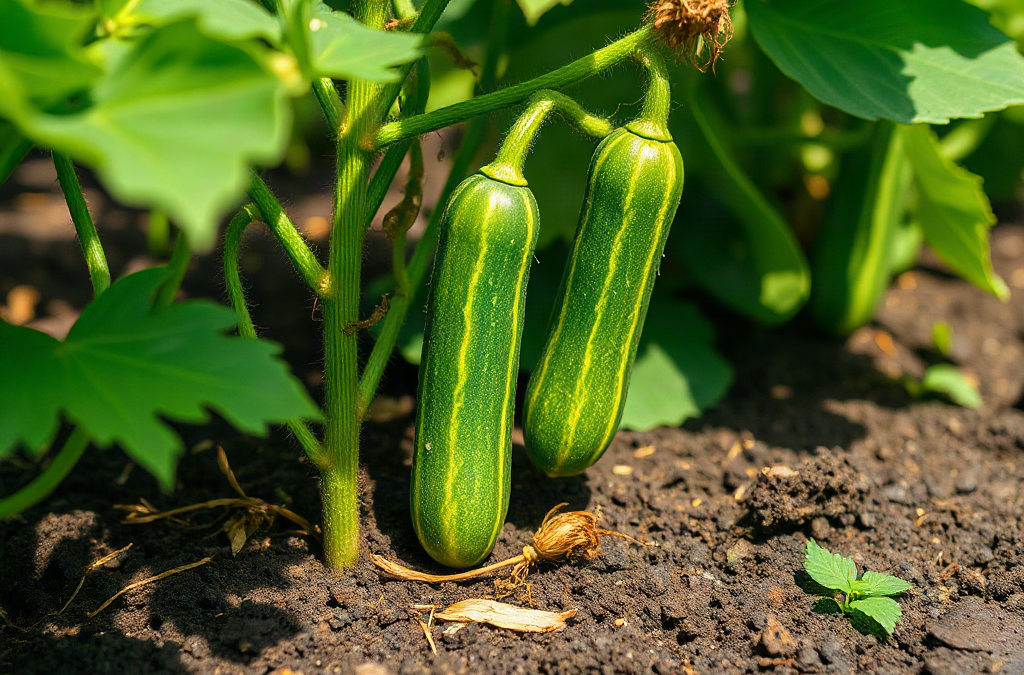
If your cucumbers are not growing, check root-zone moisture, sunlight, temperature, pollination, and feeding before adding more fertilizer. Cold soil, uneven watering, compacted roots, excess nitrogen, and poor pollination can all leave vines small or produce flowers without enlarging fruit. Keep the soil evenly moist but not saturated, give vines strong sunlight, use a trellis where practical, and inspect leaves and stems for pests or disease. If flowers appear but cucumbers remain tiny and yellow, pollination is a stronger suspect than a lack of fertilizer. Make one change at a time and watch for new leaf growth, firm stems, and fruit that enlarges steadily over the following days.
Check Temperature, Sunlight, And Planting Conditions
Cucumber growth slows sharply when the planting site is cold, shaded, or exposed to repeated environmental swings. These warm-season vines need dependable warmth for root activity and leaf expansion; a plant may remain alive yet add very little growth when nights are chilly or the soil stays cool after rain. Seedlings transplanted too early often pause for several days while their roots adjust, and severe chilling can leave them stalled longer.
Inspect the site before changing the fertilizer. Cucumbers generally perform best with several hours of direct sun, loose soil, and protection from persistent cold wind. A vine receiving only weak morning light may produce broad leaves but few flowers, while a crowded bed can develop damp foliage and limited airflow. Dark mulch can warm soil in cool weather, but it may add heat stress in an already hot, dry location, so the material and timing should match local conditions.
Planting depth and root disturbance matter as well. A buried stem that stays constantly wet can develop problems near the soil line, while a root ball left tightly compressed after transplanting may not spread into surrounding soil. Avoid repeatedly moving an established cucumber unless the plant is clearly failing in its current container. Trellising is usually preferable to letting vines sprawl through wet soil because it improves light exposure, makes pests easier to spot, and keeps developing fruit cleaner, though a trellis does not compensate for inadequate sunlight.
Compare the plant with the weather rather than judging it against a calendar. A cucumber planted during a cool spell may need time to resume growth once warm conditions return. If new leaves are small but healthy, protect the plant from cold nights and avoid aggressive pruning. If leaves are pale, scorched, or distorted, environmental stress may be combined with a root or pest problem that requires closer inspection.
Correct Watering, Soil, And Root Problems
Uneven moisture is one of the most frequent reasons a cucumber vine stops expanding. Cucumber roots are relatively shallow, so the upper soil can dry quickly in sun and wind. A plant that alternates between wilted afternoons and saturated soil after heavy watering experiences both water shortage and poor root aeration. The goal is not permanently wet soil; it is a consistently moist root zone with enough air spaces for roots to function.
Push a finger into the soil several inches near, but not directly against, the stem. Dry soil at that depth calls for a slow, thorough watering that reaches the root area. If the soil feels cold, muddy, or has a sour odor, pause irrigation and improve drainage rather than adding more water. Containers require particular attention because a small pot can dry out in a day, while a blocked drainage hole can keep roots waterlogged for much longer.
Organic matter can improve a sandy bed’s moisture retention, but adding compost to the planting hole alone will not correct compacted ground or a high-water site. Work amendments through the broader bed when preparing future plantings, and use a thin mulch layer to reduce evaporation without piling it against the stem. Heavy mulch or frequent shallow sprinkling can encourage surface roots that dry quickly, so occasional deep watering is usually more useful than many light applications.
Root damage changes what the foliage can support. Gently expose a small section of soil near the edge of the root zone if drainage is in doubt; healthy roots are generally firm, while dark, soft tissue signals trouble. Do not pull up a struggling vine simply to inspect every root, because further disturbance may finish a plant that could recover. Remove standing water, correct the drainage issue, and wait for fresh growth before increasing feed. The common mistake is treating every small cucumber as thirst: repeated overwatering can make the original problem worse.
Separate Feeding Problems From Pollination Failure
Fertilizer can help a cucumber that lacks available nutrients, but extra fertilizer is not a universal growth solution. Excess nitrogen often produces vigorous leaves and long vines with delayed flowering, while a root problem can prevent the plant from using nutrients already present in the soil. A balanced soil-building approach is safer than repeated high-nitrogen applications, especially when no soil test has identified a deficiency.
Look at the whole plant. Uniformly pale older leaves may indicate a nutrient shortage, but yellowing that begins between veins, scorched leaf margins, or sudden decline points toward other causes. A soil test is more informative than guessing from leaf color, particularly in beds that have received compost, manure, or granular fertilizer repeatedly. Follow the product label if a fertilizer is appropriate, keep granules away from the stem, and water them in as directed; stronger doses can injure roots and create salt buildup.
Flowers without enlarging fruit usually raise a separate issue: pollination. Cucumber plants commonly produce male flowers first, and female flowers can appear later. A female flower has a small cucumber-shaped swelling behind the petals. If that swelling turns yellow and drops while the vine otherwise looks healthy, insufficient pollen transfer may be involved. Rain, cool weather, insect scarcity, or insecticide use can reduce visits by bees and other pollinators.
Hand-pollination can be a useful short-term test in a sheltered garden. Transfer pollen from a fresh male flower to the center of a female flower with a small brush during the morning, when flowers are open, and repeat on another day if necessary. This is different from applying more fertilizer: pollination determines whether a fertilized ovary continues developing, while nutrition supports the vine’s broader growth. Avoid spraying broad-spectrum insecticides during bloom, and preserve nearby flowering plants when possible. If female flowers are absent entirely, focus first on warmth, light, and excessive nitrogen rather than blaming pollination.
Inspect For Pests, Disease, And Structural Stress
A cucumber that appears frozen in place may be losing new tissue to insects or disease before the damage is obvious. Examine the undersides of leaves, growing tips, leaf stems, and the soil line. Aphids can cluster around tender growth, spider mites may leave fine stippling or webbing in hot dry weather, and cucumber beetles can chew holes while spreading disease between plants. Squash bugs and other sap-feeding insects may also cause wilting or distorted growth.
Match the response to the evidence. A strong stream of water may dislodge some soft-bodied insects from leaves, while heavily infested leaves may need removal. Encourage beneficial insects and avoid unnecessary sprays that can harm pollinators. For any labeled garden treatment, follow the label’s crop, timing, and harvest directions. Do not assume that every hole requires an insecticide; wind damage, hail, and chewing insects leave different patterns, and treating the wrong cause adds stress without restoring growth.
Disease often begins as leaf spotting, angular yellow patches, powdery growth, or sudden wilt. Wet foliage, crowded vines, and poor airflow increase the chance that problems spread. Water at the soil surface, remove badly affected leaves, sanitize tools after cutting diseased tissue, and avoid handling vines when they are wet. A wilted plant with intact-looking leaves may have a stem or root issue rather than simple thirst, so check whether the soil is dry before watering again.
Structural support also affects productivity. Vines dragged across rough soil can suffer bruised stems, and fruit resting in damp vegetation is harder to monitor. Tie growth loosely to a trellis rather than tightening string around expanding stems. Mulch can reduce soil splash, but it cannot reverse an established infection. When a plant has widespread disease and little healthy growth remains, replacing it may be more sensible than repeated treatments, particularly if the same problem is appearing across several cucumbers.
Use A Recovery Sequence And Set Realistic Expectations
Work through the least disruptive checks first: inspect moisture, confirm sunlight and temperature, examine roots and stems for obvious damage, then assess feeding and pollination. This order prevents a common chain reaction in which a gardener adds fertilizer to a waterlogged plant, prunes stressed leaves, and then waters more heavily when the plant declines. Record what you find and change one major condition at a time so the response is easier to interpret.
A practical recovery sequence is:
- Clear weeds and overcrowding that compete for moisture or block airflow.
- Correct irrigation so the root zone is moist but drains between waterings.
- Support the vine and remove only clearly dead, diseased, or badly damaged tissue.
- Use a soil test or restrained, balanced feeding rather than repeated nitrogen applications.
- During flowering, check for female flowers and pollinator activity before assuming fruit failure is nutritional.
Healthy recovery shows up first as firm new leaves, active growing tips, and flowers that remain attached. Fruit enlargement should follow after successful pollination, but a severely stressed vine may not recover immediately. A plant that has suffered root rot, major disease, or prolonged drought may be better replaced, while a young vine with healthy roots can often resume growth after its environment stabilizes.
Compare short-term rescue with prevention for the next planting. Rescue means correcting the present bed, removing affected material, and accepting a smaller harvest. Prevention means waiting for suitable warmth, using disease-free seed or transplants, spacing vines for airflow, rotating cucurbit crops where practical, and installing support early. The linked resource what to do if your cucumbers are not growing can serve as a quick reference while you inspect the bed. Keep notes on planting date, weather, irrigation, and symptoms; that record is more useful than applying several untested remedies at once.
For crop-specific diagnosis, consult your local university extension service or state plant diagnostic laboratory. These organizations commonly provide region-specific information on cucumber pests, diseases, soil testing, and recommended growing conditions. The cucumber growth troubleshooting notes can be reviewed alongside local guidance, especially when symptoms spread beyond one plant.
Frequently Asked Questions
Why are my cucumber vines growing leaves but no cucumbers?
Excess nitrogen, insufficient light, cool conditions, or the normal early production of male flowers can delay fruit. Check for female flowers before adding fertilizer.
How often should cucumbers be watered when growth stalls?
Check the soil several inches below the surface and water thoroughly when that zone is drying. Avoid a fixed schedule that ignores rain, container size, heat, and drainage.
Can a cucumber plant recover after wilting?
It may recover if the roots remain healthy and the cause was temporary dryness. Water slowly, provide shade during extreme heat, and avoid soaking soil that is already wet.
How can I tell whether cucumbers are not being pollinated?
Female flowers have a tiny cucumber behind the blossom. If that swelling yellows and drops while the plant looks otherwise healthy, poor pollen transfer may be responsible.
Should I remove small yellow cucumbers?
Remove fruit that has stopped developing or is rotting so the plant does not continue supporting damaged tissue. Then investigate moisture, pollination, pests, and disease rather than simply waiting.
Conclusion
When cucumber growth stalls, diagnose the growing conditions before reaching for fertilizer. Confirm that the soil drains, moisture stays even, roots are not damaged, and the vine receives enough warmth and direct sun. Once flowers appear, distinguish a nutrition problem from failed pollination by checking for female flowers and fruit that shrivels or drops. Inspect leaves and stems regularly so insects or disease are addressed while healthy tissue remains. Make one substantial correction at a time, then watch for firm new growth rather than expecting an instant harvest. If the plant has widespread root damage or disease, replacement may be more productive than continued rescue. Notes from this season can guide better timing, spacing, support, and watering in the next cucumber planting.


