
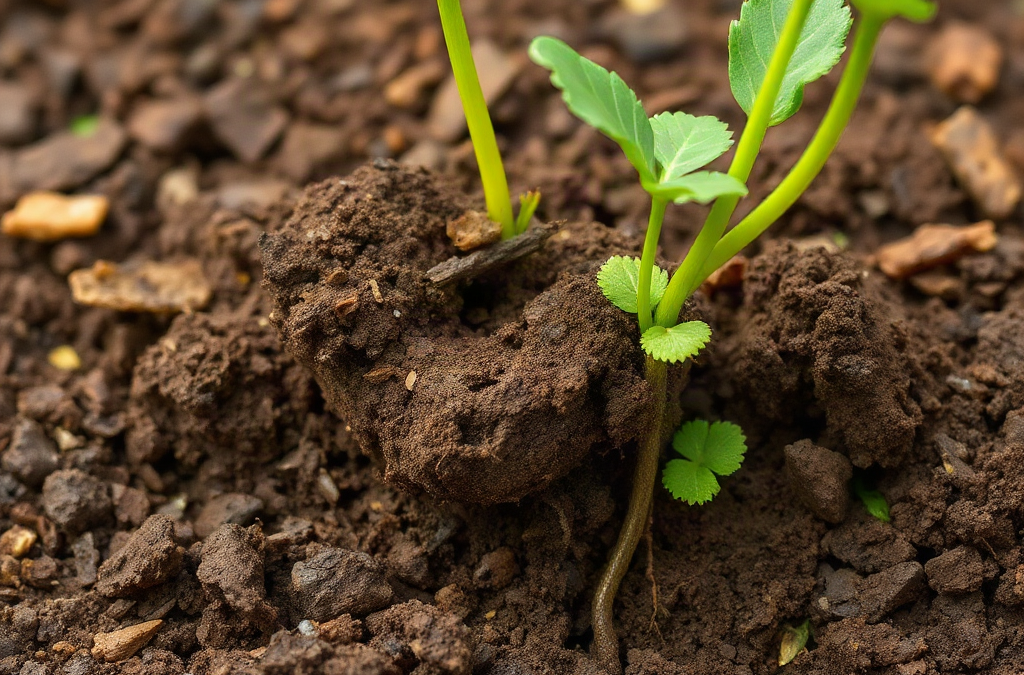
Improve soil structure for better root growth by combining mature organic matter with gentle aeration, protecting soil from compaction, and managing moisture so pore spaces hold both air and water. Compost can build aggregation over time, while coarse organic amendments may improve drainage in some soils but will not correct every texture problem. Avoid working wet soil, because pressure can collapse the pores roots need for oxygen and water movement. Check progress by observing infiltration, crumb formation, root branching, and whether the soil stays waterlogged or dries into hard clods after irrigation.
What Good Soil Structure Gives Roots
Soil structure describes how individual particles join into aggregates and how the resulting spaces are arranged. Productive root zones contain a mixture of large pores that drain excess water and smaller pores that retain moisture. Roots need both: saturated soil limits oxygen, while excessively dry, dense soil restricts root extension and makes water difficult to absorb.
Texture and structure are not the same thing. A clay soil may have excellent structure when aggregates remain stable, yet become sticky and compacted when cultivated wet. Sandy soil usually drains quickly but may hold little water or organic matter. The useful question is not whether soil is inherently “good” or “bad,” but whether it allows roots to move, breathe, and access moisture during the crop’s growing period.
A simple infiltration test reveals more than color alone. Dig a shallow hole, fill it with water, and watch how quickly the water disappears after the soil has been wetted once. Slow infiltration, standing water, a smeared hole wall, or hard horizontal layers suggest restricted pore space. By contrast, crumbly soil that breaks apart under light pressure and contains fine roots throughout the upper layer usually has more functional structure.
Root problems can be misread as fertilizer problems. A plant may remain small even when nutrients are present if dense soil prevents oxygen exchange or creates a shallow wet-dry cycle. Before adding more fertilizer, inspect the rooting depth, drainage, and resistance encountered when inserting a hand trowel. A nutrient amendment cannot compensate for a physically restricted root zone.
For a broader look at how to improve soil structure for better root growth, treat pore space as the central target rather than chasing a single soil product.
How Organic Matter Changes Soil Aggregation
Mature compost is one of the most dependable amendments for gradually improving aggregation in garden soil. Its decomposed organic material helps particles bind into more stable crumbs, while the activity of microbes and soil organisms contributes additional binding compounds and channels. The result may be better water entry, improved moisture retention in light soil, and less crusting at the surface.
Compost works differently in different soils. In sandy beds, it can add fine organic material that slows water loss and provides a more favorable environment for roots. In clay, it may support aggregation and reduce surface sealing, but it does not magically turn clay into sand. Large quantities of poorly decomposed material can temporarily compete for nitrogen as microbes break it down, and fresh manure can introduce odor, weed seeds, or sanitation concerns.
Use finished compost that smells earthy, looks dark and crumbly, and no longer resembles its original ingredients. Mix it into the upper root zone rather than creating a rich pocket beneath a transplant. A sharply different layer can interrupt water movement and encourage roots to remain in the amended pocket. For established beds, a surface layer applied as mulch is often less disruptive than deep digging; rain, organisms, and gradual decomposition carry organic matter downward.
Organic matter is not a one-time repair. Compost decomposes, so structure tends to decline when beds are left bare, repeatedly tilled, or exposed to heavy traffic. Annual additions should match the soil’s condition and the crop system, not an automatic thick layer every season. Excessive amendment can raise soluble salts, alter nutrient availability, or create an overly soft surface that dries unevenly.
Different materials have distinct roles. Leaf mold can contribute moisture-holding organic matter, well-aged compost supplies a balanced amendment, and shredded leaves are useful as a surface cover as they break down. Uncomposted wood chips belong mainly on the surface; incorporating large amounts into soil can temporarily tie up nitrogen and create uneven decomposition. The best choice depends on whether the immediate limitation is crusting, rapid drying, poor drainage, or low biological activity.
Reducing Compaction Without Damaging Soil
Compaction collapses pore spaces when foot traffic, machinery, or repeated cultivation presses particles together. Roots then encounter mechanical resistance, and water may either run off the surface or remain perched above a dense layer. The first repair is prevention: keep traffic on permanent paths and avoid entering a bed when soil clings to tools or forms a shiny smear.
Loosening compacted soil while it is slightly moist is safer than digging it wet. A broadfork or garden fork can open channels with less inversion than a rotary tiller. Insert the tool, lift gently, and stop if the soil fractures into large plates or the tool requires force. The aim is to restore connected pores, not to pulverize the bed. Repeated tillage may create a fine surface initially, but it can break aggregates and leave the soil vulnerable to crusting after rain.
Consider a raised bed with a compacted layer beneath the top few inches. Deeply mixing compost into the surface may improve the upper layer while leaving water trapped above the hard zone. A better response may combine limited loosening, permanent access paths, deep-rooted cover crops, and improved surface cover. Plant roots can create biological channels, although they cannot reliably penetrate every severely compacted layer.
Do not assume that aeration tools always help. Hollow-tine aeration is useful in some open beds or turf-like situations, but frequent puncturing can disturb roots and soil life. Likewise, adding sand to clay is usually a poor small-scale remedy unless the amount and particle size are carefully matched; a modest quantity can produce a denser mixture rather than a looser one.
After loosening, protect the repair. Mulch reduces raindrop impact and surface sealing, while living roots hold aggregates in place. If a bed compacts again after every harvest, the underlying problem is probably access, drainage, or bare-soil exposure rather than insufficient digging. Track whether roots occupy a deeper layer over the next season instead of judging success by a temporarily fluffy surface.
Moisture, Cover, And A Practical Improvement Plan
Soil structure improves more reliably when water is managed alongside organic matter and traffic. Heavy irrigation on a bare surface can dislodge particles, seal the top layer, and create runoff. Short, frequent watering can also keep the surface wet while deeper soil dries, encouraging shallow roots. Water slowly enough to penetrate the intended depth, then allow the surface to dry slightly according to the crop and weather.
Mulch provides several structural benefits. Straw, shredded leaves, or fine bark can soften raindrop impact, reduce evaporation, and moderate temperature swings. Keep mulch slightly away from plant stems to reduce persistent dampness and pest shelter. A thick, compacted mulch mat may repel water, so check whether irrigation is entering the soil rather than running across the top.
A practical improvement sequence is:
- Diagnose the limitation: check infiltration, compaction depth, drainage, crusting, and root distribution before amending.
- Stop the recurring damage: establish paths, avoid wet-soil work, and reduce unnecessary tillage.
- Add suitable organic matter: use finished compost or another appropriate material without burying a sharply contrasting layer.
- Keep the surface protected: apply mulch or grow a cover crop suited to the season and available space.
- Recheck after weather events: look for runoff, standing water, hard crusts, and new root growth rather than relying on appearance immediately after digging.
Drainage problems require restraint. If water remains for long periods because of a shallow hardpan, high water table, or poorly positioned bed, adding compost alone may not solve it. A different planting location, raised bed design, or professional site assessment may be more appropriate. Conversely, very dry sandy soil may need repeated modest organic additions and mulch rather than a single heavy application.
Signs of improvement include water entering instead of ponding, aggregates that resist collapse when watered, roots extending beyond the original transplant plug, and fewer severe swings between mud and dust. Failure signs include persistent standing water, a sour smell, roots circling in a shallow layer, or a surface that seals after every rain. Those observations tell you whether to focus next on drainage, compaction prevention, organic matter, or irrigation technique.
Useful related information can be found through soil structure and root growth practices and organic matter management for garden beds, but the correct intervention still depends on the site’s texture and moisture pattern.
For reliable, region-specific recommendations, consult soil-management publications from a local university extension service, the USDA Natural Resources Conservation Service, or a recognized soil-testing laboratory. These sources can help interpret texture, organic matter, compaction, drainage, and test results without treating one amendment as a universal solution.
Frequently Asked Questions
Does compost loosen clay soil?
Finished compost may improve aggregation, infiltration, and workability over time, but it will not eliminate clay texture. Avoid digging clay while wet, and combine organic matter with mulch and traffic control.
Can adding sand fix compacted soil?
Usually not when only a small amount is mixed into clay. The blend can become denser. Diagnose the compacted layer first and prioritize reduced traffic, careful loosening, organic matter, and living roots.
How do I know whether soil structure is improving?
Look for faster infiltration without runoff, stable crumbs, fewer hard crusts, deeper root distribution, and a soil moisture pattern that is neither persistently saturated nor rapidly dry.
Should I till compost into an existing garden bed?
Shallow incorporation can help during bed preparation, but repeated deep tillage can damage aggregates. In established beds, surface compost and mulch often improve conditions with less disturbance.
Can mulch improve root growth?
Mulch can protect aggregates, reduce evaporation, and moderate soil temperature, which may create steadier root-zone conditions. Keep it away from stems and check that water penetrates the mulch layer.
Conclusion
Better root growth comes from preserving connected pore spaces, not from making soil uniformly loose. Begin by identifying whether compaction, poor drainage, rapid drying, crusting, or low organic matter limits the bed. Then prevent further pressure, use finished organic matter in a measured way, protect the surface with mulch or living cover, and adjust irrigation so water enters gradually. Expect structural change to develop over repeated seasons rather than after one amendment. If water remains trapped above a hardpan or roots cannot pass beyond a shallow layer, investigate the site’s drainage and physical profile instead of continuing to add compost. Regular infiltration checks and root inspections provide more useful evidence than a freshly dug, temporarily fluffy surface.
Further Reading
Authoritative Sources
- USDA NRCS Soil Resources
nrcs.usda.govOfficial soil health, conservation, and water-management information.
- EPA Safe Pest Control
epa.govOfficial information for safer pest-management decisions.
- USDA National Agricultural Library
nal.usda.govAgricultural and plant-science research resources.
- Cooperative Extension Gardening Resources
extension.orgResearch-based gardening, soil, plant-care, and home-growing education.


