
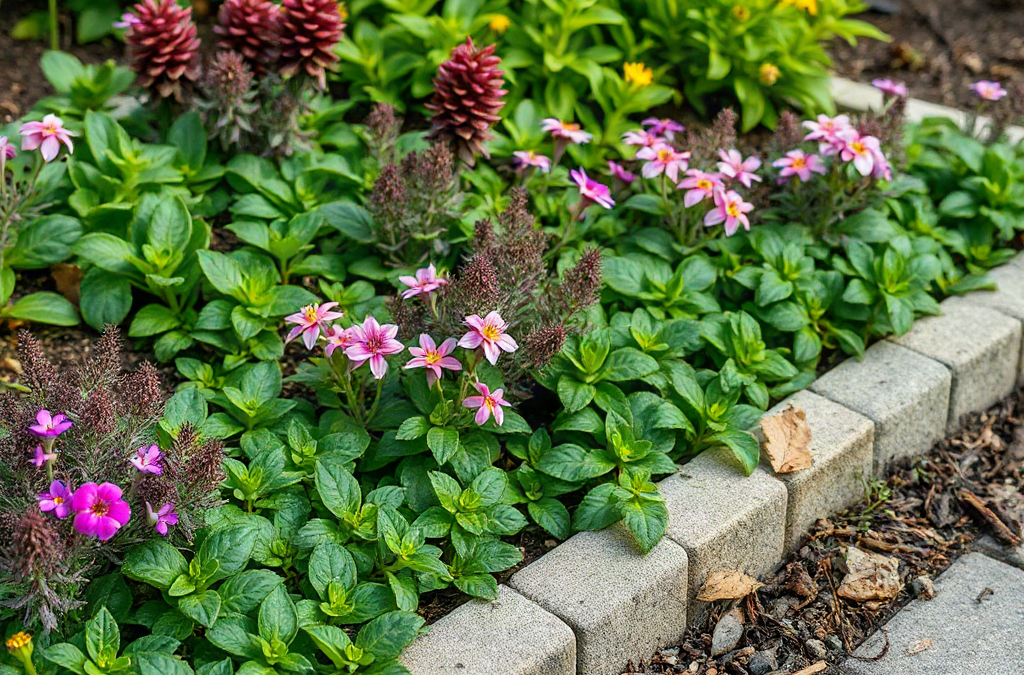
Diagnose the Edge Before Choosing a Ground Cover
A difficult edge usually combines several stresses within a narrow strip. Roof overhangs keep soil dry, paving stores heat, tree roots compete for moisture, mower wheels compress the surface, and runoff may saturate the lowest point. Conditions can change over only a few feet, so a plant thriving at one end may thin out at the other.
Watch the site before buying anything. Check direct sunlight during the growing season rather than relying on a general label such as “part shade.” Four hours of bright morning light is different from four hours of hot afternoon sun reflected by stone. Push a hand trowel into the soil after rain and again several dry days later. Soil that remains sticky suggests slow drainage, while dusty soil beneath the surface indicates rapid drying or competition from established roots.
Traffic deserves a separate assessment. “Walkable” ground cover normally means it can recover from occasional steps, not that it can replace a paved route used every day. A strip beside a driveway may receive shoes, hoses, bins, pets, and car-door contact. Where feet repeatedly land in the same place, install a stepping stone and let foliage soften its edges. Plants survive better when their crowns are not continually crushed into compacted soil.
Measure the available width and note nearby boundaries. A six-inch gap between paving and lawn calls for a compact plant that accepts trimming. A broader margin beneath shrubs can accommodate a spreading colony. Also check whether stems could trail across a path and become slippery or hide the pavement line. Evergreen foliage may be useful along a visible front walk, but deciduous ground covers can work perfectly well in less prominent areas.
Use this quick site check before narrowing the choices:
- Light: Record direct sun and reflected heat.
- Water: Identify both summer dryness and temporary pooling.
- Competition: Look for dense roots from trees, hedges, or turf.
- Use: Separate decorative margins from actual walking routes.
- Containment: Decide where spreading stems must stop.
A common mistake is assuming that all low plants function as ground cover. A compact perennial may stay short yet never knit into a weed-suppressing mat. The better candidates expand laterally, keep foliage close to the surface, and recover after routine edging. This site diagnosis gives the plant a realistic job description before its color or flowering season enters the decision.
Match Plant Choices to Sun, Shade, and Moisture
Plant choice should follow the harshest recurring condition at the edge. A sunny border that dries between waterings needs different growth than a shaded channel that remains wet after storms. Matching that limiting condition reduces replacement costs and prevents the bare patches where weeds return.
Sunny, Dry, and Heat-Reflective Margins
Creeping thyme is a useful candidate for free-draining soil beside sunny paving. Its aromatic foliage stays low, and established mats can accept occasional light steps. It performs poorly where winter water sits around the crowns, however. Sedum species with creeping growth are another option for lean, dry ground, particularly along rocks or walls, but succulent stems may break where people routinely turn or drag hoses.
Low-growing dianthus and lamb’s ear can soften dry edges, although neither should automatically be treated as a continuous lawn substitute. Lamb’s ear dislikes persistent wetness and may develop damaged foliage in humid, poorly ventilated corners. Choosing a drought-tolerant plant does not remove the need for watering during establishment; it means the mature root system can handle longer dry intervals.
Shaded or Root-Competitive Edges
Shade beneath deciduous trees often looks moist but can be remarkably dry because roots intercept rainfall. Certain sedges, including low Carex selections suited to the local climate, can create a grassy texture under those conditions. Sweet woodruff may form an attractive carpet in cool shade with suitable moisture, but its running habit can exceed a narrow boundary. Wild ginger offers broad foliage for sheltered shade, though it is not appropriate for foot traffic.
For damp shade, consider plants that tolerate moisture without assuming they can live in standing water. Creeping Jenny accepts moist conditions and provides strong color contrast, yet it can spread vigorously into lawns and beds. Blue star creeper forms a lower mat and tolerates some contact, but gardeners should confirm its regional behavior and cold hardiness before using it near natural areas.
Local climate remains decisive. A plant described as evergreen may lose leaves or discolor during a cold winter, while a moisture-loving selection can fail during summer restrictions on irrigation. University extension plant databases and regional native-plant organizations can help verify hardiness, soil preferences, and invasive status. The internal planning notes for Low-growing ground cover for difficult garden edges should therefore be treated as a shortlist, not a substitute for local suitability checks.
Mixing species can improve seasonal interest, but incompatible growth rates cause trouble. A forceful runner may bury a slower clump-forming sedge within two seasons. For a narrow margin, repeating one well-matched species is usually easier to maintain than combining several plants with different water needs and spreading habits.
Prepare and Plant a Narrow Edge Correctly
Successful establishment begins with weed removal and soil correction across the entire planting strip. Ground covers do not instantly smother existing bindweed, couch grass, nutsedge, or other persistent weeds. Their roots and rhizomes can become entangled with the new planting, making later removal far more disruptive.
Remove perennial weeds before planting and trace underground runners beyond the visible leaves. If the edge has been neglected, repeated removal over several weeks may be more effective than planting immediately. Avoid digging aggressively beneath mature trees, where cutting major roots can harm the tree. In root-dense areas, loosen only the planting pockets and add a thin organic mulch between plants rather than raising the soil level deeply over existing roots.
Compacted margins need improved pore space, not a buried layer of rich potting mix. Loosen the surface where roots can safely be disturbed, then incorporate a modest amount of finished compost into poor mineral soil. Creating isolated pockets of fluffy material can trap water in heavy clay or dry faster than the surrounding ground. The transition between amended and native soil should be gradual.
Set plants at the same depth they occupied in their containers. Buried crowns are vulnerable to rot, while exposed root balls dry rapidly. Spacing should reflect mature spread and the speed at which coverage is needed. Tight spacing closes gaps sooner but costs more and can reduce airflow; wide spacing is cheaper but demands more weeding during establishment. A creeping plant expected to spread a foot across should not be installed shoulder to shoulder merely to create an immediate finished appearance.
A practical planting sequence is:
- Mark the permanent pavement or lawn boundary.
- Remove weeds and loosen safe, root-free areas.
- Place pots on the surface to test spacing and curves.
- Plant crowns level with the surrounding ground.
- Water the root zone thoroughly and settle loose soil.
- Apply a light mulch that does not cover stems or crowns.
Watering frequency should respond to the soil rather than a fixed calendar. New roots occupy the original root ball at first, so that zone may dry even when nearby ground appears damp. Check beneath the surface and water deeply enough to moisten the planted root zone. Gradually lengthen the interval as roots move outward. Constant shallow sprinkling encourages surface rooting and can keep foliage unnecessarily wet.
Signs of progress include new lateral shoots, resistance when the plant is gently tugged, and foliage that remains firm between waterings. Repeated wilting, blackened crowns, gaps beside paving, or roots circling within the original plug indicate that moisture, drainage, planting depth, or root establishment needs attention. More fertilizer is rarely the first solution; excess nitrogen can produce soft growth that flops onto paths.
Control Spreading, Traffic, and Long-Term Maintenance
A ground cover becomes low maintenance only after its boundaries and access needs are managed. Spreading is the feature that closes bare soil, but the same behavior can push stems into turf, drains, paving joints, or neighboring perennials. The goal is controlled coverage rather than unrestricted expansion.
Choose containment according to the plant’s growth mechanism. Surface-rooting stems are often manageable with regular shearing and hand pulling. Underground rhizomes can cross beneath a shallow edging strip and reappear farther away. Where a vigorous plant borders a lawn, a defined mowing strip or deeper barrier may reduce routine work. Even with edging, inspect the boundary during active growth instead of waiting until runners have rooted throughout an adjacent bed.
Routine foot placement is another design problem rather than a plant-selection contest. A meter reader, faucet, compost bin, or gate creates predictable travel. Place firm pavers at those destinations and space them for a natural stride. Ground cover can then grow around the stones without being asked to withstand concentrated pressure. Where children or dogs regularly cut across a corner, extending the hard surface is more realistic than repeatedly replacing flattened plants.
Weed control changes as the cover fills in. During the first season, remove seedlings before they root through the mat. After coverage develops, fallen leaves and windblown debris can accumulate beneath dense stems, especially against a curb. Lift or thin congested growth where trapped material keeps crowns wet. A thick carpet is not automatically a healthy one; thinning centers, yellow foliage, and fungal-looking dieback often point to poor airflow, excessive moisture, or accumulated thatch.
Seasonal trimming should preserve live crowns. Creeping thyme and similar mats can be lightly clipped after flowering to keep stems away from paving, but cutting into old woody portions may leave persistent bare areas. Sedge-like covers may need damaged foliage combed out or cut back according to the species and regional season. Confirm the correct maintenance method before treating every ground cover like turf.
The strongest result may also include deliberate gaps. Bulbs can rise through compatible, open-textured covers, while drainage outlets and tree trunks should remain unobstructed. Keep stems and mulch away from woody bark, and do not allow growth to conceal changes in level at a step. Revisit the placement plan from Low-growing ground cover for difficult garden edges after the first full growing season, when actual spread reveals whether spacing and containment were realistic.
A common failure is judging success only by fast coverage. Rapid growth can create greater work if shoots cross boundaries weekly. A slower, clump-forming selection may be preferable beside formal paving, while a more energetic spreader can be useful on a broad bank where containment is less critical. Maintenance capacity belongs in the original plant decision, not as an afterthought.
Frequently Asked Questions
What ground cover works beside a sunny path?
Creeping thyme and low sedums are practical candidates for sunny, free-draining edges. Use stepping stones where foot contact is frequent, and avoid these choices where water pools around their crowns.
Can ground cover grow under a tree?
Yes, if it tolerates both shade and root competition. Low sedges or wild ginger may suit some sites, but minimize digging, avoid piling soil over tree roots, and provide establishment water.
How far apart should ground-cover plants be spaced?
Base spacing on each plant’s mature spread, expected growth rate, and budget. Closer placement fills sooner but costs more; wider placement requires longer weed control while stems expand.
Will ground cover stop all weeds?
No. Dense foliage can reduce light reaching new weed seedlings, but established perennial weeds can grow through the mat. Clear persistent roots before planting and weed gaps during establishment.
Which low ground covers can be walked on?
Creeping thyme and blue star creeper can tolerate occasional light contact under suitable conditions. Neither should be expected to withstand daily concentrated traffic, so use pavers along regular routes.
Conclusion
Difficult margins become manageable when their hidden constraints are identified before planting. Record the actual light, test how quickly the strip drains, account for roots and reflected heat, and distinguish occasional contact from a genuine walking route. Select a species with a growth habit that fits both the site and the amount of edging you are willing to perform.
Clear perennial weeds, plant crowns at their original depth, and keep the root balls evenly moist while they establish. Add pavers at predictable access points instead of relying on delicate stems to absorb daily traffic. During the first year, watch for lateral growth, boundary escape, persistent wilting, and crown damage. Those observations will show whether to adjust watering, improve access, thin congestion, or replace a mismatched plant before the entire edge fills in.


