
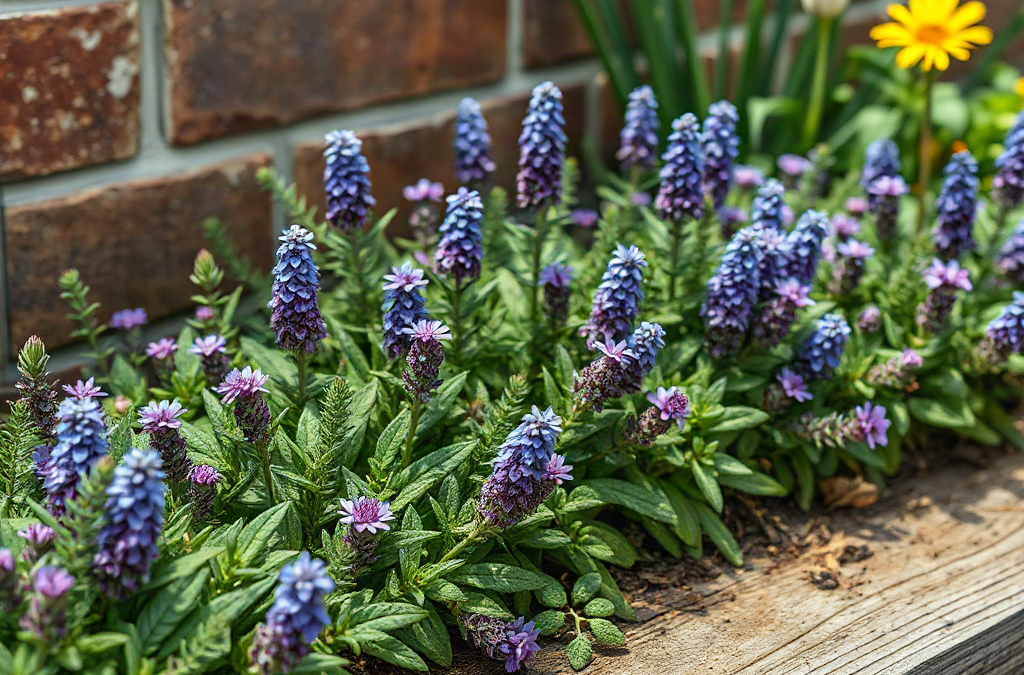
Low border plants for narrow garden edges work best when their mature width, light needs, and spreading habit match the limited planting strip. Compact choices include creeping thyme for sunny, dry soil; dwarf mondo grass for partly shaded sites; thrift for sharp drainage; and low-growing heucheras for leafy color. Favor clumping or easily trimmed species where paving, lawns, or paths leave little room for outward growth. Check the plant’s mature spread rather than relying on nursery size, and avoid vigorous runners beside small paving joints. Preparing a continuous root zone and spacing plants for their eventual width produces a neater, longer-lasting edge than crowding them for immediate coverage.
Measure the Edge Before Choosing Plants
A narrow edge should be measured at its tightest usable point, not at its widest opening. A strip may appear to be 12 inches wide while edging, paving foundations, tree roots, or an overhanging shrub leave only 6 inches of workable soil. Measure both the exposed surface and the depth available for roots. Plants that fit above ground can still struggle if the bed is a shallow pocket over compacted subsoil.
Mature spread is the decisive dimension. A plant sold in a 4-inch pot may eventually form an 18-inch mound, covering paving and forcing frequent cuts. Nursery labels sometimes give a spread range because growth changes with climate and soil. Use the upper end of that range when the site has fertile soil and regular irrigation. In lean, dry conditions, growth may remain closer to the lower end, though deliberate water stress is not a sound way to restrain a moisture-loving species.
Width also affects the type of form that will look convincing. A strip under 6 inches usually suits small tufts, tight rosettes, or plants that can trail slightly over a hard edge. A bed 6 to 12 inches wide can accommodate compact mounds. Wider plants may work where only their crown must remain in the bed and their soft stems can spill safely over a wall, but that same habit is unsuitable beside a walking path.
Light should be observed at plant height. A south-facing edge may be shaded by taller perennials for part of the day, while a strip beside a pale wall can receive reflected heat even after direct sun has moved. Watch the location in the morning, around midday, and later in the afternoon. Four hours of intense afternoon sun creates a different environment from four hours of filtered morning light.
Finish the site assessment with a compact priority check:
- Usable width: Measure around edging, foundations, and permanent roots.
- Foot contact: Note whether shoes, hoses, pets, or mower wheels cross the edge.
- Drainage: Check whether water drains promptly or collects against paving.
- Containment: Decide whether occasional trimming is acceptable or a clump must stay put.
- Seasonal appearance: Choose between evergreen structure and a flowering display followed by dormancy.
This assessment prevents a common mistake: choosing by flower color before confirming physical fit. The most useful low-growing border plants for narrow garden edges are not simply short; they remain proportionate to the strip throughout the growing season.
Reliable Choices for Sun, Shade, and Dry Soil
Plant selection should begin with the edge’s harshest recurring condition. Narrow beds dry faster than broad borders because warm paving heats the soil and nearby established plants compete for water. Conversely, a strip at the bottom of a wall or slope may remain wet after rain. Select for those conditions first, then compare flower color and foliage.
Sunny, Free-Draining Edges
Creeping thyme is useful where soil is lean, drainage is sharp, and occasional light contact is likely. Its low stems soften stone edges and carry small flowers, but they can open in the center if the soil is rich or the plant is shaded. Thrift, also called sea thrift, forms compact grassy tufts with flower stems rising above them. It provides a more defined outline than thyme and generally stays easier to read as an individual plant.
Low sedums suit hot strips where irrigation is limited. Their water-storing leaves handle short dry periods, although wet winter soil can cause thinning or rot. Select a compact cultivar rather than assuming every sedum stays low; the group includes plants with very different heights and spreading habits. Dianthus can provide blue-green foliage and fragrant flowers in sun, but crowded crowns and persistently damp soil shorten its useful life.
Part Shade and Sheltered Positions
Dwarf mondo grass creates a restrained, grass-like line in part shade. It spreads slowly through short underground growth and is valuable where a calm evergreen effect matters more than abundant flowers. Confirm that the selection is genuinely dwarf, because standard mondo grass grows taller and wider. Small heuchera cultivars offer colored foliage in bright shade, though many become broader than they first appear. They fit better in a 10- to 12-inch strip than in a crevice-like edge.
Compact ajuga can cover shaded ground quickly, especially where soil remains moderately moist. That speed is both its strength and its risk. Runners can enter lawns or gaps between stones, so ajuga belongs where the border has a firm physical boundary and spreading coverage is wanted. For a tighter clumping alternative, consider small sedges adapted to the site’s moisture level; sedges differ widely, so the species or cultivar matters more than the common group name.
No single selection performs uniformly across climates. Creeping thyme may dislike humid, water-retentive soil, while heuchera foliage can scorch beside heat-reflecting paving. Local extension plant lists and regional nurseries can help confirm winter hardiness and heat tolerance. Use named selections when mature dimensions matter, and avoid labels that offer only a broad name such as “ground cover sedum.”
Match Growth Habit to Paths, Lawns, and Walls
Growth habit determines how much work a border creates after establishment. Clump-forming plants enlarge from a central crown and are usually easiest to control beside paths. Creeping plants root or run outward and close bare soil faster, but they cross boundaries more readily. Trailing plants can remain rooted inside the bed while their stems hang over a wall, making them useful in raised edges but hazardous beside steps.
Beside a frequently used path, choose flexible foliage that stays below ankle height and does not hide the paving line. Dwarf mondo grass or a compact sedge tolerates incidental brushing better than brittle succulent stems. Plants with tall seasonal flower stalks can still work if the stalks rise from a narrow basal clump, but consider whether they will lean into the walkway after rain. Thrift is a good example: its foliage remains compact, while spent flower stems can be removed in one quick pass.
A lawn boundary creates different pressure. Runners that enter turf become difficult to separate from grass, and mower wheels may scalp plants that lean outward. Clumping dianthus, thrift, or a small heuchera is generally easier to manage than ajuga at this interface. Leave a slim visible gap between the mature foliage and turf rather than planting directly against it. The gap allows edging tools to pass without cutting the plant’s crown.
Edges against walls often have uneven moisture. Roof overhangs can produce dry soil even in rainy regions, while downspouts create concentrated wet areas. A wall may also block airflow and reflect heat. Low sedums and thyme are logical candidates for a warm, dry masonry edge, provided the soil drains. In a cool shaded wall bed, dwarf mondo grass may be more dependable. Do not treat “against a wall” as one condition; examine sun direction, rain exposure, and runoff.
Spreading speed should be judged against maintenance tolerance. Fast closure suppresses some weed seedlings by reducing open soil, but it also increases trimming and division. Slow clumps leave gaps longer, yet preserve a crisp composition. Gardeners seeking a formal edge should prioritize predictable clumps. A relaxed cottage-style border can use thyme or another restrained creeper, provided stems can be cut back without leaving an unattractive woody center.
When comparing low-growing border plants for narrow garden edges, reject any choice whose control method conflicts with the surroundings. A plant is not low maintenance if every runner must be pulled from paving joints or turf.
Plant and Maintain a Clean, Durable Border
Successful narrow borders need a continuous root zone rather than a row of isolated planting holes in compacted ground. Loosen the strip across its full usable width, removing construction debris, thick weed roots, and large stones that interrupt rooting. Avoid creating deep pockets of rich amendment surrounded by hard soil; roots may circle within the pocket, and water can collect there. Blend modest organic matter through the bed only when the existing soil needs better structure.
Set crowns at the correct depth. Thyme, dianthus, thrift, heuchera, and many tufted plants decline when their crowns are buried under soil or mulch. Place the root ball so its upper surface is level with the surrounding bed, then water thoroughly to settle air pockets. In heavy soil, planting slightly high is safer than creating a depression around the crown, but exposed root-ball shoulders can dry rapidly and should be lightly covered with soil.
Space plants from center to center using mature width, not pot diameter. For a cultivar expected to spread 10 inches, centers placed about 8 to 10 inches apart will eventually meet. Tighter spacing gives a finished appearance sooner but increases purchase cost, competition, and the likelihood of crowded, damp foliage. Wider spacing requires temporary weeding yet lets each plant develop its natural outline. A staggered arrangement often looks fuller than a rigid single row where the strip is wide enough for it.
Use a thin mulch layer between new plants, keeping it away from crowns. Fine gravel suits drought-tolerant species and does not hold moisture against low foliage as readily as deep bark. Organic mulch can work around heucheras and sedges, but thick layers may bury compact plants and encourage stems to remain wet. Weed fabric is usually a poor match for spreading perennials because stems root into it and soil accumulates on top.
Water deeply during establishment, then adjust frequency to the species and weather. Daily surface sprinkling encourages shallow roots and keeps crowns damp. Signs of success include fresh growth, foliage that holds its color, and roots beginning to occupy the surrounding soil. Repeated wilting, blackened crowns, widening bare centers, or stems stretching toward light signal a mismatch in moisture, drainage, or exposure rather than a need for automatic fertilization.
Maintenance should preserve form rather than force an unsuitable plant to fit. Clip thyme lightly after flowering if it reaches paving, remove spent thrift stems, and divide crowded mondo grass or heuchera when crowns press against one another. If trimming is required every few weeks, replace the plant with a smaller or more restrained choice. Good border design reduces intervention by matching mature behavior to the available space.
Frequently Asked Questions
What plants stay low enough for a very narrow sunny edge?
Creeping thyme, compact sedums, thrift, and small dianthus selections suit many sunny strips with free-draining soil. Check named cultivar dimensions because plants within each group vary considerably.
Which low border plant works in shade?
Dwarf mondo grass is a dependable clumping option for part shade. Compact heucheras can add foliage color where the strip is wide enough, while restrained sedges may suit either moist or moderately dry shade depending on species.
How far apart should edging plants be spaced?
Base spacing on mature width. Plants expected to reach 8 inches across are commonly placed about 8 inches center to center, with slightly closer spacing for faster coverage and wider spacing for distinct clumps.
Can low-growing border plants replace hard edging?
They can define a visual boundary, but they do not stop lawn roots or vigorous runners as reliably as physical edging. Combine compact plants with a structural barrier where turf invasion is a recurring problem.
Why do plants beside paving turn brown or thin out?
Reflected heat, rapid drying, compacted soil, winter salt exposure, and foot traffic are common causes. Check soil moisture below the surface and inspect the crown for rot before adding water or fertilizer.
Conclusion
A durable narrow border begins with accurate dimensions and an honest reading of the site. Measure usable soil width, observe light at foliage level, and determine whether paving, turf, walls, or foot traffic will restrict growth. Then select a plant whose mature spread and growth habit fit those limits: clumps for crisp control, restrained creepers for faster coverage, or trailing forms where stems can hang safely.
Prepare the entire strip, keep crowns at soil level, and space by mature width rather than nursery-pot size. Watch the edge through its first season for scorched leaves, persistent wilting, crown decline, or repeated escape into neighboring surfaces. Those signs call for a site or plant adjustment, not heavier feeding. A well-matched border should settle into a clear line with seasonal grooming, not constant cutting and containment.


