
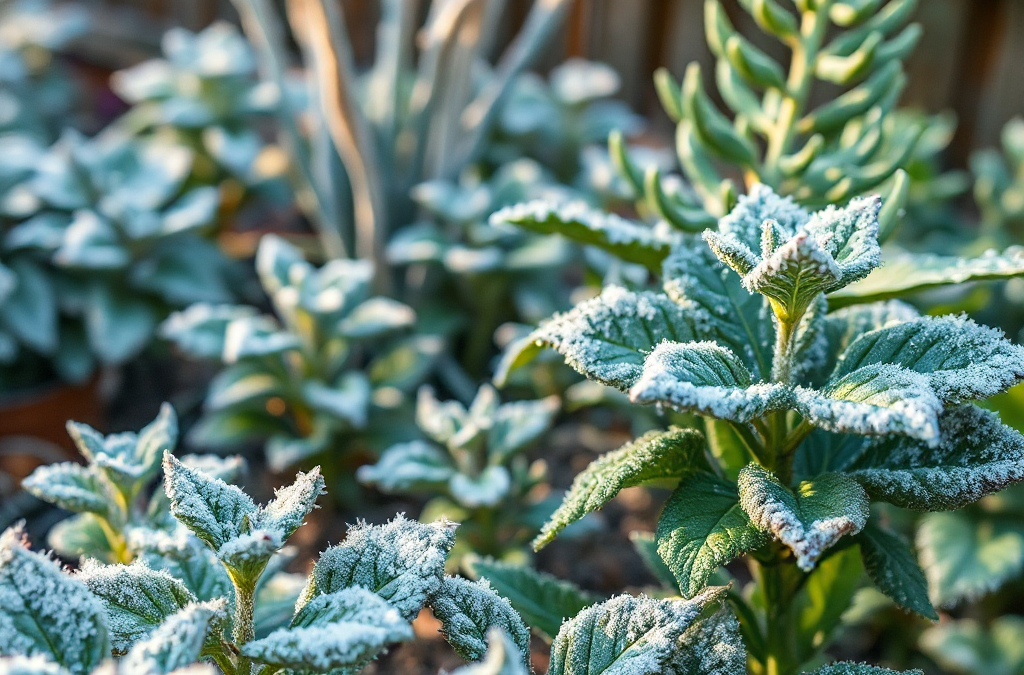
Protect your garden from frost damage by checking the forecast early, watering dry soil before sunset, covering tender plants with breathable fabric, and removing covers after temperatures rise above freezing. Frost forms when clear, calm conditions allow plant surfaces to lose heat, while exposed leaves, blossoms, and shallow roots are damaged first. Use stakes to keep fabric off foliage, secure the edges to trap warmer air, and move containers against a building or indoors when practical. Do not use plastic directly on plants, rely on mulch alone during a hard freeze, or leave coverings in place all day, since trapped heat and moisture can create new problems.
Assess Frost Risk Before Nightfall
Frost damage begins with heat loss at the plant surface, not simply with the air temperature shown in a forecast. On a clear, calm night, leaves can become colder than the surrounding air because they radiate heat toward the open sky. A light frost may blacken basil, squash blossoms, or newly planted annuals, while established kale, spinach, and some dormant woody plants may tolerate considerably more cold.
Check the forecast several hours before sunset, paying attention to the expected low, wind, cloud cover, humidity, and duration of the cold period. A brief dip near freezing is different from a prolonged freeze with strong wind. Low spots in a yard are especially vulnerable because cold air settles there. Beds beside a south-facing wall, fence, or masonry surface may stay slightly warmer after absorbing daytime heat, although that advantage is not enough to protect very tender crops during a hard freeze.
Plant condition also changes the risk. Recently transplanted seedlings have limited root systems and may be stressed by dry soil, whereas mature plants with healthy roots can sometimes recover from minor leaf injury. New spring growth on fruit trees and shrubs is vulnerable because flowers and expanding buds have less cold tolerance than dormant wood. A tomato plant in a sheltered container and a tomato plant in an exposed raised bed should not receive identical treatment.
Before deciding what to cover, walk through the garden and identify the highest-value or least cold-tolerant plants. Prioritize flowering fruit trees, young transplants, tender herbs, warm-season vegetables, and plants already showing water stress. Hardy cool-season crops usually need less intervention unless the freeze is unusually severe or they are very young.
- Light frost: Protect tender foliage and blossoms, especially in exposed locations.
- Hard freeze: Use layered protection, relocate containers, and expect some exposed growth to be lost.
- Windy cold: Reduce wind exposure, but recognize that fabric may need stronger anchoring than in still conditions.
A common mistake is treating every forecasted frost as identical. The forecast is a starting point, not a complete diagnosis of risk. Soil moisture, plant maturity, site elevation, wind, and the length of the cold window determine whether a plant needs a simple cover or should be moved altogether. For more seasonal planning, connect this decision with how to protect your garden from frost damage throughout the growing season rather than improvising after leaves have already frozen.
Choose Covers, Water, and Insulation Wisely
Breathable fabric is usually the safest first-line cover for garden beds. Frost cloth, row cover, cotton sheets, lightweight blankets, and similar materials can slow heat loss by holding a layer of air around the plant. The cover works best when it reaches the ground on every side, because the soil releases stored heat overnight and the fabric helps keep that warmer air near the foliage.
Use hoops, stakes, or a simple frame to keep the material from resting directly on leaves. Direct contact is not always disastrous during a mild frost, but wet fabric against foliage can increase abrasion, transfer cold, and create a heavy load if moisture freezes. Secure the edges with soil, stones, clips, or landscape pins. A loose cover that lifts in the wind offers far less protection than a modest cover sealed around the bed.
Plastic sheeting is useful only when it is supported above the plant and kept from touching leaves. Plastic does not provide the same insulating air structure when laid directly on foliage, and condensation can collect beneath it. If plastic is the only available material, place fabric or other support between the sheet and the plant, anchor it carefully, and remove it promptly in the morning. Buckets, cardboard boxes, and overturned nursery pots can protect individual plants for one night, but they must have enough clearance and should not crush stems.
Watering can help when soil is dry, because moist soil generally stores and releases more heat than very dry soil. Water the root zone during the day, allowing foliage to dry before evening. Saturating already wet soil does not make a severe freeze safe, and spraying leaves at night is not a dependable substitute for a cover. The old idea that water always prevents frost injury ignores the amount of heat available and the length of the freeze.
Mulch provides valuable root insulation but is not a complete shield for above-ground growth. Apply a loose layer of straw, shredded leaves, or similar material around the root zone, keeping it away from direct contact with tender stems. Thick mulch placed over a plant crown can hold moisture and encourage decay, while too little mulch offers little protection during a deep freeze.
Prioritize your materials in this order: protect the plant canopy with breathable coverage, close gaps at ground level, insulate the root zone, and add a second layer only when the forecast and plant value justify the extra work. Covers are not magic barriers; they usually moderate the cold rather than creating warm conditions. That distinction matters when deciding whether a sensitive plant should be brought indoors instead.
Protect Containers, Roots, and Tender Crops
Container plants often freeze faster than plants in the ground because a pot has a much smaller volume of soil and more exposed surface area. Roots near the sides of a container may experience the cold before roots in a garden bed. Move potted herbs, seedlings, citrus, and tropical ornamentals into a garage, shed, porch, or other sheltered space before temperatures fall. The location should be cool enough to avoid forcing growth but protected from freezing air.
If moving every container is impractical, group pots against a building and place them on the ground rather than on an exposed table. Wrap the outside of containers with blankets, burlap, or insulating material, leaving drainage holes clear. Covering the foliage alone may not protect the root ball. A pot sitting on concrete can lose heat rapidly, so placing it on soil, wood, or another insulating surface may reduce exposure.
Warm-season vegetables need special attention after a cold spring planting. Tomatoes, peppers, cucumbers, beans, eggplants, basil, and sweet potato slips can suffer chilling injury even when a forecast does not predict a dramatic freeze. Leaves may appear dull, water-soaked, or distorted later. Covering a small group of plants with hoops is more reliable than balancing a sheet over stakes that can fall onto them.
Young fruit trees and shrubs need a different approach. Protect the trunk of a newly planted tree from rapid temperature changes with an appropriate tree wrap when conditions warrant, but do not leave nonbreathable wrapping on indefinitely. For blossoms, a fabric cover over the entire small tree may help during a short frost if the cover reaches the ground. Large trees are difficult to cover effectively, so site selection, delayed pruning, and choosing locally adapted varieties provide more durable protection than a last-minute sheet.
Roots and crowns deserve attention even when foliage is the visible concern. A plant can lose leaves and still recover if its crown and root system remain viable. Conversely, a marginally hardy perennial may fail after the crown freezes repeatedly. Do not pile wet mulch against the crown simply because the night is cold; use loose insulation around, not smothering, the plant base.
For a small home garden, a practical preparation sequence is:
- Move portable containers first, especially those with tender roots.
- Water dry beds during daylight and inspect plants for pests or broken stems.
- Install supports before dark so covers do not rest on foliage.
- Apply breathable material, anchor the edges, and add root-zone mulch where suitable.
- Place a thermometer at plant height in the most exposed bed rather than relying only on a distant weather station.
The main failure mode is using one method for every plant. A fleece cover may be enough for lettuce, while basil may need relocation and a young citrus tree may need both root and canopy protection. Match the effort to the plant’s cold tolerance, container size, exposure, and value.
Remove Covers and Evaluate Frost Injury
Remove or vent covers after the air warms above freezing and sunlight begins reaching the garden. Leaving fabric in place all day can overheat plants, restrict light, trap humidity, and interfere with pollinating insects. If a second cold night is expected, fold the material aside without damaging stems and reuse it after checking that it is dry and intact.
Do not prune frost-blackened foliage immediately unless it is broken, diseased, or creating a safety problem. Damaged leaves often look worse before the full extent of injury is clear, and the remaining tissue can provide limited protection from another cold night. Wait until the danger has passed and new growth shows where viable tissue remains. Make clean cuts above healthy buds rather than removing an entire stem based on a wilted tip.
Frost injury may appear within hours as limp, dark, translucent, or water-soaked tissue. Some damage becomes visible only after a day or two, when leaves dry and turn brown. Check stems by gently scraping a small area: green tissue beneath the surface suggests living wood, while uniformly brown, dry tissue may be dead. Avoid repeated scraping, which creates wounds that invite infection.
Recovery depends on the plant and the severity of exposure. A lightly chilled lettuce plant may resume growth, but a tomato with a frozen growing point may need time to produce a side shoot. Flowers damaged by frost will not reopen, so fruit production may be reduced even if the plant survives. That is a different outcome from total plant death and should shape pruning and replanting decisions.
One misconception is that fertilizer will quickly reverse cold injury. Heavy feeding after a freeze can push soft new growth when the plant is still stressed. Resume normal care once the root zone is no longer cold and the plant shows active recovery. Keep soil reasonably moist, avoid waterlogging, and inspect for cracked stems or disease as damaged tissue breaks down.
Record which areas froze, which covers worked, and which plants recovered. A sheltered bed may need only early-season covers next year, while a low pocket may justify permanent hoops or later planting dates. Combining local observations with reputable extension or agricultural resources is more useful than treating a single night as a universal rule. The broader principle behind how to protect your garden from frost damage is preparation: know the vulnerable plants, prepare materials before sunset, and reassess after the weather changes.
Frequently Asked Questions
Should I water my garden before a frost?
Water dry soil during daylight, focusing on the root zone. Moist soil can release more stored heat than very dry soil, but watering cannot compensate for a severe or prolonged freeze.
Can I use plastic to cover plants?
Yes, if plastic is supported above the foliage and its edges are secured. Direct contact with leaves can transfer cold and cause condensation-related problems.
When should frost covers come off?
Remove or vent them after temperatures rise above freezing and morning sunlight reaches the plants. Leaving covers on all day can overheat foliage and restrict light.
Does mulch protect leaves from frost?
Mulch mainly insulates roots and crowns. It does not adequately protect exposed leaves, flowers, or growing points, which need a supported cover or relocation.
Should frost-damaged leaves be pruned immediately?
Usually wait until the freeze threat has passed and the injury is clear. Delayed pruning helps you distinguish dead tips from living tissue and avoids removing protection before another cold night.
Conclusion
Frost protection works best when it is planned around exposure, plant tolerance, and the length of the cold period. Check the forecast before sunset, prioritize tender crops and containers, water dry soil during the day, and use breathable covers supported above foliage with edges secured to the ground. Treat mulch as root insulation rather than a substitute for canopy protection, and move especially vulnerable potted plants into shelter. After the freeze, remove covers promptly, delay major pruning until damage is visible, and give stressed plants steady moisture without forcing them with heavy fertilizer. Notes about which beds froze and which methods succeeded will make the next cold event easier to manage and may reveal that a later planting date or a more sheltered location is the most reliable long-term solution.


