
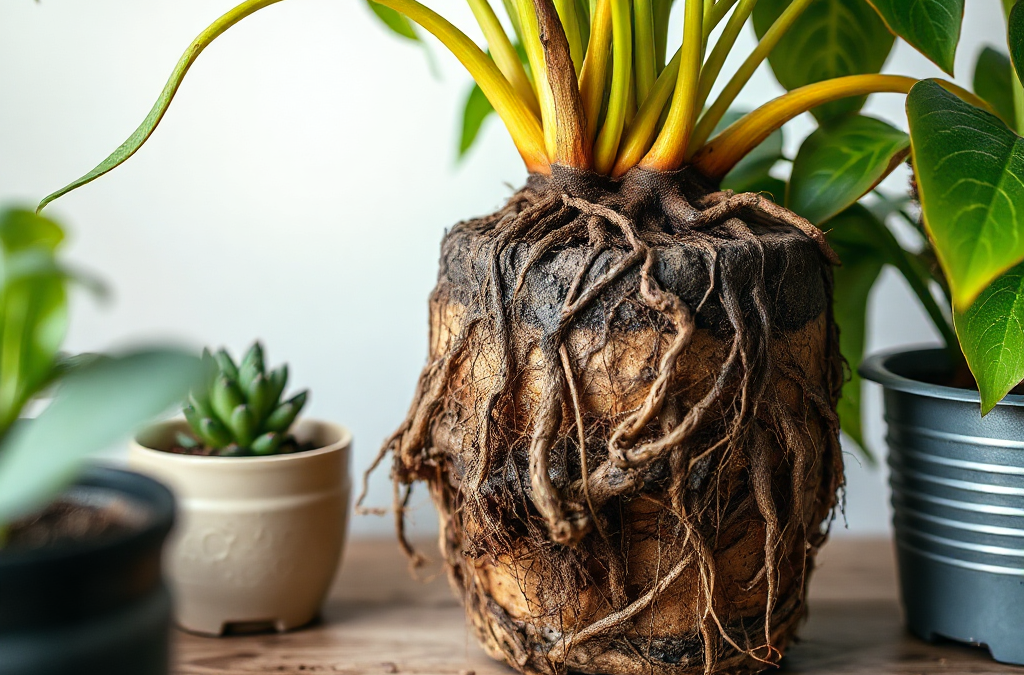
To tell if plants are root-bound, slide the root ball from its container and look for dense circling roots, roots packed against the pot wall, or a root mass that holds the container’s shape. Check whether water runs quickly down the sides, the plant wilts soon after watering, or growth has slowed despite suitable light and feeding. A few visible roots do not prove a problem; crowded roots combined with rapid drying and stalled growth are stronger evidence. If the roots are tightly compressed, move the plant into a pot only slightly wider, loosen the outer roots gently, and water it thoroughly after repotting.
Visible Symptoms That Point To Root Crowding
Root-bound plants often show a pattern of watering, growth, and root symptoms rather than one unmistakable sign. The clearest above-ground clue is a plant that dries out unusually fast: the pot feels light shortly after watering, leaves droop between normal watering intervals, and the plant recovers briefly when moisture is added. Crowded roots fill much of the container, leaving less loose growing medium to hold water around the root surface.
Growth may slow even when light, temperature, and fertilizer appear suitable. New leaves can emerge smaller, lower leaves may yellow, or the plant may produce fewer flowers. These symptoms are not exclusive to root crowding. Poor drainage, damaged roots, low light, cold soil, pests, and excessive fertilizer can create a similar appearance, so the symptoms should prompt an inspection rather than an immediate repot.
Look at the drainage holes before disturbing the plant. Thick roots protruding from the bottom, a raised root mass at the soil surface, or a container that has become difficult to remove are useful clues. A nursery plant may have a few roots at the holes without being severely restricted. The stronger warning sign is a dense network that has occupied the outside of the root ball, especially when the plant dries rapidly and has stopped making healthy growth.
Container shape also matters. A tall plant in a small, shallow pot may become unstable before its roots are severely crowded, while a wide container can hide substantial root congestion. A plant that has recently been moved into a larger pot may simply be adjusting. Connect the visible evidence with the plant’s watering history instead of treating any single root at a drainage hole as proof.
A useful first check is to record how long the pot remains moist after a thorough watering. If the same plant once stayed hydrated for several days but now needs water much sooner, inspect the root ball when the plant is not severely wilted. Avoid waiting for extreme decline; heavily stressed roots are more likely to break during removal and recover slowly.
For more help interpreting related container problems, see how to tell if plants are root-bound alongside your normal checks for light and drainage.
How To Inspect The Root Ball Safely
The most reliable test is a direct examination of the root ball. Water the plant lightly a day before inspection if the medium is completely dry, because bone-dry soil may crumble and expose roots unnecessarily. If the soil is saturated, wait until it is moist but not muddy. Support the stems and soil with one hand, tip the container sideways, and tap or squeeze the pot rather than pulling the plant by its leaves.
Healthy, adequately spaced roots usually occupy the soil in a loose network. Root-bound plants commonly have roots circling the outside in repeated loops, a thick mat at the bottom, or a hard outer shell that resists gentle separation. The root ball may come out as a solid container-shaped plug. White or tan roots can still be crowded; color alone does not determine whether the plant needs a larger home.
Inspect the roots and the growing medium together. A fine, dense web around the perimeter indicates restriction more clearly than one large root crossing the surface. If the inner soil is wet while the outer roots are dry, water may be bypassing the compacted mass. Conversely, black, soft, or foul-smelling roots suggest decay associated with excess moisture or poor drainage, not simply a shortage of pot space.
Do not tear apart a root ball aggressively to make the diagnosis. For a mildly crowded plant, loosen only the outer surface with your fingers. A few shallow vertical cuts in the outer layer may help a severely circling root mass, but cutting deep into the central roots adds stress and is not necessary for every houseplant. Delicate roots, recently transplanted seedlings, and plants known to dislike disturbance deserve a gentler approach.
Use this compact inspection sequence:
- Check whether roots circle the sides or form a dense bottom mat.
- Look for a root mass that keeps the pot’s shape after removal.
- Assess whether the medium is compacted, hydrophobic, waterlogged, or unusually dry.
- Compare the root evidence with fast drying, repeated wilting, or stalled growth.
- Inspect for rot before deciding that a larger pot is the remedy.
A common mistake is to judge crowding by root color or quantity alone. Some plants naturally produce thick, visible roots, and some containers have roots near the drainage holes while still providing adequate space. Density, circling, poor moisture behavior, and reduced growth together provide a more dependable decision than appearance in isolation.
Root-Bound Plants Compared With Other Problems
Root crowding can resemble several common growing problems, so diagnosis should include the entire plant. A plant that wilts while the soil remains wet may have damaged roots or poor drainage rather than insufficient container space. Waterlogged roots lose access to air, and adding a larger pot without correcting the wet medium can increase the volume of poorly aerated soil around the plant.
Fast drying is more suggestive of a full root ball when water runs straight through the container or travels down a gap between the soil and pot wall. It can also result from intense sun, low humidity, a porous unglazed pot, or a loose soil mix. Compare identical plants when possible. If one plant in the same light and room dries dramatically faster and has a tightly packed root perimeter, crowding becomes a stronger explanation.
Yellow leaves do not automatically mean the roots need more space. Yellowing can follow natural aging, insufficient light, nutrient imbalance, cold conditions, or chronic overwatering. Fertilizer buildup may damage root tips and cause browning at leaf edges; moving that plant into a larger container without flushing or replacing the problematic medium does not address the original stress.
Consider the plant’s recent history. A plant bought in a small production pot may be ready for a modest upgrade, while a specimen repotted several weeks ago may be reacting to root disturbance, a change in light, or a different watering schedule. A root-bound diagnosis is more convincing when the plant has occupied the same container through an active growth period and the root mass now fills the available medium.
The best alternative to an unnecessary repot is a short observation period. Check moisture at several depths, confirm that drainage holes are open, inspect for insects, and review light exposure. If the plant remains healthy and the root ball is loose, leaving it in place may be safer than increasing the pot size. Extra soil around a small root system stays wet longer and can create a new problem.
Use the broader troubleshooting page, how to tell if plants are root-bound, when the symptoms remain ambiguous. The goal is not to force a repotting decision; it is to identify whether restricted roots are actually limiting water access and new growth.
Repotting Decisions And Aftercare
Repot when the evidence shows restricted roots and the plant can tolerate disturbance. Choose a container with a drainage hole and a diameter only modestly larger than the existing root ball, often about 1 to 2 inches wider for many small container plants. A dramatically larger pot is not a faster solution. It leaves more unoccupied medium around the roots, which may remain wet for too long after watering.
Use a fresh, appropriately textured potting mix rather than ordinary garden soil in an indoor container. The mix must balance moisture retention with air space; the best choice depends on the plant, pot material, indoor humidity, and watering habits. Set the root ball at the same depth as before. Burying the stem or crown can encourage rot, while raising the plant too high can expose roots and cause rapid drying.
For a mildly crowded root ball, loosen the outer roots with your fingers and place it into the new container. A severely circling mass may need the outer mat teased apart or lightly scored in a few places. Remove only dead or obviously rotten roots. Healthy roots are not disposable packing material, and excessive pruning can delay recovery, particularly in plants with fine or fragile roots.
Water slowly after repotting until moisture reaches the full root ball and excess drains freely. The old root mass may initially repel water if it became very dry, so apply water in stages rather than assuming one quick pour was enough. Empty standing water from a saucer. Keep the plant in its usual suitable light, protect it from sudden heat or harsh midday exposure, and avoid heavy fertilizer until fresh growth indicates recovery.
Watch the response over the next few weeks. Successful adjustment usually shows as firm foliage, a root ball that remains evenly moist without staying saturated, and new growth appropriate to the season. Continued wilting despite wet soil, foul odors, darkening roots, or worsening leaf loss points toward root damage, drainage failure, pests, or another stressor. Those signs call for a second inspection instead of another immediate increase in pot size.
Repotting also has a timing tradeoff. Active growth gives many plants more capacity to replace disturbed roots, but a severely crowded plant may need attention before the ideal season. Newly flowering plants, dormant specimens, and recently purchased plants may benefit from waiting if they are stable. Prioritize serious water-management problems first, then choose the least disruptive container change that restores usable root space.
University extension services and horticultural departments offer reliable information on container media, drainage, transplanting, and root health. Search those sources for the specific plant type because cactus, woody plants, tropical houseplants, and seedlings can differ in their tolerance of root disturbance and moisture.
Frequently Asked Questions
Can roots coming out of drainage holes prove a plant is root-bound?
No. A few roots may reach the holes normally. Look for a dense circling mat, a solid container-shaped root ball, fast drying, and reduced growth before repotting.
Should a root-bound plant go into a much larger pot?
Usually not. A pot only modestly wider is easier to keep evenly moist. Excess unused soil can stay wet and reduce air around the roots.
How can root crowding be distinguished from overwatering?
Root crowding often causes rapid drying and roots circling the container. Overwatering is more associated with persistently wet soil, poor drainage, soft roots, and foul odors.
Is it necessary to cut circling roots?
Not always. Gently loosen mildly crowded roots. Lightly score only a severely compressed outer layer, and avoid aggressive cutting of healthy roots.
When should a repotted plant be fertilized?
Wait until the plant has settled and shows fresh growth, unless the potting mix specifically calls for another schedule. Heavy feeding immediately after root disturbance may add stress.
Conclusion
Confirm root crowding by combining the plant’s behavior with a direct root-ball inspection. Rapid drying, repeated wilting between normal waterings, slowed growth, circling roots, and a firm container-shaped mass make a stronger case than a single root visible at the drainage hole. Before repotting, rule out wet soil, poor drainage, low light, pests, and fertilizer injury. If the roots are genuinely compressed, use a clean container only slightly wider, preserve healthy roots, maintain the original planting depth, and water thoroughly without leaving the pot standing in excess moisture. Monitor new growth and moisture patterns afterward; continued decline means the diagnosis or growing conditions need another review.
Further Reading
Authoritative Sources
- CDC Nutrition
cdc.govOfficial public-health nutrition guidance and data.
- USDA FoodData Central
fdc.nal.usda.govOfficial food composition and nutrient data.
- MedlinePlus Health Information
medlineplus.govConsumer health information from the U.S. National Library of Medicine.
- NIH Office of Dietary Supplements
ods.od.nih.govEvidence-based fact sheets about vitamins, minerals, supplements, and nutrition.


