
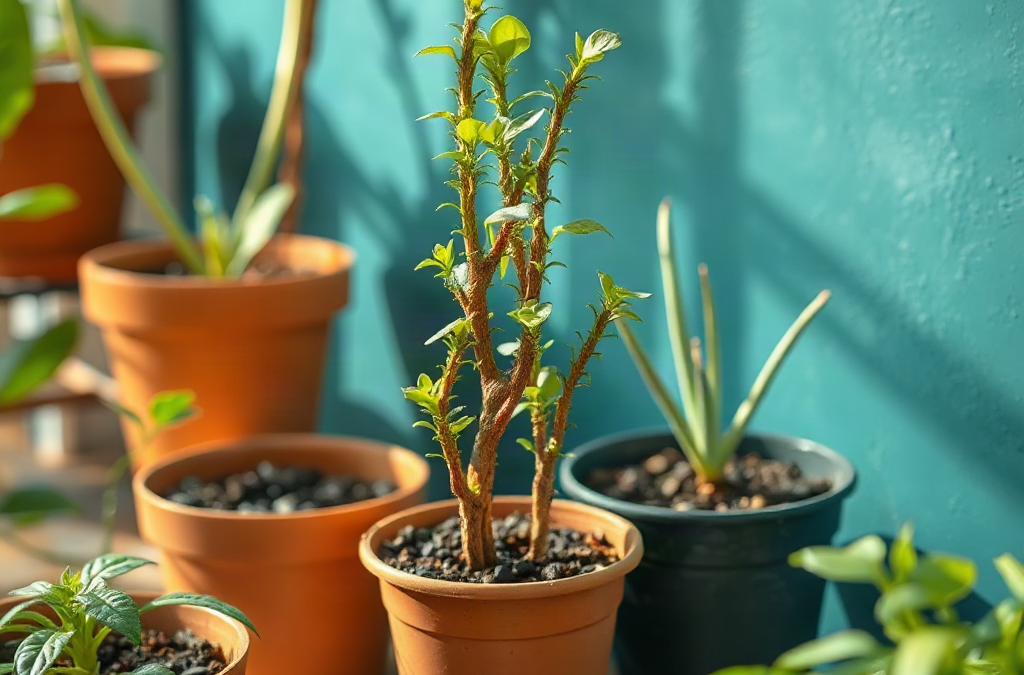
When plants become leggy, move them to brighter suitable light, correct watering, prune or pinch stretched stems, and provide enough space for steady new growth. Leggy growth usually develops when stems elongate toward inadequate light, although overcrowding, excessive warmth, and too much nitrogen can worsen it. Remove only damaged or weak growth, and avoid placing a suddenly shaded plant in intense direct sun, which can scorch leaves. For seedlings, stronger light placed close enough to prevent stretching is usually the best correction; mature plants may need pruning, staking, or propagation if bare stems cannot regrow leaves. Watch for compact new leaves and firmer stems as signs that conditions are improving.
Identify Why the Growth Became Leggy
Leggy growth means a plant has produced unusually long, thin stems with wide gaps between leaves. The most common cause is insufficient usable light: the plant stretches toward a window, grow lamp, or opening instead of building compact tissue. Seedlings show this quickly, but houseplants, herbs, bedding plants, and vegetable transplants can all become elongated when light is weak.
Look at the plant before cutting anything. A stem leaning strongly toward one direction points toward uneven lighting, while evenly stretched growth often indicates that the entire location is too dim. Pale new leaves, slow growth, and long spaces between leaf nodes support a light-related diagnosis. Warm conditions can accelerate stem extension, so a seed tray kept on a warm shelf under weak light may become leggy faster than one in a cooler, brighter position.
Other contributors deserve attention. Crowded seedlings shade one another, frequent high-nitrogen feeding can encourage soft leafy growth, and inconsistent watering may weaken stems even when light is adequate. A plant that is naturally vining, such as pothos or some tomato varieties, should not be judged by the compact shape of a rosette plant. The practical question is whether the newest growth is becoming weaker and more widely spaced than the plant’s normal form.
Do not assume that every thin stem needs to be buried, staked, or fertilized. Staking may hide the symptom without correcting the light, and extra fertilizer can create more tender growth. Take a photograph from the side, inspect the newest leaves, and compare the plant with a healthy specimen of the same type. That quick assessment makes the next step more precise and avoids unnecessary root disturbance.
Correct Light, Water, And Feeding Conditions
Better light is usually the first correction because compact growth depends on adequate energy reaching the leaves. Move the container closer to a bright window when the species can tolerate that exposure, or use a suitable grow light positioned according to the manufacturer’s distance guidance. Turn the pot periodically if light comes from one side. A gradual transition is safer for a plant moving from shade into strong sun, especially when its leaves are thin and tender.
Seedlings need special handling. A bright window may look sunny while providing too little intensity for compact stems, particularly on short winter days. A grow light kept too far above the tray can produce the same problem. Raise or lower the fixture as directed for that light, keep seedlings from touching hot surfaces, and provide enough daily illumination for the crop rather than leaving a lamp on continuously without considering the plant’s dark period.
Water when the growing medium and plant type indicate a need, not as a treatment for stretching. Constantly wet compost can reduce root oxygen and leave stems soft, while severe drying can cause collapse and leaf loss. Check moisture below the surface, confirm that excess water can drain, and empty standing water from saucers. The correct interval varies with pot size, temperature, root density, and species.
Hold fertilizer until light and roots are functioning reasonably well. Feeding a dimly lit plant often produces larger, softer shoots that are even less stable. After conditions improve, use a balanced fertilizer at the label rate only when active growth and the plant’s normal feeding schedule justify it. A useful comparison is a tomato transplant: stronger light and gentle airflow may produce a sturdy stem, whereas fertilizer alone can make a tall transplant greener but not structurally stronger.
Prune, Pinch, Or Propagate Stretched Stems
Pruning can improve the shape of many leggy plants, but the correct cut depends on where healthy leaves and dormant buds remain. Pinch soft growing tips just above a leaf node to encourage branching in plants that naturally branch, such as basil, coleus, and some ornamental houseplants. Use clean, sharp scissors for firmer stems and cut just above a node rather than leaving a long bare stub.
Do not remove every elongated stem at once from a stressed plant. Leaves still produce energy, and a drastic haircut can add shock when roots are already struggling. Remove dead, damaged, or clearly weak sections first, then shorten healthy stems gradually. For a plant with a long bare section and leaves only at the tip, cutting back to a viable node may be worthwhile if that species reliably produces new shoots there. Some woody plants will not refill old bare stems quickly, so expectations should remain modest.
Propagation is often the better use for a severely stretched vine. Take a cutting below a node, remove excess lower foliage, and root it in water or a suitable propagation medium according to the plant’s needs. Replanting several rooted cuttings into one container can create a fuller appearance, but only after the cuttings have developed adequate roots. This is a practical alternative to forcing one old, bare stem to branch where it has few viable buds.
Seedlings require a different decision. If a tomato, pepper, or flower seedling is mildly stretched, transplanting it deeper can help when that species forms roots along buried stem tissue; tomatoes are notably tolerant of this approach. It is not appropriate for every plant, and burying a weak stem in cold or saturated medium can encourage decay. Firm the medium gently, support the seedling temporarily if needed, and fix the light immediately. Pruning without better light simply produces another round of thin growth.
Prevent Leggy Growth In Future
Prevention starts with matching the plant to the growing site before the stem elongates. Record which windows receive direct, bright, or filtered light at different times of day, then place light-demanding plants in the strongest suitable location. Keep low-light plants away from a dark corner that looks attractive but provides little usable illumination. For indoor seedlings, plan the lamp position and height before sowing rather than trying to rescue a crowded tray later.
Spacing also changes the outcome. Seedlings packed together compete for light and develop one-sided, weak stems. Thin them according to the crop’s needs, or transplant them before leaves overlap heavily. Gentle air movement can encourage sturdier stems, but a fan should not blast delicate seedlings or dry the medium rapidly. The goal is mild movement, not visible constant bending.
A simple weekly check catches problems early:
- Examine the newest stem sections for widening gaps between leaves.
- Rotate containers when growth is clearly leaning toward one side.
- Check whether neighboring plants are casting shade.
- Feel the medium before watering and confirm drainage.
- Delay extra fertilizer when growth is pale, soft, or stretched under weak light.
Use the plant’s newest growth as the main progress signal. Compact leaves, shorter internodes, stronger upright stems, and balanced color suggest that the correction is working. Older stretched sections may never shorten, so improvement often appears at the growing tips rather than throughout the existing stem. If growth continues to elongate despite improved lighting, inspect for a naturally trailing habit, root trouble, pests, or a light source that is still too weak or too distant.
One common mistake is changing several conditions dramatically on the same day. Moving a shaded plant into harsh midday sun, repotting it, pruning heavily, and fertilizing immediately makes it difficult to identify the cause and increases stress. Correct the light first, stabilize watering, then shape the plant once new growth shows it can respond.
Frequently Asked Questions
Can a leggy plant become bushy again?
Often, yes, if the species branches readily and the plant receives stronger suitable light. New growth may become compact even though older bare sections remain.
Should I cut off all the leggy stems?
No. Remove damaged growth and shorten healthy stems selectively above viable nodes. Severe pruning can weaken a plant that is already short on energy.
Does fertilizer fix stretched seedlings?
Usually not. Weak light is the main issue for many stretched seedlings, and extra fertilizer may create softer growth. Improve lighting before feeding.
Can I bury a leggy seedling deeper?
Some plants, including tomatoes, can form roots along buried stems. Check the crop first, and avoid burying stems in cold, waterlogged medium.
How close should a grow light be?
Follow the fixture's distance guidance because brightness and heat vary widely. Keep the light close enough to prevent stretching without overheating or bleaching the foliage.
Conclusion
Leggy growth is a structural warning, not merely a cosmetic problem. Inspect the newest leaves and stem spacing, then correct usable light before reaching for fertilizer or drastic pruning. Stabilize moisture, reduce crowding, and use gradual changes when moving a plant into brighter conditions. Pinch or cut above healthy nodes on branching plants, while treating severely stretched vines or suitable seedlings as possible propagation or deeper-transplant candidates. Expect older bare sections to remain imperfect; the clearest evidence of recovery is compact, firm new growth. A short weekly inspection of light direction, spacing, moisture, and stem length will usually catch the problem early enough to correct it with less stress.


