
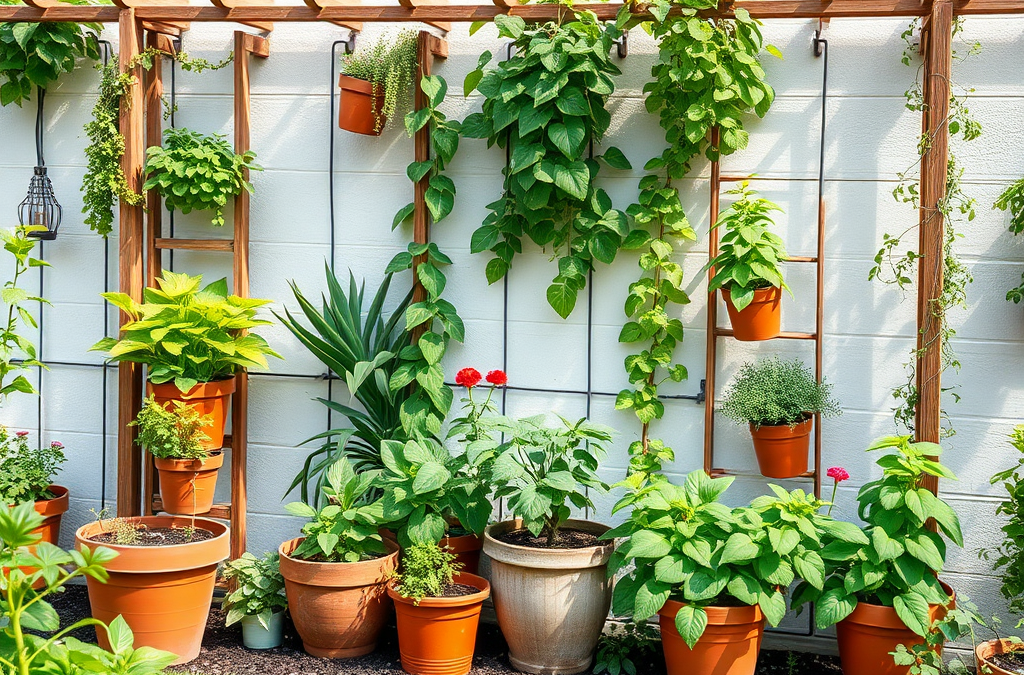
How to utilize vertical space in gardening means growing upward with trellises, wall planters, hanging containers, shelves, and sturdy supports matched to each plant’s weight and growth habit. Place sun-loving crops where they will not shade shorter plants, anchor structures securely, and use containers deep enough for roots rather than treating every wall as planting space. Climbing beans, cucumbers, peas, tomatoes, herbs, strawberries, and trailing flowers can all occupy different vertical levels. Check irrigation, airflow, access, and long-term load before planting, because crowded foliage, unstable supports, and drying containers are the most common failures.
Plan Vertical Layers Around Sun, Access, and Structure
Vertical gardening works best when the available airspace is treated as a growing plan rather than simply filling a wall with pots. Measure the area first, note the direction of sunlight, and identify how much weight the surface or ground can safely carry. A south-facing wall may provide strong light but also reflect heat; a shaded fence may suit leafy herbs or ornamentals better than fruiting crops.
Map the garden in layers. Low containers can hold lettuce, basil, or compact peppers, while a trellis behind them supports peas, cucumbers, or pole beans. Higher shelves may be reserved for shallow-rooted herbs, but they should not block access to plants below. Tall structures belong on the north side of a bed when possible so they cast less shade across shorter crops.
Sun exposure changes as plants mature. A cucumber that begins as a small seedling can cover a support quickly, while a tomato may become heavy and difficult to reposition. Sketch the mature height and spread of each crop before installation. This simple step prevents the common mistake of planning for today’s seedlings instead of the foliage and fruit that will occupy the space later.
A vertical arrangement can produce more usable growing area, but it does not create unlimited sunlight, root volume, or water. Prioritize the positions that are easiest to reach for crops harvested frequently. Use how to utilize vertical space in gardening as a planning question: which plants truly need elevation, and which could remain at ground level without wasting valuable light?
Choose Supports and Plants That Work Together
The support should match the plant’s climbing method and mature weight. Peas and beans can wind around relatively narrow strings or netting, whereas cucumbers may need a broader mesh or trellis that can hold developing fruit. Indeterminate tomatoes do not naturally cling like beans; they require tying, clips, or a cage that supports stems as they lengthen.
Use weather-resistant materials and anchor them before planting. A freestanding trellis pushed only lightly into loose soil may lean once foliage becomes wet. Fasten wall-mounted systems to appropriate structural points, not merely thin siding or decorative panels. For heavy crops such as melons, provide slings or another way to support fruit rather than expecting stems to carry every load.
Plant selection also determines whether vertical space is genuinely useful. Pole beans generally make better upward use of a small bed than bush beans, but they need a tall, stable framework. Compact cucumbers are more manageable in containers than vigorous varieties. Strawberries and trailing nasturtiums suit pockets or hanging baskets, while rosemary and many woody herbs may struggle in small, frequently drying compartments.
Compare a simple stake with a full trellis. A stake uses little material and suits one tomato, but it offers limited lateral support. A trellis can spread several vines across a plane, yet it needs stronger anchoring and more pruning or tying. Avoid the assumption that every climbing crop should be forced upward; some vines become tangled, shade neighbors, or produce inaccessible fruit when their support is too narrow.
- Light climbers: peas, pole beans, and some small cucumbers.
- Heavier crops: tomatoes, melons, and vigorous cucumbers requiring reinforced support.
- Trailing plants: strawberries, thyme, and ornamental vines suited to hanging or tiered containers.
Inspect ties weekly during rapid growth. Loose stems can be redirected early; mature stems are more likely to kink or snap when moved.
Use Containers, Walls, and Hanging Systems Wisely
Wall planters, pocket systems, shelves, and hanging baskets expand planting options where ground area is limited, but each reduces the margin for watering errors. A shallow pocket may work for lettuce or small herbs but is a poor home for a tomato with a large root system. Select containers according to root depth, plant size, drainage, and the weight of wet growing media.
Hanging baskets dry faster than containers sitting on the ground because they are exposed to air on more sides. They may need more frequent checks during hot or windy weather. Install them where watering is practical; a basket that requires a ladder or awkward reach often receives less care than planned. Drip irrigation or a dedicated watering line can make a dense vertical display manageable, provided emitters are checked for blockage.
Tiered shelves are useful for arranging herbs, seedlings, and compact greens, but spacing matters. Leave enough room for leaves to expand and for air to move between levels. A crowded shelf against a warm wall can produce uneven growth and encourage prolonged leaf wetness after watering. Rotate portable containers when light comes from one direction so stems do not lean permanently.
Living walls are visually efficient but usually demand more maintenance than a simple trellis. They contain many small root zones, which can dry at different rates, and replacing one failed plant may disturb neighboring pockets. For a first project, a ground-supported trellis paired with a few strategically placed containers is often easier to maintain than a fully planted wall.
When choosing among systems, consider the whole season rather than the initial appearance. A low-cost crate shelf may be adequate for herbs, while a permanent wall frame makes sense only if the surface is sound and the site will remain useful for several years. The best arrangement is the one that leaves room to prune, inspect, harvest, and repair irrigation.
Manage Water, Airflow, Harvesting, and Safety
Water management becomes the central maintenance issue as plants move off the ground. Containers have limited reserves, and upper levels may dry before lower ones. Check moisture at the root zone rather than judging by surface color. Water slowly until excess drains, then make sure runoff does not damage walls, paths, or plants positioned underneath.
Airflow matters because dense vertical foliage can remain damp after rain or overhead watering. Space vines so leaves are not pressed continuously against a wall, remove damaged foliage, and avoid placing a moisture-sensitive crop in a stagnant corner. Good circulation does not replace observation: inspect leaf undersides and stems for pests, chewing, discoloration, or wilting.
Harvest access should shape the layout. Cucumbers hidden behind a curtain of leaves may become oversized before they are noticed. Place frequently harvested herbs and greens at waist or chest height, while less frequently visited ornamentals can occupy higher positions. Keep thorny plants away from narrow walkways and leave a clear route for watering equipment.
Vertical installations also introduce physical risks. Check fasteners, hooks, shelves, and trellis legs after strong wind and whenever plants become heavier. Do not hang loaded containers from weak trim, gutters, or improvised wire. If children or pets use the space, avoid sharp edges and unstable freestanding frames. A structure that is attractive but difficult to inspect is not a reliable long-term solution.
Use this compact check before planting:
- Confirm mature plant height, spread, root volume, and expected fruit weight.
- Match the support to the crop’s climbing or tying habit.
- Place tall plants where they will not deprive shorter crops of needed light.
- Test watering reach, drainage, and access for pruning and harvest.
- Recheck anchors, ties, foliage density, and container moisture during peak growth.
Signs the system is working include upright growth, reachable fruit, even moisture, and open foliage. Leaning frames, persistently wilted upper pots, yellowing lower leaves, tangled stems, or inaccessible harvests indicate that the layout needs adjustment rather than simply more fertilizer. For additional planning ideas, revisit how to utilize vertical space in gardening alongside your site’s light and watering constraints.
Frequently Asked Questions
Which plants are easiest to grow vertically?
Peas, pole beans, compact cucumbers, and some tomatoes are practical choices because their stems can be trained or tied to a support. Herbs, strawberries, and trailing flowers work well in elevated containers.
How tall should a garden trellis be?
Match the height to the crop’s mature growth and your ability to harvest. A support that is too short creates tangles, while one that is too tall may make pruning and picking inconvenient.
Can vertical gardens grow in shade?
Some can. Leafy greens, mint, parsley, and shade-tolerant ornamentals may perform in limited light, but fruiting crops usually need stronger direct light to produce well.
Why do vertical containers dry out so quickly?
Small containers hold less moisture, and elevated pots are exposed to moving air on multiple sides. Check the root zone regularly and consider drip irrigation or larger containers where practical.
Is a living wall better than a trellis?
Not automatically. A living wall can fit more small plants into a narrow area, but it usually needs closer watering and replacement. A trellis is often simpler for climbing vegetables and seasonal crops.
Conclusion
Successful vertical gardening begins with matching plants, supports, containers, and maintenance access to the actual site. Put tall structures where they preserve useful sunlight, anchor them for mature plant weight, and reserve deeper containers for crops with substantial roots. Treat watering as part of the design rather than an afterthought, especially for hanging baskets and upper shelves. Start with a manageable combination, such as a secure trellis for beans or cucumbers plus a few accessible herb containers. Watch for drying media, crowded foliage, leaning supports, and hidden fruit during the first growing cycle. Those observations reveal whether the arrangement is genuinely saving space or merely moving maintenance into a harder-to-reach position.
Further Reading
Authoritative Sources
- Small Space Vegetable Gardening | Grow Vertical
joegardener.comSmall space vegetable gardening is possible with a little knowledge and ingenuity. Herbs and vegetables can grow in urban environments.
- Vertical Growing and How to Have a Space Efficient Garden
thelivingfarm.orgTight spacing is only possible in a high performance garden system because there are enough nutrients for multiple plants in small spaces.
- Vertical Gardening for Small Spaces
ruhligfarmsandgardens.comUse pot feet, casters or wheeled stands whenever possible so you can rotate plants to get even sun exposure or to move vertical gardening arrangements into more ...
- Creative Ideas for Vertical Gardening and Planting
azurefarmlife.comVertical gardening helps to maximize space. Vertical gardening creates visual interest by using different heights, containers, and colors. It ...


