
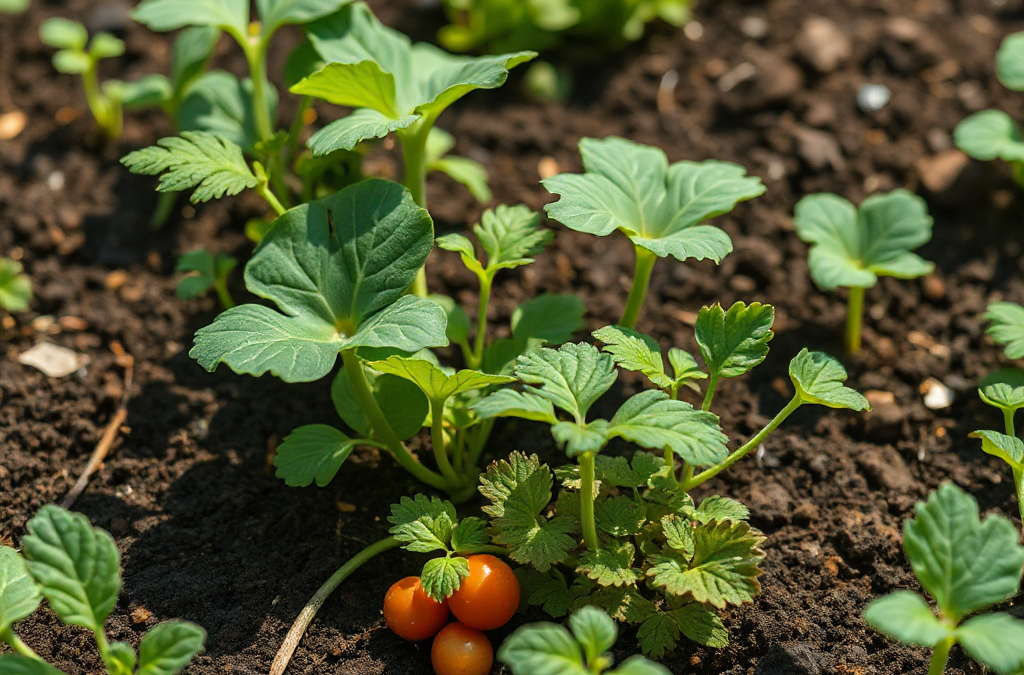
Mistakes that lead to poor vegetable growth usually involve unsuitable light, compacted or poorly drained soil, irregular watering, overcrowding, incorrect planting dates, and unmanaged pests or disease. A shaded bed can produce thin, weak plants, while waterlogged roots may decline even when the surface looks moist. Check sunlight, drainage, root-zone moisture, spacing, and leaf symptoms before adding fertilizer, because extra nutrients rarely correct a basic site problem. Correcting one limiting factor at a time—such as thinning seedlings, improving drainage, or adjusting irrigation—makes it easier to identify what actually restores steady growth.
Site And Soil Conditions That Restrict Roots
Poor vegetable growth often begins below ground, where roots cannot obtain enough air, water, or usable nutrients. A bed may look dark and fertile yet remain unsuitable if it stays saturated after rain, contains dense clay, or has been repeatedly walked on. Roots in compacted soil have less room to branch, so plants may remain small even when leaves receive adequate light.
Drainage and water-holding capacity must be judged together. Sandy soil can drain quickly and leave shallow-rooted lettuce or radishes dry by midday, while heavy soil may hold water around tomato or bean roots for too long. Dig a small test hole and examine the soil several hours after watering. It should feel moist but not soupy, and it should crumble rather than form a hard, glossy mass. Raised beds can improve control, but simply adding a thin layer of compost on top will not correct a severely compacted subsoil.
Adding organic matter is useful when it is well decomposed and mixed into the root zone, but more is not always better. Fresh manure can injure roots, introduce weed seeds, or create nutrient problems. Compost improves structure gradually; it does not instantly transform a poorly drained site. If water collects in one location, a different bed position, a modestly raised planting area, or a drainage correction may be more effective than repeated amendments.
Another common mistake is treating fertilizer as a substitute for suitable soil. Pale leaves may reflect nitrogen shortage, but they can also result from cold, saturated roots that cannot function normally. Test soil when a problem affects several plants, and compare the result with the crop’s needs rather than applying a general feed by guesswork. Readers troubleshooting mistakes that lead to poor vegetable growth should prioritize root conditions before chasing isolated leaf symptoms.
Watering, Light, And Spacing Errors
Vegetables need a dependable balance of light and moisture, not simply frequent attention. Most fruiting crops require strong direct sun to produce vigorous growth and mature harvests, whereas some leafy crops tolerate less intense light. Planting tomatoes, peppers, or cucumbers beside a wall, fence, or tall crop can create long stems, sparse leaves, and delayed flowering. Observe the bed across the day instead of judging sunlight from a single morning visit.
Shallow, irregular watering encourages roots to remain near the surface. Plants may look acceptable after irrigation but wilt quickly during warm weather. Conversely, watering every day on heavy soil can reduce oxygen around the roots. Push a finger several inches into the soil near—not directly against—the plant. If the upper layer is dry but the deeper zone remains damp, longer intervals may be appropriate; if the root zone is dry throughout, water more deeply and monitor again.
Spacing errors create a second set of problems. Crowded seedlings compete for light, water, and nutrients, while foliage that remains wet and poorly ventilated may be more vulnerable to disease. Radishes and carrots also need enough room for usable roots, not just green tops. Thinning can feel wasteful, but leaving every seedling in place often produces a larger number of weak plants rather than a productive row.
Mulch can reduce evaporation and splashing, yet placing it tightly against stems may keep the crown damp and invite decay. Drip irrigation or a soaker hose can deliver water near the root zone, but neither system removes the need to check actual soil moisture. A low-cost approach—hand watering at the base and using mulch after seedlings are established—may be more suitable for a small bed than installing equipment that is difficult to maintain. Adjust frequency for weather, soil, container size, and crop stage rather than following a fixed calendar.
Planting Timing, Nutrition, And Crop Stress
Planting a crop outside its suitable temperature range can produce poor growth even when the seed packet was followed carefully. Cool-season greens may bolt or stall in heat, while warm-season crops can remain inactive in cold soil. A late frost can damage tender transplants, but planting too late can also expose cool-weather crops to heat before they develop. Local frost dates are useful starting points, yet soil temperature, forecast conditions, and the crop’s tolerance should guide the final decision.
Transplant shock is another overlooked cause of weak growth. Plants moved from protected conditions into wind, intense sun, or cold nights may lose water faster than their roots can replace it. Harden transplants gradually, water the root ball before planting, and avoid disturbing roots unnecessarily. A plant that pauses briefly after transplanting may be recovering normally; one that continues to wilt in damp soil may have damaged roots or a drainage problem.
Fertilizer mistakes range from applying too little to applying too much. Excess nitrogen can produce large, soft leaves with limited fruiting, especially in tomatoes and squash. A granular product placed against a stem can scorch tissue, while feeding dry plants can intensify stress. Balanced nutrition is not identical to maximum nutrition. Use a soil test where possible, follow the product label, and consider the crop’s growth stage. Leafy greens and fruiting plants do not have the same priorities throughout the season.
Crop rotation and sanitation matter when the same problem returns in the same bed. Repeatedly growing related crops in one spot can allow certain pests or diseases to persist, although rotation is not a complete solution for every soilborne issue. Remove badly diseased plant material rather than composting it unless the compost system reliably reaches suitable conditions. Organic products can fit a garden’s goals, but “natural” does not mean harmless or automatically effective. Confirm the pest, read the label, and protect pollinators when treatment is justified.
Diagnosing Problems Before Choosing A Fix
Effective troubleshooting starts with the pattern of damage, not the most visible symptom. Yellowing across an entire bed suggests a shared condition such as waterlogging, cold roots, nutrient imbalance, or insufficient light. Damage on one plant may point instead to a stem injury, localized pest, or transplant problem. Compare new growth with older leaves, inspect the underside of foliage, and examine roots from a plant that must be removed.
Keep a short record of planting date, weather, irrigation, amendments, and symptom changes. This is more useful than making several changes at once. If a gardener adds fertilizer, increases watering, and applies an insecticide on the same day, an improvement—or further decline—cannot be attributed confidently to any one action. Test a small area or a few plants first when the remedy is uncertain.
A practical inspection sequence is:
- Confirm the crop receives enough direct light for its type.
- Check soil moisture several inches below the surface and look for standing water.
- Measure spacing and thin crowded seedlings.
- Inspect roots, stems, leaf undersides, and new growth.
- Review planting date, recent weather, fertilizer, and spray applications.
Signs of improvement should be judged by new growth, not by expecting damaged leaves to become healthy again. New leaves that expand normally, firmer stems, and steadier moisture are encouraging. Continued wilting in wet soil, spreading lesions, hollow stems, or sudden collapse calls for removing the affected plant and seeking crop-specific advice from a university extension service or local horticulture authority. The best repair is often modest: improve drainage, correct spacing, moderate irrigation, and wait long enough to observe the response.
Use the same careful reasoning when reviewing mistakes that lead to poor vegetable growth after a disappointing harvest. A failed crop does not prove that the seed, fertilizer, or variety was defective; site conditions and timing may have limited it first. For future beds, change one high-confidence factor at a time and record the result.
Frequently Asked Questions
Why are my vegetables growing slowly?
Slow growth may result from cold soil, inadequate light, compacted roots, poor drainage, drought, overcrowding, or a nutrient imbalance. Check shared site conditions before adding fertilizer.
Can overwatering cause poor vegetable growth?
Yes. Saturated soil limits oxygen around roots and may cause yellow leaves, wilting despite wet soil, root decay, and weak growth. Improve drainage and allow the root zone to moderate before watering again.
Should I fertilize vegetables with yellow leaves?
Not immediately. Yellowing can reflect water stress, cold roots, disease, or nutrient shortage. Inspect the plant and soil first; use a soil test or label-directed fertilizer when evidence supports feeding.
Does overcrowding affect vegetable harvests?
Yes. Crowded plants compete for light, water, and nutrients and often have poorer airflow. Thin seedlings according to crop needs, even when removing healthy extras feels wasteful.
How can I prevent poor growth next season?
Record planting dates and symptoms, choose a suitable site, prepare well-drained soil, respect spacing, water according to root-zone moisture, and change one management factor at a time.
Conclusion
Healthy vegetable growth depends on matching the crop to its conditions and diagnosing limits before applying remedies. Check light, drainage, soil texture, root-zone moisture, spacing, planting timing, and visible pest or disease signs in that order. Correcting a saturated bed will usually matter more than adding another dose of fertilizer, and thinning a crowded row may accomplish more than replacing the seed variety. Make one measured change, watch new growth, and keep notes about weather and watering so the next decision is based on evidence. When symptoms spread or remain unclear, consult a local extension resource rather than treating by appearance alone. Consistent observation turns a disappointing season into useful information for a more reliable planting plan.


