
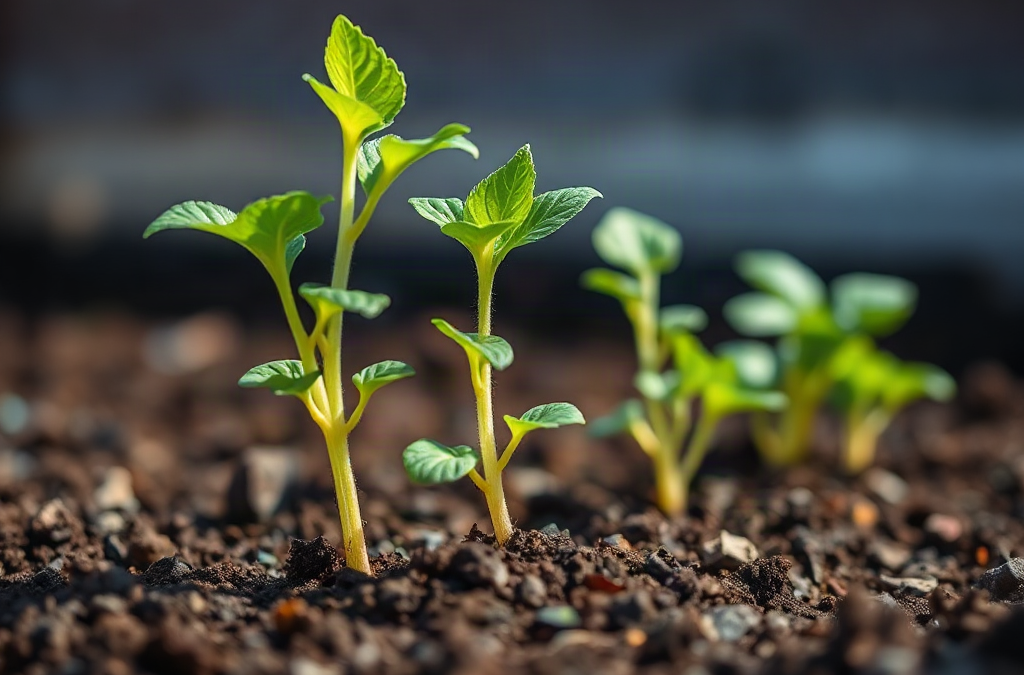
If your vegetable plants are stunted, check root conditions, moisture, sunlight, temperature, nutrients, pests, and disease before adding fertilizer or replacing plants. Compacted or waterlogged soil can restrict roots, while cold weather, insufficient light, transplant shock, and root-feeding pests can slow growth. Compare affected plants with healthy ones, inspect roots and leaves, test soil when possible, and correct one major problem at a time. Give recovering plants steady moisture without saturation, adequate light, and space for airflow; avoid heavy feeding when roots are damaged. Plants with healthy roots and undamaged growing points may resume growth, but severe disease, persistent root damage, or a badly mismatched planting time may make replanting the more practical choice.
Read the Pattern Before Changing the Garden
Stunted growth is a symptom, not a diagnosis. A plant may remain small because its roots cannot expand, its leaves cannot produce enough energy, or a pest or disease is damaging new tissue. The fastest way to narrow the cause is to compare the affected plants with healthy plants of the same crop and age. Note whether the entire bed is slow, only one variety is affected, or the problem is limited to plants near an edge, path, container, or low spot.
Timing provides useful evidence. Seedlings exposed to cold nights often pause without showing dramatic leaf damage, especially with warm-season crops such as peppers, tomatoes, cucumbers, and beans. Plants that stalled immediately after transplanting may be experiencing root disturbance, drying, or sun and wind stress. A decline that began after heavy rain points more toward poor drainage or root injury than a simple need for fertilizer.
Inspect the newest leaves and the growing point rather than judging only plant height. Healthy new growth suggests that the plant still has functional roots and can recover. Distorted shoots, spreading discoloration, holes, sticky residue, or sudden wilting require a closer pest or disease inspection. A common mistake is to respond to every small plant with a high-nitrogen product. Excess nitrogen can produce soft foliage, mask the original problem, and increase stress when roots cannot absorb water normally.
Record the crop, planting date, recent weather, watering pattern, fertilizer applications, and nearby chemical use. That simple timeline can distinguish a temporary cold-weather pause from a continuing soil problem. If the symptoms appear only in one patch, compare soil texture and drainage there before treating the whole vegetable garden.
Check Soil, Roots, Water, and Light
Root conditions deserve priority because damaged roots limit nearly every other corrective action. Dig carefully beside a weak plant and examine the root zone without pulling on the stem. Healthy roots are generally firm and branched; dark, mushy, foul-smelling roots suggest excessive moisture or decay, while sparse roots may reflect compaction, transplant injury, severe drying, or root-feeding organisms.
Soil that stays saturated pushes air out of pore spaces, leaving roots with less oxygen. Soil that dries into a hard crust creates a different problem: fine roots lose contact with moisture, and young plants may be unable to push through the surface. Press a finger into the soil several inches below the surface instead of watering by the calendar. Water slowly when the root zone is dry, then allow excess water to drain. Containers need open drainage holes; raised beds and heavy ground soil may need organic matter incorporated over time rather than a sudden layer placed against stems.
Compaction is especially common beside paths and in beds worked while wet. If a trowel meets a dense horizontal layer, avoid repeatedly digging around established roots. A narrow cultivation fork can loosen accessible soil, while future beds benefit from permanent walkways and added compost mixed through the planting area. Compost can improve structure, but it is not a complete answer to poor drainage, contaminated soil, or a badly compacted subsoil.
Light and temperature should be checked alongside soil. Leafy crops may tolerate partial shade better than fruiting crops, but a plant receiving several hours of weak or blocked light can remain small even when watered correctly. Shade from a fence, trellis, or newly leafed tree changes during the season. Warm-season vegetables also grow slowly in cool soil; adding fertilizer will not substitute for temperatures suitable for active roots.
Use a practical priority order: confirm drainage, inspect roots, assess light and temperature, then consider fertility. Moving a container to a brighter position may solve the issue without disturbing the root ball. In contrast, moving an established plant from compacted ground can cause more injury than gradual soil improvement around it.
Separate Nutrition Problems From Pests and Disease
Nutrient shortages usually affect color and growth together, but visual diagnosis is uncertain because water stress, root damage, and disease can create similar patterns. Uniform pale older leaves may be consistent with inadequate available nitrogen, whereas yellowing between veins on newer leaves can point toward a different nutrient or root-uptake problem. Soil pH influences which nutrients are available, so repeated feeding without a soil test may worsen imbalance rather than correct it.
Use a soil test when several plants show the same slow growth or when the bed has received repeated amendments. Follow the test recommendations and the crop label rather than combining multiple fertilizers. A modest, balanced feeding may be reasonable for actively growing plants with healthy roots, but fertilizer should be delayed when the soil is saturated, roots are rotting, or a plant is severely wilted. Salts from concentrated fertilizer can draw water away from roots and burn already stressed plants.
Pests often reveal themselves through a pattern that nutrition does not. Inspect leaf undersides, stems, and the soil line for aphids, thrips, mites, chewing larvae, cutworms, or swollen and damaged roots. Look for stippling, webbing, honeydew, holes, clipped stems, or distorted new leaves. Disease may appear as lesions, vascular browning, persistent wilt, or a spreading pattern from plant to plant. Remove badly affected tissue when appropriate, sanitize tools, and avoid moving wet soil or foliage between beds.
A real-world example is a row of small peppers with pale leaves. If the whole row is evenly pale and the soil test shows low available nitrogen, measured feeding may help. If only plants in one wet section are pale and their roots are brown, more fertilizer is the wrong response. If the newest leaves are twisted while older leaves remain green, inspect for insects before changing the soil.
Do not assume organic products are automatically harmless or fast acting. Manures, composts, fish-based products, and mineral fertilizers vary in strength and release rate. Read the label, keep amendments away from stems, and avoid pesticide applications unless the pest has been identified and the product is suitable for that crop and site.
Use a Measured Recovery Plan
Recovery works best when one major stress is corrected at a time and the plant is observed for new growth. Begin by removing obvious competition, clearing weeds close to the stem, and correcting watering or drainage. Protect tender crops from unusually cold nights when practical, but do not enclose foliage so tightly that humidity remains high for long periods. Improve air movement by respecting the mature spacing rather than crowding weak plants together.
After the environment is corrected, inspect growth over the next several days and weeks according to the crop’s normal pace. New leaves that are larger, greener, and free of distortion are better evidence of recovery than an immediate increase in height. A plant may not regain lost size, particularly late in the season, but it can still produce a useful harvest if the growing point remains healthy.
A compact sequence helps prevent overcorrection:
- Photograph symptoms and mark affected plants so changes are easy to compare.
- Check soil moisture below the surface, drainage, root condition, light, and temperature.
- Inspect leaves and stems for feeding damage, residue, lesions, and distorted growth.
- Use a soil test before adding substantial lime, fertilizer, or other corrective amendments.
- Apply only the correction that matches the strongest evidence, then reassess new growth.
Container plants may need a different approach from plants in the ground. A root-bound plant can have a dense mass that dries rapidly, while a large container with fine-textured soil may stay wet near the bottom. Repotting can help when roots fill the container, but it also creates transplant stress. Choose a container only modestly larger, use a well-draining growing medium, and water according to moisture rather than pot size.
Keep expectations realistic. A damaged root system cannot be repaired by foliar feeding, and a plant infected with a serious soilborne disease may not recover after surface improvements. Avoid changing water, fertilizer, location, and pest products all at once; if the plant improves, you will not know which action helped, and if it declines, the added stress may obscure the diagnosis.
Know When Replanting Is Better
Replanting is reasonable when a vegetable has a dead growing point, extensive root decay, a spreading disease pattern, severe stem damage, or too little remaining season to recover and mature. Healthy plants with intact roots and fresh green growth should usually receive a chance before removal. The decision depends on crop value, local planting dates, available space, and whether the underlying cause has been corrected.
For example, replacing a weak lettuce plant may be practical because lettuce matures relatively quickly and a new seedling may catch up. Replacing a mature pepper after a cold snap may be less useful if the plant is still producing healthy new leaves. A cucumber repeatedly wilting in waterlogged soil is unlikely to improve simply because it is fed; drainage must be fixed or the replacement will face the same failure.
When removing a suspect plant, take as much of the affected root zone as practical, dispose of diseased material according to local guidance, and clean tools before working on healthy crops. Do not automatically replant the same crop in the same hole. A different crop with different temperature and disease sensitivities may be a better use of the space, provided the soil and drainage issue are addressed first.
Prevention begins with crop-specific planting dates, gradual hardening off, healthy transplants, proper spacing, and soil that drains while retaining enough moisture for the crop. Rotate plant families where space permits, avoid working wet soil, and inspect new plants before placing them among established vegetables. These steps reduce repeated diagnosis, but they cannot eliminate weather-related setbacks or every soil and pest problem.
For ongoing planning, connect this troubleshooting process with your vegetable planting notes and keep records of varieties that perform well in each bed. The useful goal is not perfect uniformity; it is recognizing which plants can recover and which condition must be corrected before investing more time.
Frequently Asked Questions
Should I fertilize stunted vegetable plants immediately?
Not usually. Check moisture, drainage, roots, light, temperature, and pests first. Fertilizer is most appropriate when plants are actively growing and a soil test or clear symptom supports a nutrient correction.
Can overwatering make vegetable plants stay small?
Yes. Saturated soil reduces oxygen around roots and can encourage decay, leaving plants pale, weak, or wilted despite wet soil. Improve drainage and wait for the root zone to dry appropriately before watering again.
How can I tell whether cold weather caused the slowdown?
Cold-stressed warm-season plants often pause while remaining mostly intact, then resume producing healthier new leaves when conditions warm. Persistent distortion, lesions, or root damage suggests an additional problem.
Will a stunted plant catch up?
Some do, especially when the roots and growing point are healthy and the stress is corrected early. Recovery may restore new growth without fully replacing lost time, so late-season plants may still yield less.
When should I remove a stunted vegetable plant?
Remove it when roots are extensively rotten, the growing point is dead, disease is spreading, or the remaining season is too short for recovery. Correct the soil or drainage problem before replanting the space.
Conclusion
Small vegetable plants need diagnosis before treatment. Compare affected plants with healthy ones, inspect the root zone, check soil moisture and drainage, and account for light and temperature before reaching for fertilizer. Leaf and stem symptoms can then guide a closer search for insects or disease, while a soil test can prevent guesswork about pH and nutrients. Correct the strongest confirmed problem first and judge progress by healthy new growth rather than instant height. Give recoverable plants time, but replant when roots, stems, or growing points are badly damaged or the season no longer allows a crop to mature. Recording the cause and correction will make the next planting decision faster and more accurate.


