
When your garden lacks sunlight, measure where direct sun actually falls, remove only safe and appropriate obstructions, choose shade-tolerant plants, and move sun-hungry crops into containers placed in brighter locations. Map the space at several times of day because buildings, fences, and tree canopies create different patterns than brief cloud cover. Prioritize leafy vegetables and woodland ornamentals in partial shade, while relocating tomatoes, peppers, squash, and most fruiting crops. Improve results with reflective light-colored surfaces, wider spacing, restrained watering, and careful pruning, but avoid assuming that mirrors, fertilizer, or aggressive tree cutting can replace direct sun.
Measure the Available Light Before Changing the Site
A useful shade plan begins with observation rather than plant shopping. Check the growing area in the morning, around midday, and during late afternoon on several clear days. Record when direct light touches each bed and how long it remains there. A location that appears gloomy at breakfast may receive several productive hours after lunch, while a bright-looking courtyard may receive only reflected light and no direct sun.
Direct sun creates distinct shadows with defined edges. Bright indirect light illuminates foliage without producing a strong shadow, and dense shade remains dim for most of the day. Those conditions are not interchangeable. Fruiting vegetables usually need more direct exposure than leafy crops, while many woodland ornamentals are adapted to filtered light. Counting hours without noting intensity can therefore mislead: three hours near solar noon may be more useful than three weak hours shortly after sunrise.
Identify the source of the shade as well. A deciduous tree creates a changing canopy and may allow strong spring light before its leaves open. A building creates a fixed shadow that shifts predictably with the season. Evergreen branches, solid fences, and closely spaced shrubs can block light throughout the year. Seasonal observation matters because a bed measured in early spring may become substantially darker by summer.
For a simple assessment, sketch the property and mark each growing area as morning sun, midday sun, afternoon sun, filtered light, or persistent shade. Repeat the check near the beginning and middle of the main growing season. A phone light meter can provide comparative readings, but it is not necessary for ordinary garden decisions; a time-stamped photo record often reveals the pattern clearly.
The common mistake is labeling the entire property “shady” after one observation. Small differences beside steps, along a driveway, or near a south-facing wall can determine whether a crop merely survives or produces well. A detailed light map makes what to do when your garden lacks sunlight a site-specific decision rather than a series of guesses.
Match Plants to the Type of Shade
Plant selection should follow the measured light pattern, not the shade label printed on a tag alone. “Part shade” can mean protection from hot afternoon sun, several hours of gentle morning exposure, or broken light passing through leaves. Read the plant’s moisture and climate requirements alongside its light preference, because a shade-tolerant species can still fail in dry soil under tree roots.
For edible beds with roughly three to five hours of direct light, leafy crops are generally a more realistic choice than fruiting crops. Lettuce, spinach, arugula, chard, kale, parsley, cilantro, and green onions can produce usable leaves with limited exposure, although growth may be slower and less dense than in brighter conditions. Radishes and beets may provide greens even when their roots remain small. Harvesting leaves rather than waiting for large heads or roots makes better use of a constrained site.
Tomatoes, peppers, cucumbers, melons, corn, and squash devote substantial energy to flowering and fruit development. In insufficient light they commonly stretch, flower sparsely, ripen late, or produce little despite healthy-looking foliage. Adding fertilizer does not correct that energy shortage and can encourage more soft, leafy growth. If these crops matter most, reserve the brightest location for them or grow fewer plants in movable containers.
Ornamental choices offer a wider palette. Hostas, heucheras, ferns, hellebores, astilbes, brunnera, and many woodland groundcovers suit various shaded settings, but local climate and soil drainage still control performance. Dry shade beneath a mature tree is especially demanding because plants compete with established roots for water. In that setting, locally adapted groundcovers may be more dependable than moisture-loving shade plants selected only for their foliage.
A sensible priority list is compact:
- Keep prime light for fruiting crops that cannot be productive without it.
- Place leafy crops in moderate shade and harvest them at smaller sizes.
- Use adapted ornamentals in persistent shade where edible output is unlikely.
- Leave extremely dark or root-filled ground unplanted and use mulch, seating, or a path instead.
The last option is not a failure. Converting an unsuitable patch into a functional surface can prevent repeated spending on plants that decline for predictable reasons.
Recover Light Without Damaging Trees or Structures
Some blocked light can be recovered, but the safest changes are selective and modest. Begin with removable causes: relocate stored materials, lower an unnecessarily tall movable screen, tie back an overgrown vine, or thin dense shrubs that have exceeded their intended space. Clean greenhouse panels and nearby windows if they are meant to transmit light. These changes can improve exposure without destabilizing a mature landscape.
Tree work requires more restraint. Removing dead, damaged, crossing, or low branches may improve light penetration and air movement, but stripping the canopy or “topping” a tree can create weak regrowth, sunscald, decay, and structural hazards. Large limbs, branches over buildings, and work near utilities belong with a qualified arborist. Permission may also be needed for protected trees or shared boundary trees. Root cutting to establish a sunny bed can be just as harmful as excessive canopy removal.
Compare the value of the tree with the expected value of the brighter bed. A mature canopy can cool a home, shelter wildlife, reduce glare, and make an outdoor area comfortable. Removing it merely to gain a few hours for annual vegetables may be a poor trade. Selective pruning makes sense when neglected growth blocks a previously open area; plant relocation is usually wiser when shade is produced by a healthy, well-placed tree.
Light-colored walls, fences, gravel, or paving can increase diffuse brightness around a confined garden. A pale fence behind leafy greens is safer and more practical than positioning mirrors outdoors. Mirrors can create concentrated glare, hot spots, confusing reflections for birds, and hazards if they break. Reflected light may support shade-tolerant foliage, but it does not turn a deeply shaded bed into full sun.
Track the result after any pruning rather than assuming that more cutting is better. Signs of a useful change include a longer period of direct light, sturdier new growth, improved flowering, and faster drying after rain. Wilting, scorched leaves, exposed bark, or rapidly drying soil may show that the altered site is now hotter than expected. Readers considering what to do when your garden lacks sunlight should treat pruning as a measured adjustment, not the default solution.
Use Containers and Bed Design to Reach Brighter Areas
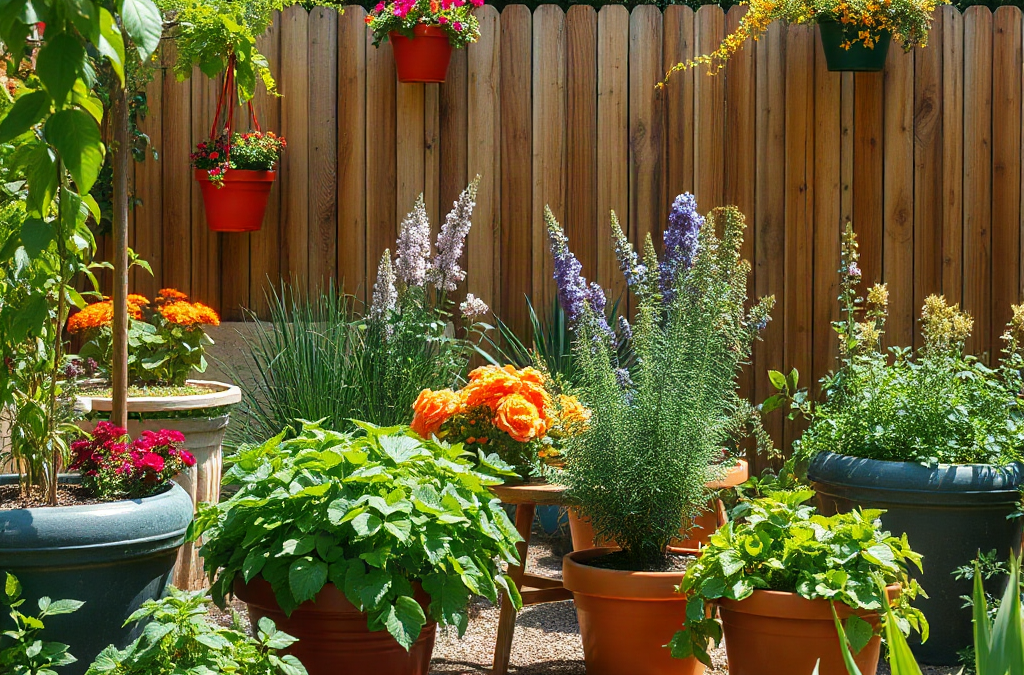
Containers let plants follow the light when the ground cannot. A sunny doorstep, paved strip, balcony edge, driveway margin, or open section near a gate may receive more exposure than the formal beds. Before placing pots there, confirm that they will not obstruct doors, paths, vehicles, drainage routes, or emergency access.
Choose a container large enough for the mature root system and make sure it has unobstructed drainage holes. Small pots are easy to move but dry rapidly and can restrict tomatoes, peppers, and other substantial plants. Large pots buffer temperature and moisture more effectively, though they become heavy. A wheeled platform is useful on a smooth, level surface; it is less safe on steps, slopes, or rough paving.
Moving pots once or twice during the season is more practical than chasing the sun every hour. For example, a tomato might remain in the open driveway margin during summer, while lettuce occupies a cooler position receiving morning light. Rotating a stationary pot by a quarter turn every few days can prevent one-sided growth, but rotation cannot compensate for a location with no meaningful direct exposure.
Raised beds do not inherently create more light. They can lift low crops above a short railing or curb, but they will not escape the shadow of a building or mature canopy. Vertical supports have a similar tradeoff: a trellis may raise climbing beans into brighter air, yet it can shade everything behind it. Place the tallest structures on the side least likely to cast shadows across shorter plants, accounting for the sun’s path in your location.
In a narrow yard, a staged arrangement often works better than one crowded bed. Put sun-demanding containers in the brightest open area, leafy crops at the edge of their shadow, and shade ornamentals nearest the building. Keep enough space between pots for airflow and maintenance. The failure mode is squeezing extra plants into the brightest square metre; crowding creates mutual shading and damp foliage, canceling much of the advantage gained by relocation.
Adjust Water, Spacing, and Expectations in Shade
Shaded soil often dries more slowly, so irrigation should respond to moisture rather than a fixed sunny-garden schedule. Check the soil below the surface with a finger or small trowel before watering. Damp soil, cool temperatures, and limited air movement can keep roots wet longer, increasing the likelihood of rot and foliar disease. Under large trees, however, the opposite can occur: established roots may draw water so effectively that the surface looks shaded while plants remain dry.
Water the root zone in the morning when moisture is needed, and avoid repeatedly wetting leaves late in the day. Mulch can limit evaporation and soil splash, but a thick, constantly wet layer in a poorly drained bed may prolong dampness. Apply a moderate layer and keep it away from crowns and stems. If water stands after rain, improve drainage or switch to plants suited to moist shade rather than watering less and hoping the root zone corrects itself.
Give plants slightly more room than they would receive in an open, breezy bed. Wider spacing allows light to reach lower leaves and improves airflow. Remove yellow or diseased foliage promptly, but do not strip healthy leaves in an attempt to expose the plant; those leaves are the plant’s energy-producing surface. Thin seedlings early so the strongest individuals are not stretched by competition.
Evaluate success by the intended harvest or display, not survival alone. Leafy greens should form harvestable leaves with reasonably sturdy stems. Ornamentals should hold their characteristic color and produce compact growth. Long pale stems, leaves leaning sharply toward one direction, persistent wetness, little flowering, and repeated fungal spotting indicate that the site or plant choice is failing. Move the plant, reduce crowding, or replace it rather than compensating with extra fertilizer.
Expect slower growth and smaller yields from limited light. A partial-shade vegetable bed can still supply herbs, salad leaves, and tender greens, but it is unlikely to match the fruit production of an open plot. Keeping brief notes on exposure, watering frequency, harvest dates, and plant performance turns the first season into a reliable plan for the next one.
Frequently Asked Questions
Can vegetables grow with only three hours of sunlight?
Some leafy vegetables and herbs may provide a modest harvest with three hours of direct light, especially if it arrives near midday. Fruiting crops are much less likely to perform well.
Will a grow light work outdoors in a shady garden?
Outdoor grow lights are usually impractical because fixtures need weather-safe electrical installation, adequate intensity, and controlled placement. Moving valuable crops to a brighter site or growing them indoors is generally simpler.
Should I prune a tree to bring more sun into the garden?
Selective pruning may help, but major canopy reduction can damage the tree and create hazards. Ask a qualified arborist to assess large limbs, protected trees, and branches near buildings or utilities.
Do mirrors make a shaded garden sunny enough for vegetables?
No. Mirrors may create glare and concentrated hot spots without supplying dependable exposure across a bed. Pale, matte surfaces can increase diffuse brightness more safely, but they cannot replace direct sunlight.
Why are plants in shade tall and floppy?
Long, weak stems often indicate that plants are stretching toward insufficient light. Move them to a brighter position, reduce crowding, or replace them with plants adapted to the measured exposure.
Conclusion
A productive low-light space depends on using each pocket of exposure for the plants that can benefit from it. Map direct and filtered light through the season, reserve the brightest areas for crops that flower and fruit, and assign moderate shade to leafy harvests or adapted ornamentals. Recover light only through safe, proportionate changes; a healthy mature tree is rarely worth damaging for a marginal increase in vegetable yield.
Use containers where paved or elevated locations are brighter, then adjust spacing and irrigation to the slower drying conditions common in shade. Watch plant form, flowering, soil moisture, and disease rather than judging success by survival. If a bed remains dark, wet, or filled with competing roots, convert it to a path, seating area, or mulched woodland space and concentrate growing effort where the available light can support it.


