
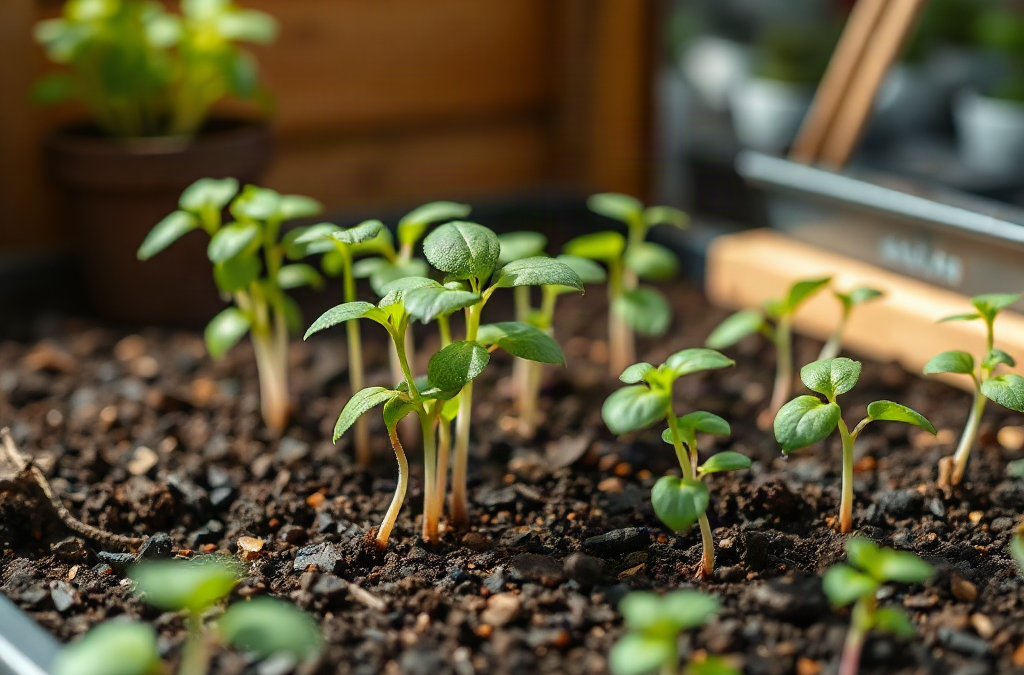
Create a supportive environment for seedlings by balancing strong overhead light, controlled moisture, gentle airflow, suitable temperatures, and enough root space for steady growth. Keep the growing mix evenly damp rather than saturated, place lights close enough to prevent stretched stems, and provide mild air movement after germination. Seedlings also need drainage holes and timely thinning so their roots receive oxygen and their leaves do not remain crowded. Check plants daily instead of watering on a fixed schedule: pale growth, leaning stems, persistent wetness, and stalled roots indicate that light, irrigation, ventilation, or container size needs correction.
Build the Root Zone Around Moisture and Oxygen
A seedling container must hold enough moisture for small roots without trapping water around them. Newly emerged roots need both water and oxygen, yet their limited size makes them vulnerable to either extreme. A fine, lightweight seed-starting mix usually manages that balance better than dense garden soil, which can compact in small cells, drain unevenly, and introduce weed seeds or soilborne organisms.
Choose trays, pots, or soil blocks that remain intact through the expected indoor growing period. Every rigid container needs unobstructed drainage. Fill cells loosely, settle the mix with water, and avoid pressing it into a hard plug. After sowing, a humidity cover can slow evaporation until germination, but it should be removed as seedlings emerge. Leaving a closed dome over growing foliage maintains excessive humidity and reduces air exchange.
Water according to the condition of the mix rather than a calendar. The surface may become slightly lighter in color while moisture remains available below. Lift a tray to judge its weight, touch the mix at the edge of a cell, and inspect the drainage holes. A tray that stays heavy for days is more concerning than a surface that briefly appears dry. Bottom watering can moisten cells with less disturbance, but the tray should be drained after the mix has absorbed water. Permanently standing containers in water deprives roots of oxygen.
For example, a shallow tray beneath twelve cells may be filled with a small amount of water and emptied once the cell surfaces begin to darken. That differs from pouring water into the tray every morning regardless of plant demand. The first method responds to moisture status; the second can keep the lower root zone continuously saturated.
Common warning signs must be interpreted together. Wilting in dry, lightweight cells suggests a need for water, while wilting in heavy, wet cells may reflect damaged or oxygen-starved roots. Algae on the surface, a sour odor, persistent condensation, or stems collapsing near the mix line indicate that moisture and ventilation need prompt attention. Adding fertilizer does not correct a poorly aerated root zone.
A practical approach to how to create a supportive environment for seedlings begins with containers that drain predictably and a mix that can be checked easily. Clear observation is more valuable than a complicated watering product because seedling water use changes with leaf size, room temperature, light intensity, and cell volume.
Match Light and Temperature to Seedling Growth
Strong, evenly distributed light keeps emerging stems compact and directs leaves upward instead of toward a distant window. A bright window may appear adequate to a person while delivering short, angled, or inconsistent light to a tray. Seedlings that elongate rapidly, lean sharply, or develop wide gaps between leaves are usually receiving insufficient usable light for their growth rate.
An adjustable grow light provides more control than window light alone. Position it above the entire tray so edge plants are not forced to lean inward, then adjust the distance according to the fixture manufacturer’s directions and plant response. Lights placed too far away encourage stretching. Lights placed too close can bleach foliage, overheat leaf surfaces, or dry small cells unusually fast. Rotate trays if one side remains visibly stronger, but do not treat rotation as a substitute for adequate overhead coverage.
Seedlings also benefit from a regular dark period. A timer makes the daily cycle consistent and prevents accidental round-the-clock lighting. The appropriate duration and intensity vary with the crop and fixture, so observe structure rather than relying on hours alone. Compact stems and leaves with normal color suggest a workable setup. Leaning, pale, rapidly lengthening plants call for a light adjustment, while curled or bleached upper leaves may indicate excessive intensity or heat.
Temperature controls the pace of both germination and subsequent growth. Some seeds need warm conditions to sprout, which can make a heat mat useful under a tray. The same warmth may be unnecessary after emergence. Continuing to heat the root zone while light is limited can accelerate stem growth faster than the plant can support, producing soft, elongated seedlings. Remove supplemental bottom heat when the crop no longer requires it, unless the growing space is unusually cold.
Air temperature should remain reasonably stable, but a perfectly constant room is not required. Avoid placing trays against cold window glass, directly over a heating vent, or where midday sun causes sharp heat spikes beneath a clear cover. A thermometer at tray height gives more relevant information than a thermostat across the room.
Light and temperature should be adjusted as a pair. If a cool basement has excellent grow lights, growth may be slower but sturdy. A warm room with weak window light often produces rapid, fragile extension. When resources are limited, improving light coverage and avoiding unnecessary heat generally does more for stem quality than buying extra fertilizer.
Use Airflow, Spacing, and Clean Handling to Reduce Stress
Gentle air movement helps foliage dry, limits stagnant humidity, and exposes stems to mild mechanical movement. A small fan can serve this purpose when it moves air across the growing area without blasting one row. Leaves may tremble slightly, but seedlings should not remain bent or dry out within hours. Aim the fan indirectly or use a low setting, especially immediately after emergence.
Spacing matters because overlapping leaves create humid pockets and block light from smaller plants. Sow the recommended number of seeds per cell rather than treating dense germination as an advantage. If several seedlings emerge together, thin extras before their roots and leaves become entangled. Snipping unwanted seedlings at the mix surface is less disruptive than pulling them from a shared cell. Save separation and potting-on for robust seedlings that tolerate handling.
A crowded tray presents a predictable scenario: the outer plants receive moving air and more light, while the center remains damp and shaded. Watering the entire tray to satisfy the dry outer cells then leaves the center even wetter. Wider spacing, individual watering attention, or dividing plants between trays corrects the environmental difference more effectively than increasing fan speed.
Clean practices reduce avoidable exposure without requiring a sterile room. Begin with clean containers and fresh growing mix, remove dead leaves promptly, and empty water left in catch trays. Wash reused pots and tools before sowing. Handle seedlings by a leaf rather than pinching the delicate stem when moving them. A damaged leaf may be replaced as growth continues, but a crushed main stem often cannot recover.
Fertilizer should enter the routine only when seedlings need it. Many seed-starting mixes contain little nutrition, but seeds supply initial energy for emergence. Once true leaves develop, a dilute, appropriately labeled seedling fertilizer may be useful, particularly if plants will remain in cells for several weeks. More concentrated feeding does not compensate for poor light and may injure young roots or leave salts in small containers.
Use plant color as one clue, not a diagnosis by itself. Uniformly pale seedlings may be short of nutrition, but they can also suffer from saturated roots, cool conditions, or inadequate light. Check those environmental conditions before feeding. For a closer look at coordinated moisture, light, and spacing decisions, use this resource on how to create a supportive environment for seedlings as a working reference rather than treating each symptom in isolation.
Monitor, Adjust, and Prepare Seedlings for Transplanting
Daily observation should produce small corrections before seedlings decline. Check trays at roughly the same time each day so changes in weight, posture, color, and surface moisture are easier to recognize. Look beneath leaves as well as across the canopy. New growth often reveals whether a correction is working more clearly than older leaves, which may retain prior damage.
Use a short priority sequence when something looks wrong:
- Check moisture and drainage. Determine whether affected cells are dry, saturated, or draining differently from neighboring cells.
- Inspect light exposure. Compare stem length, leaning, and leaf color at the center and edges of the tray.
- Review temperature and airflow. Look for direct drafts, trapped condensation, heat from fixtures, or a cold surface beneath the tray.
- Assess crowding and root space. Thin overlapping plants and inspect whether roots have filled the available cell.
- Consider nutrition last. Feed only after basic environmental problems have been addressed.
This order prevents a common mistake: responding to every pale or stalled seedling with fertilizer. Suppose tomato seedlings stop expanding while their cells remain wet for several days. Feeding them adds dissolved salts but does not restore oxygen around the roots. Better drainage, a longer interval between watering, and improved airflow address the more likely constraints.
Pot up seedlings when their roots hold the mix together and the existing container dries very quickly, not merely because a certain date has arrived. Move them into containers only modestly larger than the current root mass. Oversized pots retain more unused moisture and are harder to water evenly. Handle the root plug gently, use fresh mix, and return plants to stable light after transplanting.
Indoor support must eventually give way to outdoor adaptation. Harden seedlings gradually by introducing outdoor light, wind, and temperature variation over multiple days. Begin in a sheltered position for a limited period, then increase exposure as leaves remain firm and undamaged. Tender seedlings moved directly from protected indoor conditions into strong sun may scorch even when the air feels mild. Cold-sensitive crops also need protection from unsuitable nighttime temperatures.
Successful adjustment appears in the newest growth: stems remain upright, leaves hold normal color, roots begin occupying fresh mix, and watering intervals become predictable. Failure appears as continued collapse, spreading discoloration, no new roots, or cells that remain wet. Change one major factor at a time when possible. That makes the plant’s response easier to read and avoids swinging from excessive water to severe dryness or from weak light to sudden exposure.
Frequently Asked Questions
Should seedlings be covered after they sprout?
Remove a humidity dome as seedlings emerge. Continued covering can trap moisture, restrict airflow, and keep leaves wet; provide normal room humidity and monitor the uncovered mix more frequently.
How can I tell whether seedlings need water?
Check the tray’s weight, the mix below the surface, and the drainage holes. Water when the root zone is beginning to dry, then drain excess water instead of maintaining a permanently full catch tray.
Why are my seedling stems tall and thin?
Rapidly elongated stems usually point to insufficient light, excessive warmth relative to available light, or both. Improve overhead light coverage and remove unnecessary bottom heat after germination.
When should seedlings receive fertilizer?
Consider dilute fertilizer after true leaves appear if the growing mix contains little nutrition and the seedlings will remain in containers. Correct wet roots, weak light, and cold conditions before feeding.
Do seedlings need a fan running all day?
Continuous operation is not always necessary. Use gentle airflow long enough to prevent stagnant, persistently humid conditions, while ensuring that leaves do not bend continuously and small cells do not dry too quickly.
Conclusion
Seedling care becomes more reliable when the growing area is managed as a connected system rather than a collection of separate products. Begin with freely draining containers and an airy mix, then match irrigation to actual moisture instead of habit. Give the entire tray even overhead light, avoid unnecessary warmth after emergence, and maintain enough spacing and airflow for foliage to dry.
Inspect new growth and root-zone conditions before reaching for fertilizer or changing several settings at once. Small, measured adjustments reveal whether moisture, light, temperature, or crowding caused the problem. As roots fill their cells, move plants into slightly larger containers and begin gradual outdoor acclimation. The next useful step is simple: lift the tray, inspect the center and edges, and correct the clearest environmental imbalance before it affects new leaves.


